Puerto Rican Thanksgiving: Mofongo-Stuffed Turkey and Island Traditions
2026-11-10 13:30
511 views
Chef Giovanna Huyke shares how Puerto Rican Thanksgiving blends turkey, mofongo and island ingredients with traditions shaped by the island’s history.
A Thanksgiving table shaped by Puerto Rico
Puerto Rican Thanksgiving keeps the familiar centerpiece and changes almost everything around it. Turkey is marinated with garlic, lime, and oregano, then stuffed with mofongo made from fried green plantains and chicharrón. Guava may flavor the gravy; flan takes the place of apple pie. Calabaza, the island’s winter squash, replaces pumpkin spice, while coconut water is sipped from a fresh coco by the beach.
The meal is part of a holiday season that Puerto Ricans have celebrated since the early 20th century, after the United States invaded the island in 1898. For chef and restaurateur [Giovanna Huyke](https://giovannahuyke.com/en), Thanksgiving is a particular specialty: over a career spanning more than four decades, she has become one of the island’s leading authorities on the feast.
I meet Huyke at [SatoFino](https://www.instagram.com/satofino_), a brightly colored, woman-owned restaurant in San Juan. She’s a regular there, and her red hair makes her easy for the bartender to pick out. A Manhattan arrives; the conversation turns to the cooking adventure ahead. Huyke has barely paused between projects. She had recently traveled to Atlanta to cook for [Ser Familia](https://serfamilia.org/), a nonprofit supporting Hispanic families, then returned to Caguas, 20 miles south of San Juan, to cook for guests at the Miss Universe Puerto Rico pageant. After that, she crossed the island to teach traditional cooking methods in San Germán, Puerto Rico’s second-oldest city. Now she’s showing me how she builds a Thanksgiving feast.
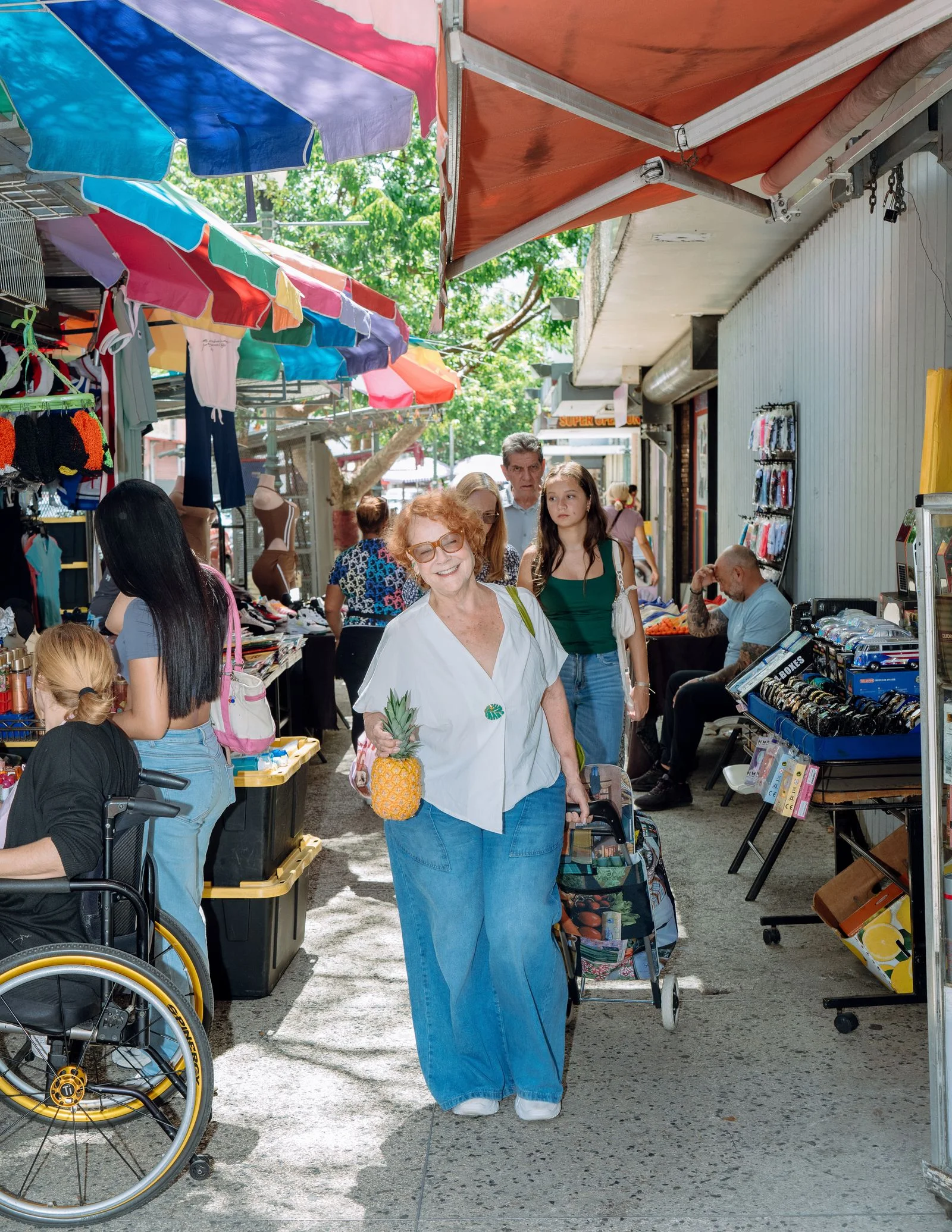
A quick walk through the Plaza del Mercado de Río Piedras to gather groceries for Sanguiving.
“We have a rich and resilient food history—it came from necessity, lack, and a bounty from the land,” Huyke says. Puerto Rican cooking draws on farming traditions and on imported, shelf-stable foods. The result, she argues, is a cuisine shaped by centuries of change: “Our food comes from Spain, Indigenous Taíno people, and [enslaved] West Africans. But it grew from our land and from our history, mixing every influence in our pilónes and our cauldrons.”
Huyke has spent decades teaching that history through food. Since the late 1980s, she has worked as a TV personality, newspaper columnist, and cookbook writer, guiding generations of home cooks through Puerto Rican dishes. My grandmother, Sara—Tata to our family—was one of them. We often went back to Puerto Rico for the holidays, alternating between Thanksgiving and Christmas. We’d leave Atlanta bundled in winter coats and step off the plane at San Juan’s Luis Muñoz Marín airport in shorts and tank tops.
Tata’s Thanksgiving turkey looked familiar; its stuffing didn’t. She started with Pepperidge Farm mix, then stirred in picadillo: ground beef cooked with sofrito, the aromatic base of garlic, onions, peppers, and culantro, along with pimiento-stuffed Manzanilla olives and sazón. After Tata died, I inherited her worn copy of Huyke’s 2004 recipe booklet, *Celebraciones*. Its recipes echoed the Thanksgiving dishes I’d grown up eating. Huyke had been part of our family table long before I understood her influence.
Making the feast Puerto Rican
The holiday has several names. Its formal Spanish title is El Día de Acción de Gracias. Many Puerto Ricans say Sanguiving, a playful rendering associated with the island’s enduring Roman Catholic tradition; others call it El Día del Pavo, or “Turkey Day,” or spell it Sangiving. The impulse to shorten and reshape words reflects what Puerto Ricans call *Puertorriqueñizar*: making something Puerto Rican.
The food does its own kind of translation. “Our adobo goes on the turkey, and all the sides have something to do with sofrito,” Huyke says. Puerto Rican adobo can be wet or dry, but both versions combine garlic, onion, peppers, and herbs. The ingredients are pounded in a wooden mortar called a pilón, a preparation that brings Indigenous Taíno and Spanish and African culinary traditions into the same dish.
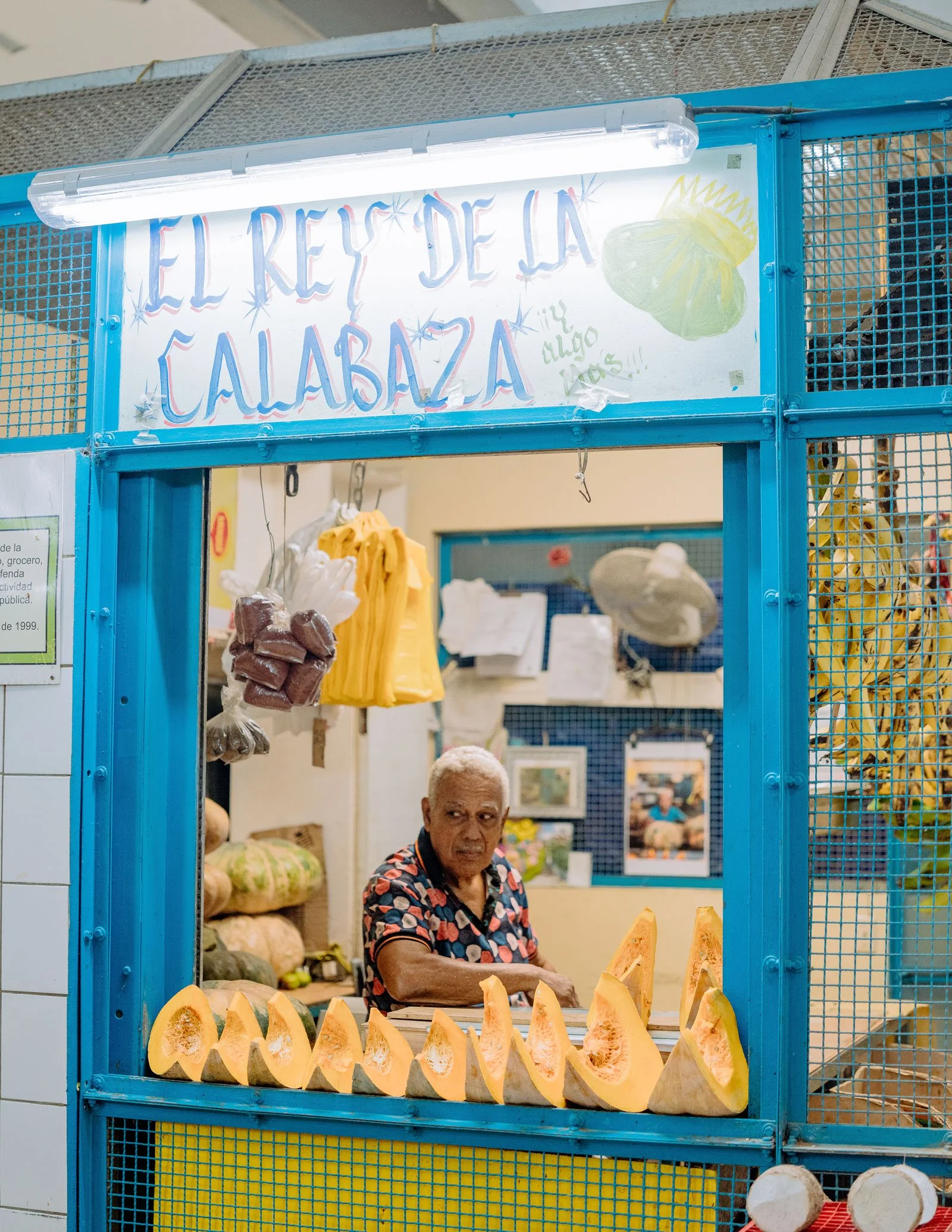
A market stall piled with local calabaza.
That layered food history also includes the island’s ties to the US military and its dependence on imported goods. Puerto Ricans became US citizens in 1917, weeks before the United States entered World War I; as many as 20,000 islanders served, and Puerto Rican soldiers have taken part in every US military conflict since. Military food traditions traveled home, while government subsidies and the practical need for shelf-stable supplies on a storm-prone island helped cement a taste for canned and packaged staples.
Puerto Rico’s economy shifted from exporting sugar, coffee, and tobacco to industrial manufacturing. Today, roughly 85 percent of the island’s food is imported, and kitchens still make room for corned beef, Vienna sausages, Spam, club soda crackers, and canned vegetables. The figure helps explain why Huyke’s push for fresh ingredients carries cultural weight as well as culinary appeal.
Her father, Hector, came home from the Korean War with a lasting dislike of instant mashed potatoes. He would eat them only at the holidays, when Huyke’s mother, Alice—a trained cooking instructor—made a richer version: yellow potatoes simmered slowly in cream with chicken bouillon, then whipped with butter. Huyke now serves a garlicky variation at her Sanguiving table.
She wants Puerto Rican cooking to rely less on processed foods and more on fresh ingredients. Her case is straightforward: fresh food tastes better, supports healthier meals, and speaks more clearly to the island’s culinary past. That means drawing on ingredients such as maize, peppers, yuca, and other Indigenous root crops, alongside later arrivals including plantains and coconuts.
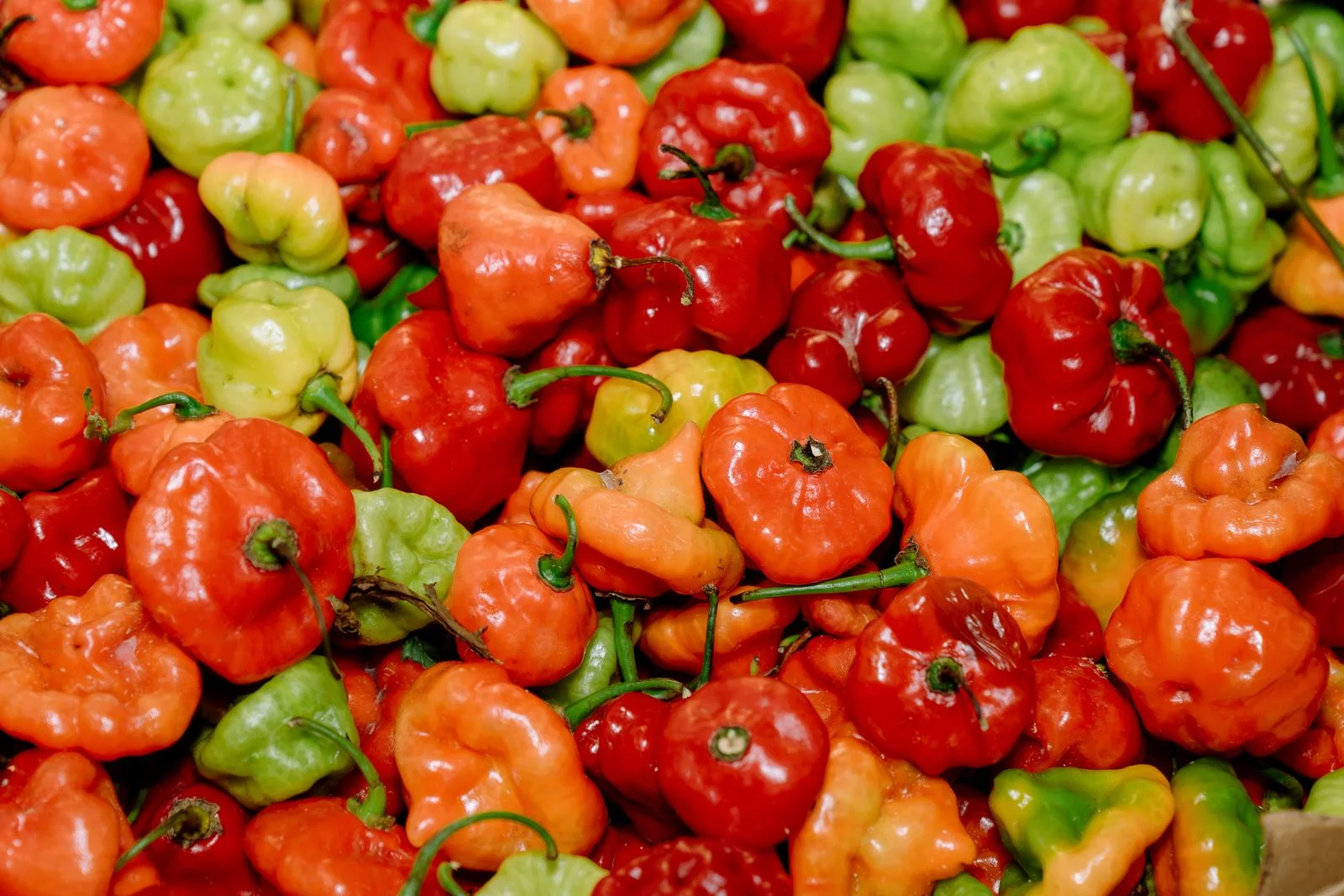
Ají dulce, or sweet pepper, is a staple of cuisines across Latin America and the Caribbean—and of Huyke’s Sanguiving menu.
Cooking as a form of teaching
Huyke says the best way to explain her approach is to cook together. Weeks after our first meeting, she joins me in my North Carolina kitchen. She narrates each step, explaining why she chooses one ingredient or technique over another. Teaching is central to her work: she mentors younger cooks, including Natalia Vallejo, Puerto Rico’s first James Beard Award–winning chef, invites rising chefs to cook alongside her, and makes time for mentoring calls. I leave the kitchen feeling fortunate to have learned from her.
Huyke tries new dishes for Sanguiving every year, but family favorites stay on the menu. One is yuca stuffing, often pronounced “estuffing” in Puerto Rico. Her family’s Agüeybaná stuffing takes its name from the powerful Taíno chief who led the island’s people when the Spanish invaded in 1493. Huyke peels and grates fresh yuca, then processes it into a paste. As I work, she has me sauté sofrito in olive oil and add ground pork, salt pork, annatto, herbs, and aromatics. The mixture goes into a deep baking dish and into the oven.
Next comes pastelón, a layered casserole of fried sweet plantains and creamy queso fresco, assembled much like lasagna. Huyke says it likely emerged in New York City, where Puerto Rican and Italian communities lived close enough to influence one another. “The Puerto Rican and Italian diasporas were physically close in New York during the ’50s—they were exposed to lasagna and mozzarella,” she says.
Pigeon peas, or gandules, are another essential crop. They’re often served with rice—arroz con gandules is Puerto Rico’s national dish—but Huyke makes them into a tangy salad with tomatoes, avocado, herbs, and vinaigrette. She gives another familiar ingredient a fresh treatment too: instead of canned beets, she roasts locally grown ones and finishes them with crumbled queso fresco.
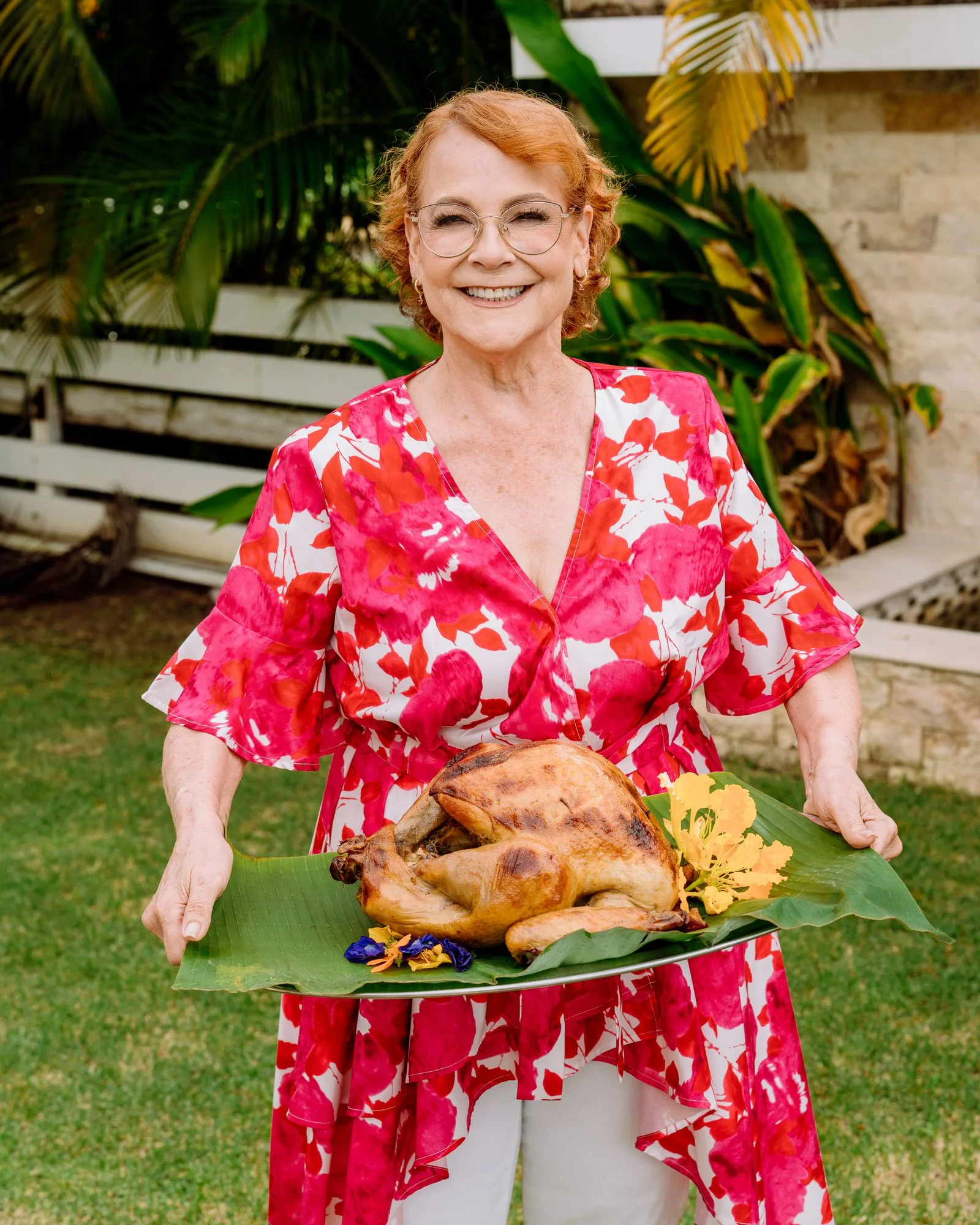
Huyke’s Sanguiving turkey sits on banana leaves and is decorated with wildflowers gathered in the rainforest.Photographs by Jesse Kornbluth
A Thanksgiving table shaped by Puerto Rican roots
For many Puerto Rican families, Thanksgiving centers on pernil: pork shoulder marinated overnight with minced garlic, sour orange juice, olive oil, oregano, salt and pepper. Huyke takes another route, keeping turkey at the center. She brines it with salt, brown sugar, dried bay leaves, fresh herbs and peppercorns, then slips butter beneath the skin and brushes the bird with rum, melted butter and guava jelly. The pan drippings become a tangy, sweet guava gravy.
Her ajilímojilí brings a sharper, greener note. Garlic, ají dulce peppers, culantro, cilantro, olive oil and vinegar make a flexible herb sauce; Huyke’s personal touch is a generous helping of capers. She says guests pour it over nearly everything on the Sanguiving table.
The meal draws on both old and new kitchen tools, from a traditional pilón to a Vitamix. After frying, molding, steaming, sautéing and roasting, the dishes add up to an unmistakable Thanksgiving feast, transformed by Puerto Rican flavors.
That transformation carries more than culinary meaning. Puerto Ricans have embraced and resisted U.S. imperialism, while the unresolved debate over statehood continues alongside a longstanding independence movement. Huyke’s cooking makes that tension tangible: a familiar American holiday takes shape through traditions with their own roots and history.
“I believe every cuisine evolves,” she says. “But traditions should be kept and taught. So we do not lose the roots that make us unique.”