Nekajui’s most distinctive amenity may fit on a café counter. At this 1,400-acre resort on Costa Rica’s Papagayo Peninsula, a small micro-roastery serves coffees from across the country, giving the property’s culinary program a strong sense of place alongside its chef-led restaurants.
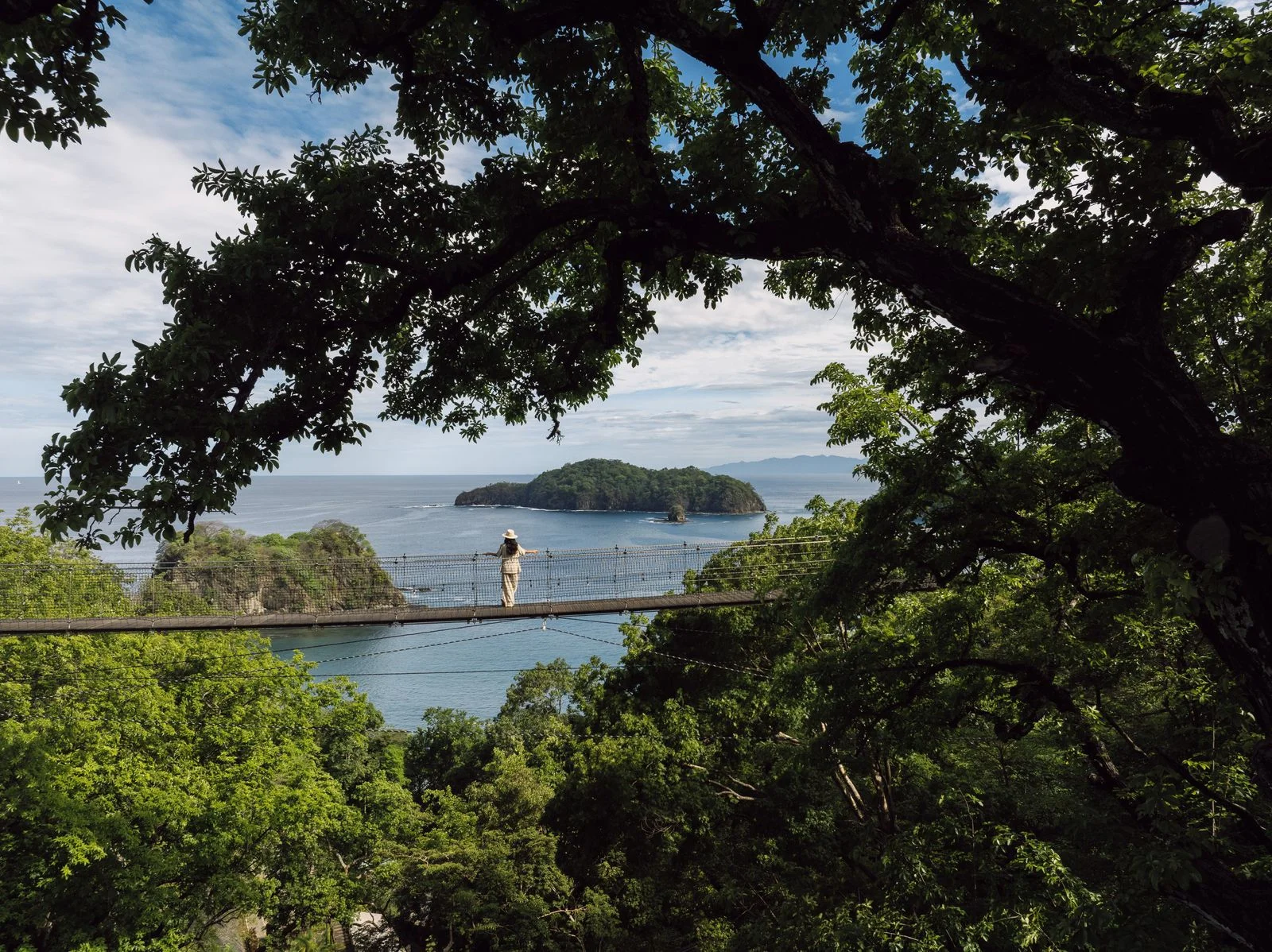
Opened in February 2025, Nekajui is the first Ritz-Carlton Reserve in Central or South America. Its secluded setting brings together jungle, beach and Gulf of Papagayo views, with wildlife including capuchins, coatis, iguanas and howler monkeys. Arrival begins in La Casita, a modest bungalow; beyond it, the grounds open toward lawns, tiered pools and the bay.
A resort built into the coast
The 107 rooms and suites look across treetops or toward ocean sunsets. Carved wood details reference Guanacaste design, and many rooms add generous patios and private plunge pools. Treetop tents and villas offer more room for larger groups. Guests staying below a plunge pool may hear or see water spilling down from above.
The resort’s main campus gathers the accommodations, restaurants and spa, while a funicular carries guests down the cliffs to the beach. The ride passes through habitat used by howler monkeys; at the shore, the warm water and a cave to explore make the destination part of the experience.
Muñoz’s Peruvian-led kitchens
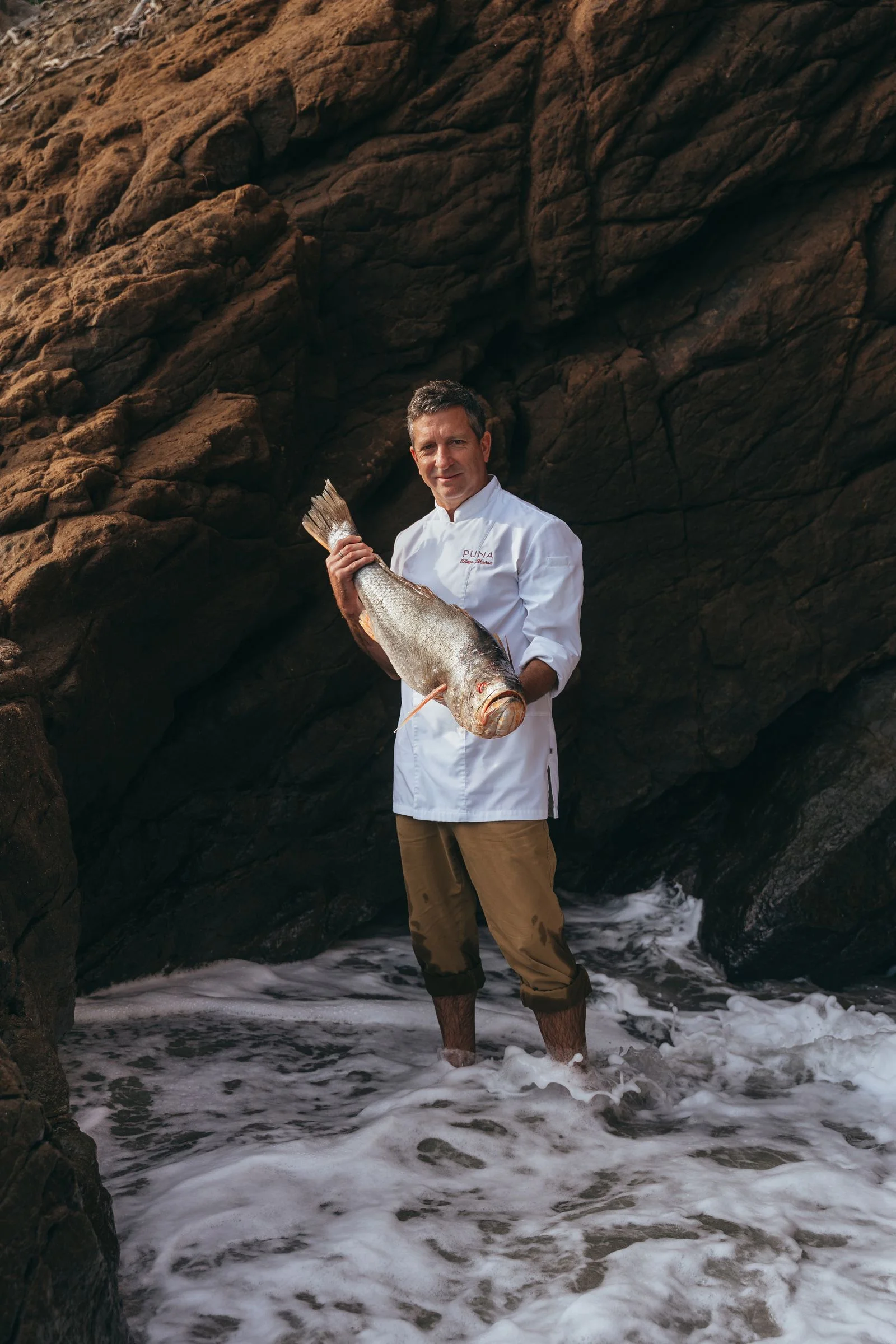
Chef Diego Muñoz oversees the main dining venues, Puna and Paruro, a six-seat chef’s counter inside Puna. His résumé includes El Bulli and Mugaritz, and his menus draw on the layered flavors and visual precision associated with contemporary Peruvian cooking.
Puna folds ingredients and spices encountered on Muñoz’s travels into Peruvian staples such as sudado and ceviche. Paruro takes an East Asian direction, with dishes including nori-cured tenderloin and sea bass curry. One signature crosses both menus: a deboned chicken wing filled with prawn.
Muñoz is also focused on sourcing ingredients that rarely appear on Costa Rican menus. Fresh seafood can be difficult to secure despite the country’s extensive marine territory, a challenge that makes local supply a practical concern as much as a culinary ambition. Costa Rica’s marine territory is a significant part of that context.
Drinks extend the regional focus. Cooper’s, a dimly lit, speakeasy-style bar, builds cocktails around Guanacaste ingredients and local distillates. Its menu includes goat cheese, cascara and mango leaf distillates; the Turrialba, made with fino sherry and goat cheese distillate, gives a martini-like format an unusual local accent. The bar is invite-only, with guests able to ask their server or personal concierge about access.
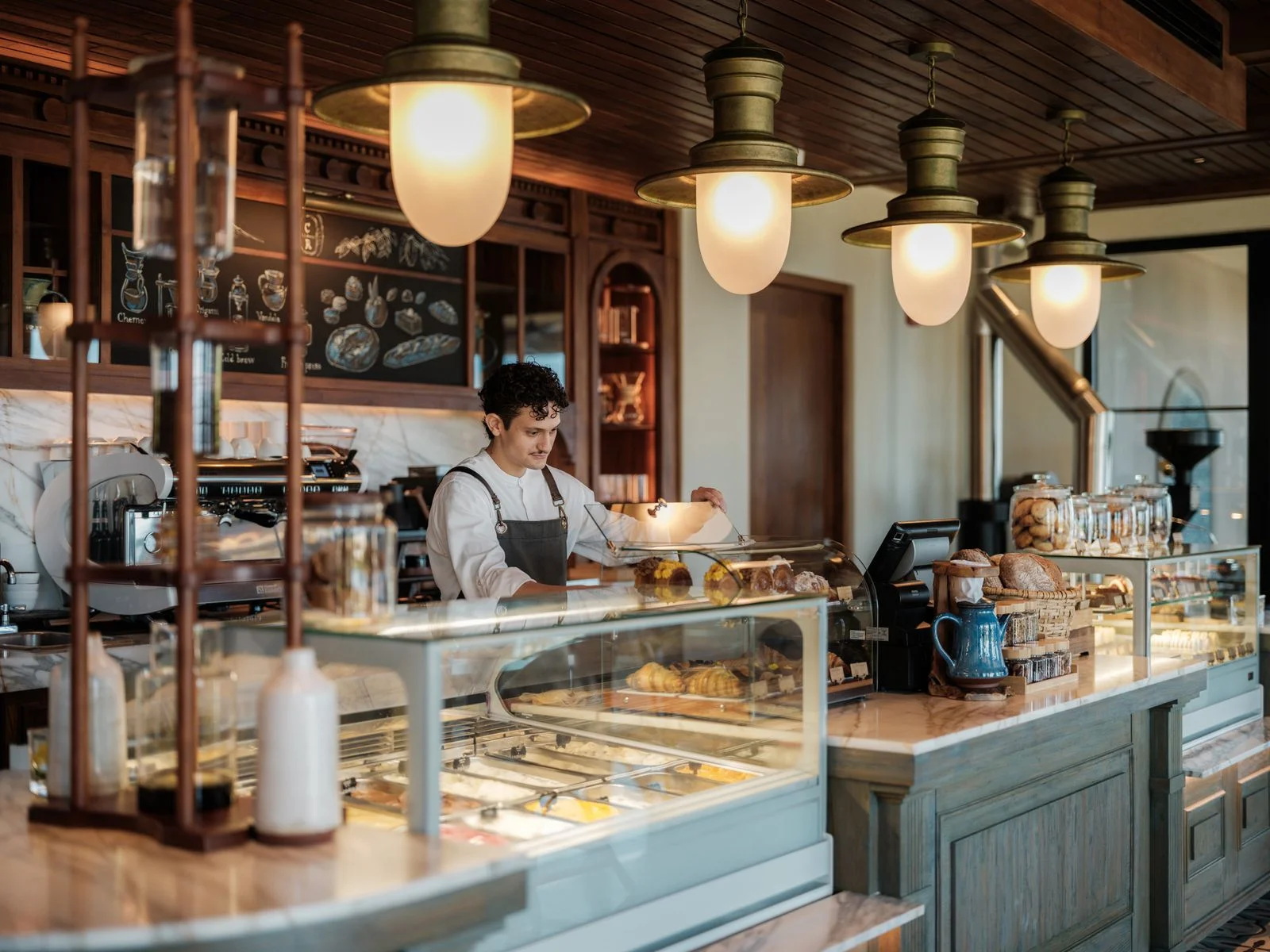
Niri Beach Club serves Iberian-inspired dishes, while Café Rincon handles all-day dining with sandwiches, bowls and pastries.
Coffee from seven growing regions
Café Rincon’s micro-roastery is run by Fabi Rojas, who rotates coffees from all seven of Costa Rica’s growing regions. She has built relationships with farmers around the country, giving the café access to a range that reflects the country’s varied elevations and growing conditions.
The differences are striking for a country roughly the size of West Virginia. Lower elevations in the coastal west produce approachable, easy-drinking coffees; Valle Occidental, in the north, is known for brighter acidity. The southern-central Los Santos region grows fruity geisha coffees, including one that sold for more than $300 per pound at auction. A Costa Rican geisha reached that auction price.
Rojas can prepare coffee to order, but the house method worth seeking out is the vandola. Its one-piece clay carafe and pour-over cone look centuries old, though Costa Rican roaster and barista Minor Alfaro developed the design in 2015. Clay helps retain aroma, while a valve at the base allows a measured amount of oxygen into the brew. Alfaro says that controlled oxygenation can bring out sweetness.
The vessel is also handmade ceramic work, well suited to coffee whose character depends on careful growing, roasting and preparation. That attention gives Nekajui’s café a clear identity: a resort dining program can feel rooted in its location when it puts local producers and regional differences directly in the cup.