5 Best Sci-Fi Movies Where the Hero Dies
Spoilers ahead.
Science fiction doesn’t owe us a hopeful ending. “Star Trek” imagines a future built around diplomacy and shared prosperity; “Star Wars” treats fascism as a force that can be beaten back, a promise embedded in the title “A New Hope.” But plenty of sci-fi stories ask what happens when hope fails. These five films make their protagonists’ deaths part of the point, whether the sacrifice is noble, the ending is brutally wasteful, or humanity simply runs out of time.
The difference matters. A hero’s death can expose the cost of protecting something worth saving; it can also leave viewers with a warning about the damage people do to themselves and the world around them. Here are five films that refuse an easy escape.
Beneath the Planet of the Apes (1970)
 20th Century Studios
Ted Post’s sequel to Franklin J. Schaffner’s 1968 “Planet of the Apes” takes the original’s social satire and makes its warning literal. James Franciscus plays Brent, an astronaut sent on a rescue mission who lands on the same future Earth as Taylor, played by Charlton Heston. There, the gorilla general Ursus (James Gregory) prepares to invade the Forbidden Zone, over the objections of Dr. Zaius (Maurice Evans).
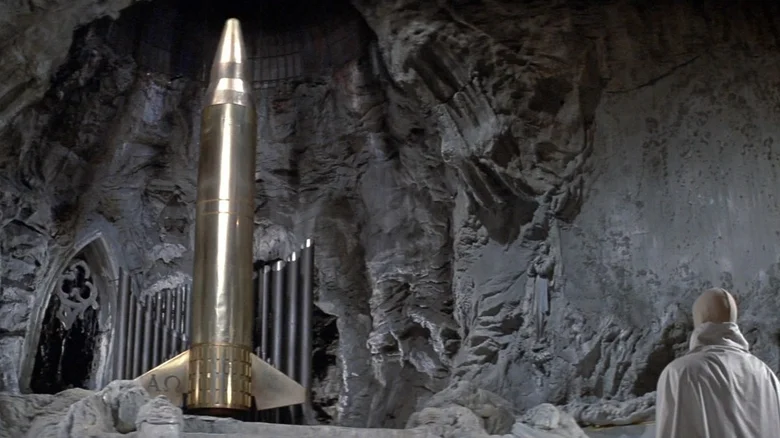
The sequel also reveals a hidden population beneath the surface: surviving humans with psychic powers, worshipping an unexploded nuclear bomb. Taylor and Brent encounter them, and Taylor recognizes the bomb’s Alpha Omega markings. He knows it can wipe out life on Earth by itself.
That weapon is the film’s grim promise. When Taylor is mortally wounded, he falls onto the detonation switch. He dies, and so does everyone else on the planet. It’s an unusually bleak ending, and the bomb turns the story’s warning about human destruction into its final image.
Silent Running (1972)
 Universal Pictures
Douglas Trumbull’s “Silent Running” has stayed with /Film’s Jeremy Smith since it made him a lifelong science-fiction fan. It’s a dystopia about an idealist confronting a future that puts commercial demands ahead of the natural world. If you liked “Project Hail Mary,” this is a pointedly different kind of space adventure: quieter, sadder, and focused on what humanity has already lost.
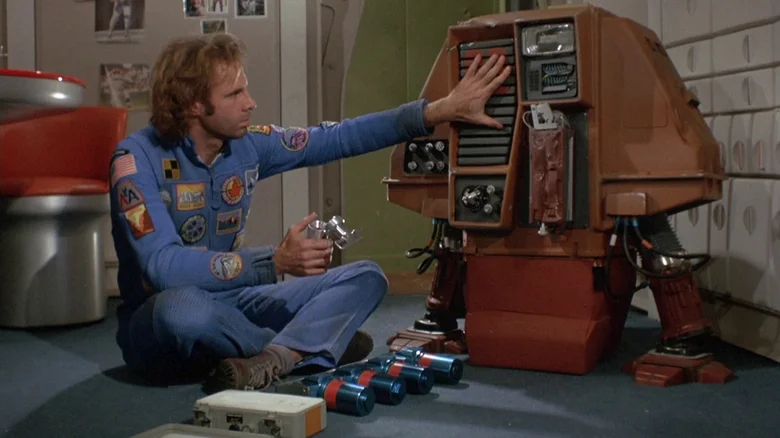
Earth’s forests are gone. The remaining plant specimens survive in greenhouse domes aboard spacecraft, including the Valley Forge, a ship owned by American Airlines. Botanist Freeman Lowell (Bruce Dern) is responsible for keeping them alive. When the company orders the domes jettisoned so the ship can return to commercial service, Lowell turns against his crew and kills to protect the forest. He escapes with one dome, but the others are lost.
Lowell ultimately gives his life to preserve what remains. The film’s environmental message is blunt, and its critique of commercial priorities hasn’t softened with age. That’s part of its force: the sacrifice feels moving because the loss it tries to prevent has already happened.
They Live (1988)
 Universal Pictures
John Carpenter’s “They Live” turns a Reagan-era critique of power and consumer culture into an alien invasion story. Roddy Piper plays Nada, a drifter who finds sunglasses that reveal both disguised aliens and the commands hidden beneath ordinary advertising: “OBEY,” “STAY ASLEEP,” and “CONSUME.” The glasses make the film’s central suspicion visible. The people controlling society aren’t always the ones you can see clearly.
Nada is hardly equipped to act on what he discovers. His attempt to bring Frank Armitage (Keith David) around leads to a famously prolonged fight; Piper and David really went at each other during the scene. Later, Nada learns that aliens are working with Earth’s wealthy, using signals to keep poor people docile.
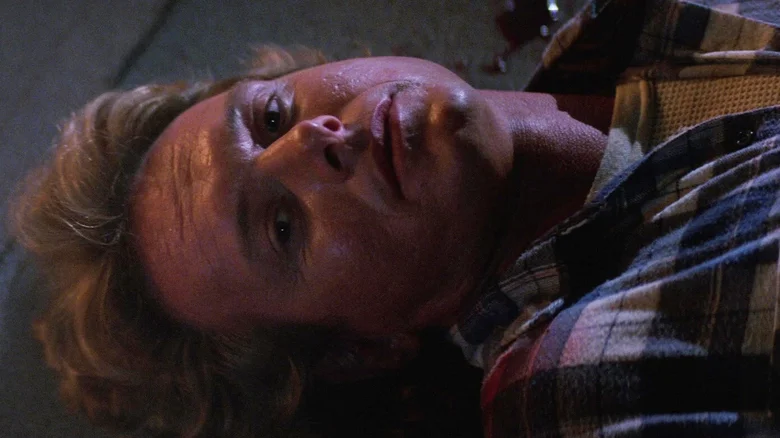
The climax sends Nada, Frank, and their allies against the alien compound to shut down the signal. Nada succeeds, but he’s mortally wounded. His last gesture is a middle finger aimed at the aliens. The ending still lands as a sharp piece of defiance, even if the film’s suspicion of wealth and media can feel less like satire than an accusation aimed straight at the audience.
Melancholia (2011)
 Magnolia Pictures
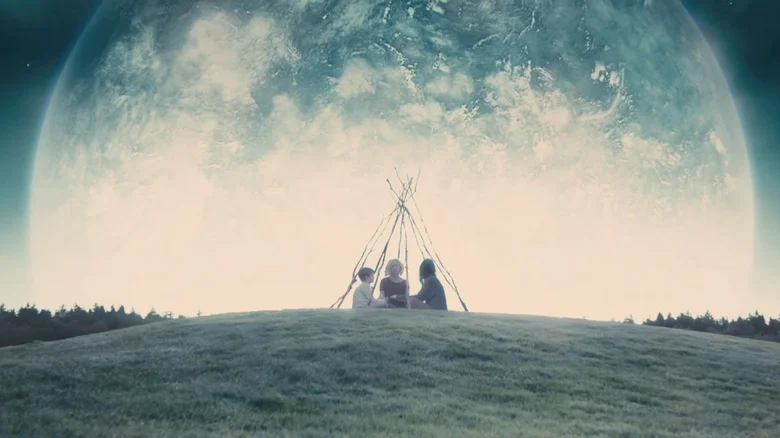
Lars von Trier’s “Melancholia” is both an apocalypse film and a portrait of depression. It’s the second part of a trilogy that began with “Antichrist” (2009) and concluded with “Nymphomaniac” (2013). A rogue planet named Melancholia is expected to pass Earth, loop back, and collide with it. The orbital path becomes a slow, ominous rehearsal for extinction.
At the center is Justine (Kirsten Dunst), a newly married woman falling back into depression. As the planet approaches, she takes grim comfort in the idea that life will end: she believes humanity is evil and that no other life exists beyond Earth. Electricity behaves strangely; some characters try to flee. Justine remains detached.
No one survives. The film’s ending makes the apocalypse feel less like a surprise than the external shape of Justine’s despair. It’s a beautiful and punishing movie, and it leaves little room for a hopeful follow-up—though the original article’s suggestion is to try “Apocalypse Now.”
The Substance (2024)
The horror in “The Substance” works because its Hollywood satire doesn’t stop at the screen. It points straight back at the industry that made the film.A body horror story with a real-world sting
Coralie Fargeat’s 2024 film stars Demi Moore as Elisabeth Sparkle, a famous actor whose career has narrowed to hosting a TV workout show. When her boss, played by Dennis Quaid, fires her, he makes the ageism behind the decision painfully plain: Hollywood no longer sees her as a heartthrob. A secretive pharmaceutical company offers Elisabeth a way to reclaim her youth through a drug called “The Substance.” After injecting it, she loses consciousness as her back splits open and a younger woman emerges. Margaret Qualley plays that woman, who calls herself Sue. They are two versions of the same person, bound by a strict arrangement: each gets a week awake, while Sue draws spinal fluid from Elisabeth. Sue soon refuses to return to the older body she resents. The film makes the cost of breaking their agreement grotesquely clear. By the finale, Elisabeth is a mass of dead, swollen flesh on the Hollywood Walk of Fame. It’s an unsubtle image, but subtlety was never the point. Fargeat turns the industry’s preference for young women—and its habit of discarding older ones—into literal body horror. The ending carries an extra sting outside the movie. Moore was nominated for the Best Actress Oscar for her performance, then lost to Mikey Madison, a younger actor. That doesn’t explain the Academy’s decision, but it does make the film’s argument feel uncomfortably close to home.
Image credit: Mubi


