If you've shopped for nonstick pots and pans in the last decade, you've heard "nontoxic cookware" so often it may sound like a standard feature rather than a sales pitch. Before you spend money on a pan labeled that way, it's worth knowing what "toxic" is supposed to mean here, and whether the alternatives actually fix the problem.
The story starts with PFAS, short for per- and polyfluoroalkyl substances. These synthetic chemicals repel liquids, which made them useful in everything from waterproof jackets to nonstick pan coatings. They've been in consumer products for nearly a century, but scientists only began raising health concerns that reached a broad public audience in more recent years. That lag is the core of the whole nontoxic-cookware trend.
Is traditional nonstick toxic?
Traditional nonstick pans are usually coated in polytetrafluoroethylene, or PTFE. Companies that label their cookware "nontoxic" are positioning it against that coating, and the label works as much as a marketing move as a technical description.
To see why old nonstick pans picked up the "toxic" reputation, you need the history of PTFE. The material was discovered accidentally in 1938. DuPont trademarked it as Teflon in the early 1960s, and through the second half of the 20th century it reshaped home cooking. A surface that released food without oil was a real selling point. By the turn of the century, Teflon was everywhere in American kitchens, on skillets, muffin tins, baking dishes, and more.
PTFE is only one member of the PFAS family, which contains thousands of compounds. The more troubling chemical was PFOA, perfluorooctanoic acid, which DuPont began using in its Teflon manufacturing process around 1951. PFOA could reach the human body through gaseous fumes or from chipped coatings. Over time, researchers linked it to serious health effects, including a higher risk of certain cancers, birth defects, ulcerative colitis, and thyroid disease. Under sustained pressure from public health and environmental groups, manufacturers phased PFOA out by 2013.
That's the good news. The less comfortable part is what came next. Today's traditional nonstick is generally made with PFOA-free PTFE, and it's typically free of PFOS, another harmful PFAS. You'll see it sold under names like T-fal, Dura-Slide, or hard-anodized aluminum. PTFE is generally considered less harmful than the compounds it replaced, but that's not the same as harmless. Thousands of PFAS remain unregulated, and research into the class as a whole is ongoing. A "PFOA- and PFOS-free" label answers two specific questions. It doesn't clear the whole family.
What does "nontoxic cookware" actually mean?
The term isn't new, but it became a consumer category with a specific origin. GreenPan released the first PFAS-free ceramic nonstick frying pans in 2007, and that launch did more than any other single event to define the phrase. Since then, "nontoxic cookware" has effectively come to mean "PFAS-free nonstick cookware."
That definition isn't wrong. It's just narrower than the word suggests. "Nontoxic" sounds like a promise about everything in the pan, when in practice it describes the coating chemistry and little else. If you read it as a guarantee, you'll overpay for a label that's doing less work than it appears to.
The best nontoxic cookware
We've tested dozens of nonstick and "nontoxic" pans to sort the real options from the marketing. Here's where we landed:
- Best ceramic nonstick pan: GreenPan Valencia Pro
- Best nonstick pan that isn't Teflon or ceramic: Misen Carbon Nonstick Frying Pan
- Best stainless-steel cookware: All-Clad D3 Stainless Steel Skillet
- Best nontoxic cookware set: All-Clad D3 Stainless-Steel 7-Piece Cookware Set
- Best cast-iron skillet: Lancaster Cast Iron Skillet
- Best enameled cast-iron Dutch oven: Staub Cocotte
- Best carbon steel skillet: De Buyer Blue Carbon Steel
"Nontoxic" is a looser label than most shoppers assume. In practice, it usually points to ceramic nonstick, a coating made from silica through the sol-gel process. But the term covers more ground. Any pan made without PFAS or other harmful chemicals qualifies, and that's good news. It means some of the best options have been sitting in your cabinet for decades.
Stainless steel, cast iron, and carbon steel all qualify. None of them need a coating to earn the label, and none depend on a chemical finish that wears away over time.
Why the coated options keep selling
Ceramic nonstick comes closest to the slick, forgiving release of traditional Teflon, and that's the whole pitch. The catch is that every coating degrades. Ceramic chips, and it tends to chip sooner than buyers expect. That's why we keep steering people toward uncoated stainless, cast iron, and carbon steel. They take some getting used to. Once you learn how heat behaves in them, though, food stops sticking, and the pans last far longer than any nonstick surface will.
The best ceramic nonstick pan: GreenPan Valencia Pro
If you're set on a ceramic pan, GreenPan is where we'd start. The brand's ceramic pans were the first to hit the market, in 2007, and they've kept landing near the top of our years of nonstick testing. Its Valencia Pro line is our favorite, and the 12-inch frying pan, listed at $100 on Amazon, is the one most people should look at first.
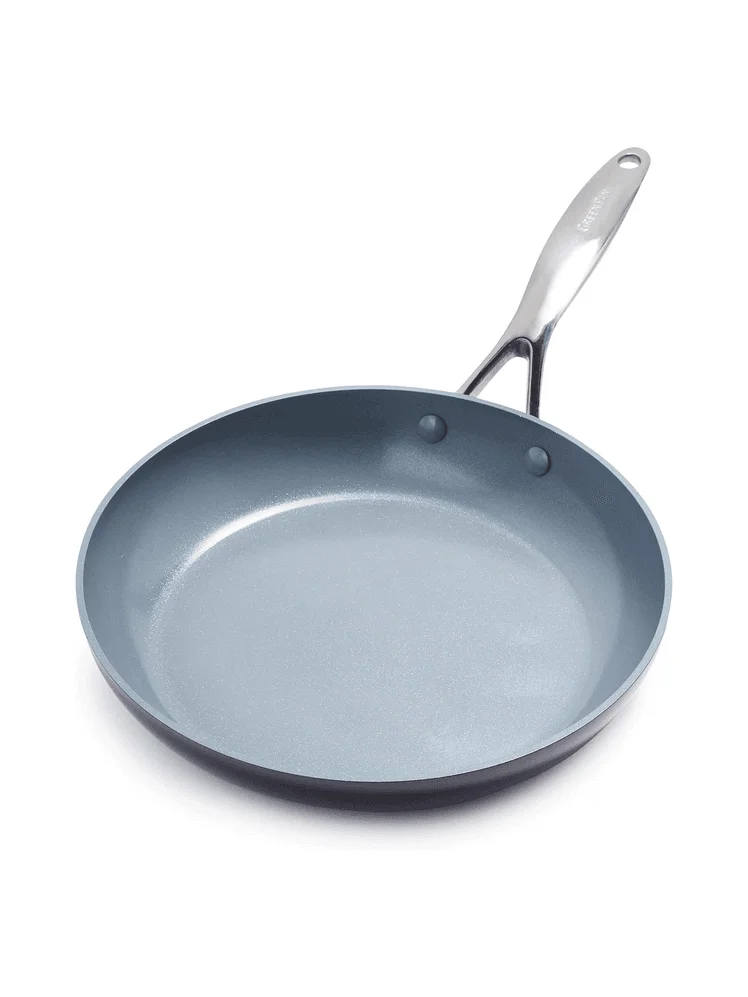
What makes it work? It has enough heft to feel solid, yet it's light enough to move around without effort. The price matters more than people admit. When the coating eventually fades, replacing a $100 pan doesn't sting the way replacing a premium one does. It's also more scratch-resistant than earlier GreenPan models we've tried, and it's induction compatible, which settles the question for anyone cooking on that kind of stove.
What it does well:
- Rated for high heat
- Comfortable handle
- Induction compatible
- Oven-safe
- Good conductivity
The drawback: the ceramic coating will wear down after a few years. That's not a Valencia problem, though. Every nonstick pan does this, whatever its price or coating type.
Specs: available in 8", 10", and 12" sizes. It's dishwasher-safe, but hand-washing is recommended. Metal utensils are theoretically fine, but wood or silicone is the safer bet. It's oven-safe up to 600°F, and it comes with a one-year warranty. That warranty is short, and it's worth remembering that the coating may give out before the paperwork does.
A budget option: If you don't cook on induction and want to spend less, GreenPan's Paris Pro line is the alternative. It performed much like the Valencia in our testing, so the induction question is really the only thing separating them.
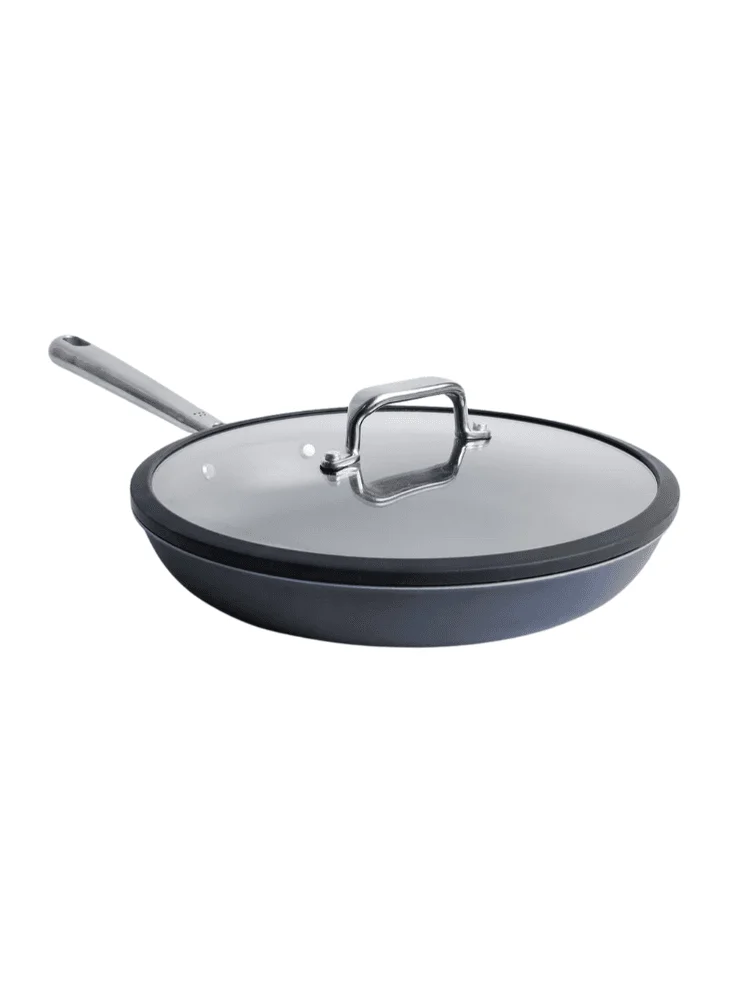
Neither Teflon nor ceramic: Misen Carbon Nonstick Frying Pan
Misen's carbon nonstick frying pan doesn't fit neatly into either camp we've covered so far, which is why it gets its own spot.
Carbon nonstick is steel that's been changed, not coated
If you've been trying to get off Teflon, you've probably hit the same wall: the pans that dodge PTFE usually trade it for ceramic coatings that scratch and wear out. Carbon nonstick is a different bet. These pans look and cook like traditional nonstick, but there's no coating to flake. The steel is nitrided, a process that infuses nitrogen into the metal. That makes it tougher and slicker, and it resists corrosion and rust. Metal utensils are fine, and the pan can take high heat for years.