Japanese knives have become a fixture in home and restaurant kitchens, and the reason is simple: many of them beat their Western counterparts in kitchen tests. That doesn't mean a Japanese knife is the right answer for every cook. The catch is that these knives are built for specific jobs, which makes them harder to shop for than a single do-everything chef's knife.
Why the Western chef's knife is the wrong comparison
Western knives are bulky, all-purpose tools. Their heavy bolster, the thick junction near the heel of the blade, was once so useful that chefs would use it to crack open a can of tomatoes in the middle of service. Nobody reaches for a Japanese knife to do that. These blades are designed around precise cuts, and each one usually has a particular purpose. That specialization is the whole appeal, and it's also why buyers stall. If you don't know what the knife is for, its strengths are invisible.
What actually separates the two traditions
Start with the blade shape. Many Japanese knives are meant for push cuts or pull-through slicing, not the rocking chop that a Western chef's knife handles so well. Their edges run straighter, so they're a little worse at tearing through a pile of herbs, but they're more exact where it counts. Most also have a sheep's-foot tip, a point that curves down toward the tip and gives you finer control for detailed work.
Steel is the next difference, and it's where things get interesting. Japanese knives are typically forged from harder steel. Hard steel holds an edge longer, which lets makers grind steeper sharpening angles and produce a finer edge. The result is cleaner, more delicate slicing. The trade-off is brittleness: that same hardness means the edge can chip if you take it through something like ice or bone.
Bevel is where the sharpening philosophy shows. Traditional Japanese knives are sharpened on one side only, which yields a much finer edge than the 50/50 bevel on most Western knives, which is ground on both sides. Some modern Japanese makers have moved to 50/50 grinds because they're simpler to sharpen. You'll still see plenty of knives with a 70/30 bevel, where the inside edge (the left edge on a right-handed knife) is ground at a steeper angle. That compromise is easier to maintain than a single bevel and sharper than a 50/50, which is why it's so common. If you're comparing knives, check the bevel before you assume a sharper edge is on offer.
Handles are the last piece. Many traditional knives use a wa-style handle, an octagonal wooden grip that wraps around a hidden tang, the part of the blade that runs into the handle. Wa handles keep the knife light and quick. Western knives typically use full-tang construction, where the steel runs the full length of the handle, which adds heft. Plenty of modern Japanese makers have split the difference, pairing full-tang handles with Japanese blade shapes. Those hybrids are durable and still slice well, and for a lot of home cooks they're the most practical place to start.
The knives we'll cover
We tested a wide range of Japanese-style knives for Bon Appétit, and this roundup focuses on the ones that held up. It isn't an exhaustive list. There are more styles than the eight below, but each of these has been put through its paces, so we can speak with some confidence about what each one does well:
- Gyuto
- Santoku
- Nakiri
- Deba
- Petty
- Funayuki
- Kiritsuke
- Honesuki
Before we get to individual styles, it helps to understand the shared logic behind them. Once you know why a gyuto differs from a deba, choosing between them stops being guesswork.
The types of Japanese knives
Where the gyuto came from
The gyuto is a French idea that Japanese knifemakers reworked. It emerged in the early 1900s, when French cooking was catching on in a Japan that was modernizing fast. Makers took the traditional French chef's knife and blended it with their own blade-making traditions. The result was a knife built primarily for slicing meat, with a gentle curve that still makes quick work of herbs.
The differences from a Western chef's knife are physical, and they matter. The gyuto has a straighter blade, a drop point tip, and a lower overall profile. That shape is deliberate. You set the tip on the board and draw the blade through the food, relying on a sharp, thin edge to do the work. It's a precision motion, and it rewards a light hand more than a heavy chop.
But calling it a meat slicer undersells it. The shape is flexible enough that plenty of home cooks use a gyuto as their everyday knife instead of a Western chef's knife. That's the more interesting claim, and it's why the style anchors so many collections.
Two picks worth your money
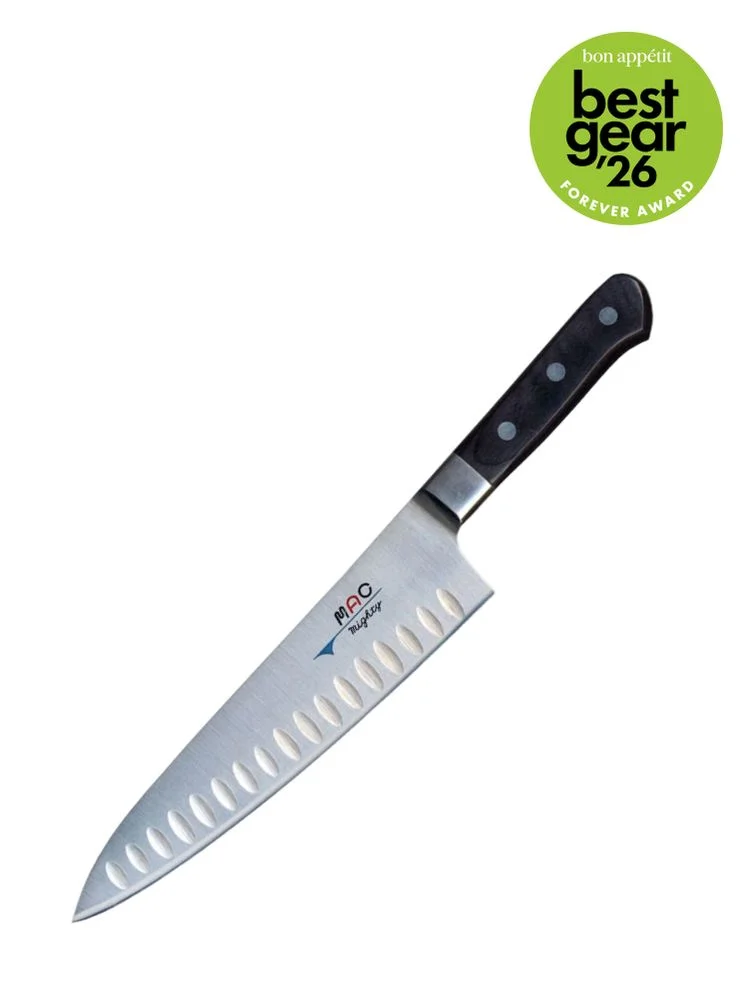
If you want a dependable starting point, MAC's Professional Hollow Ground Chef's Knife has topped the [chef's knife review](https://www.bonappetit.com/story/how-to-find-the-best-chefs-knife-for-you) for years. It's listed at $195, and MAC's own site currently has it at $175. Hardly a lot of ceremony, and that's the point: it's a reliable knife that doesn't demand you learn a new set of habits.
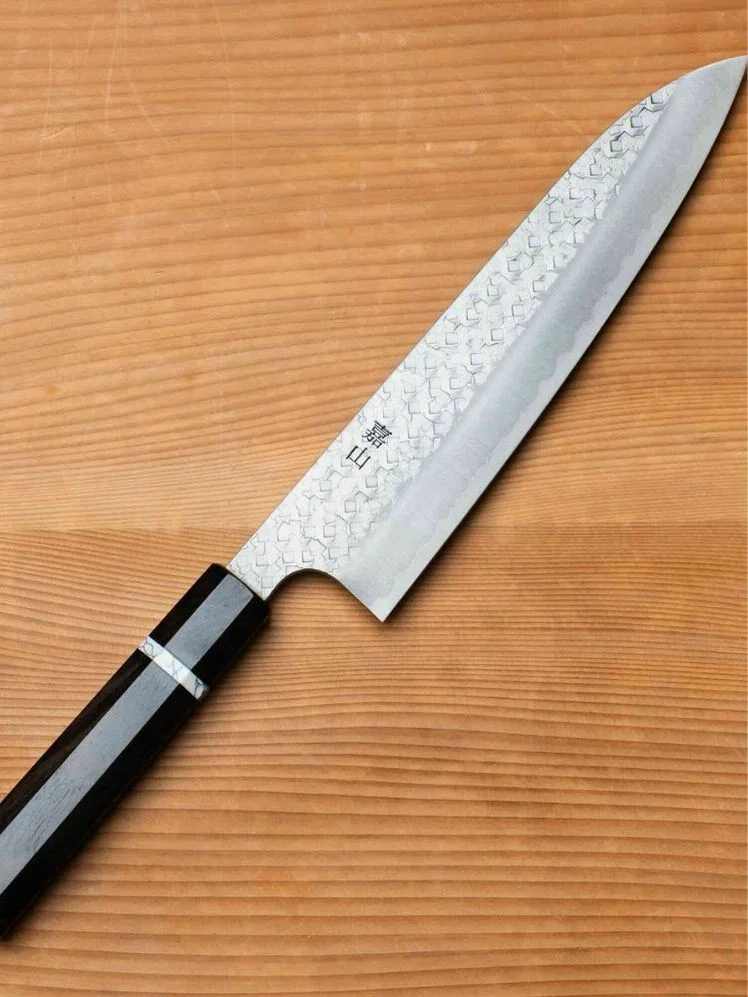
The pick for people who want something sharper and more traditional is the [Kazan Arare by Shibata gyuto](https://shop.com/products/7546935541858/kazan-arare-by-shibata-gyutou-210mm-8-2). It's priced at $240 at Shop and at Chubo, and it impressed enough to earn its own [full review](https://www.bonappetit.com/story/kazan-arare-sg2-by-shibata-knife-review). Here's the catch: the edge is wicked sharp, and that sharpness is less forgiving. If you're used to hacking through squash with a heavy Western blade, expect an adjustment period.
The gyuto isn't the only Japanese shape competing for your counter space. Its most common rival is a shorter, flatter-bladed knife with a very different job description.
Why the santoku keeps turning up in knife sets
Brands now bundle the
santoku into knife sets as a matter of course, which is a little odd for a shape that only dates to the 1940s or so. It's a young design by knife standards. Its nickname, the three virtues knife, points to its pitch: it borrows from the gyuto, the nakiri, and the deba, and it's meant to handle meat, fish, and vegetables without forcing you to switch blades.
What the shape actually does
The geometry explains the appeal. A santoku usually has a steep sheep's-foot tip, which gives you precision for detail work. The tall heel handles push cuts. And the blade carries just enough curve to support pull-through slicing and rock-chopping. That's a lot of jobs for one blade, and it's why the santoku earns its place as a utility knife rather than a specialist.
In practice, that means cheese and an apple for a snack, slicing leftover roasted chicken for a sandwich, or dicing an onion for a curry. None of those tasks is hard, and none needs a dedicated tool. The santoku just handles them without fuss, which is the whole argument for it.
Pick the length before the brand
Here's the thing: most cooks should aim for a santoku between six and seven inches. That length sits in deliberate contrast to the longer gyuto, so you're not buying two knives that do the same job. A shorter blade also feels more controllable on a cutting board, and it's easier to store. Go much longer and you're drifting back toward a gyuto's territory.
Two picks, two philosophies
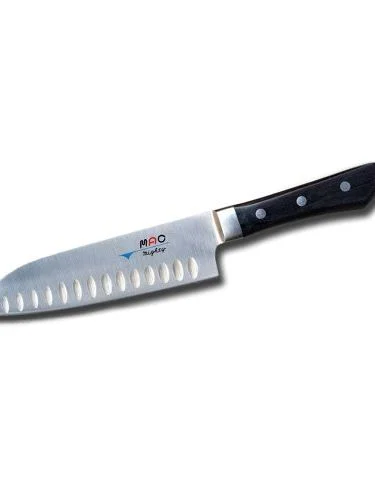
Our favorite overall is the
MAC Professional Santoku Knife. It's sharp and well made, and at $140 on Amazon, it's good value for what you get. The one knock is the handle, which feels a bit clunky in the hand. That's a fair trade for most people, but it's worth knowing before you buy.
If you want something with more refinement, the
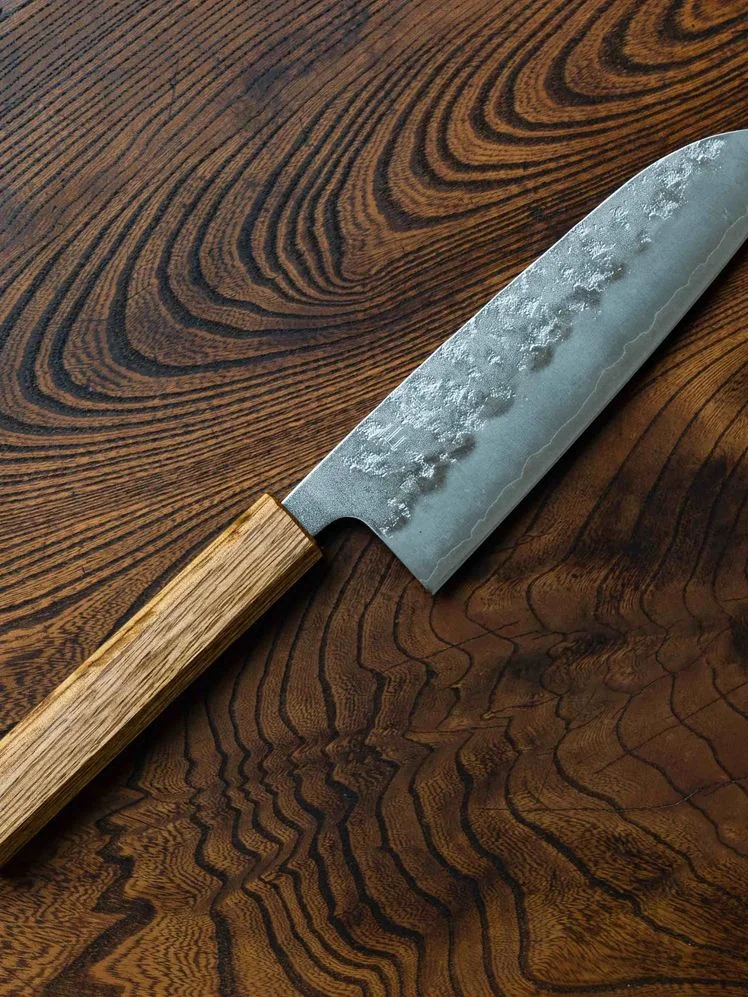
Kazan Ginsan Nashiji Santoku is the one to look at. It has a traditional wa-style handle and an edge that's razor sharp out of the box. The blade feels nimble but sturdy, and the hand-finished details are hard to miss. The catch is price: at $180 from Chubo Knives, it's the more expensive of the two, and that's the obvious drawback.
The bottom line
The santoku earns its spot in a knife set because it covers most daily cutting without asking much of you. Start with the six-to-seven-inch length, decide whether you care more about value or finish, and you'll have a knife that does most of the work. If you're shopping this space, don't let the set's other pieces make the decision for you. The santoku is often the one blade you'll reach for first.