Photography in fiction is often treated as a late twentieth century experiment. That account misses a much older history—and a more interesting question: what happens when images don’t just illustrate a text, but change how we read it?
WG Sebald’s Vertigo helped make photographs in fiction and poetry a visible trend in 1990. But Georges Rodenbach had designed an illustrated novel nearly a century earlier: Bruges-la-Morte, published in 1892. Writer and curator Terry Pitts maintains a list called Vertigo that now approaches 900 works of fiction and poetry with photographs. That scale points to a field with a rich practice and surprisingly little shared history or guidance.
The range is the point. Contemporary writers including Jonathan Safran Foer, Minae Mizumura, Hannah Weiner, Monica Ong, Lydia Davis, Debra Di Blasi, Susan Howe, Jesse Ball, and Ali Smith have all worked with images. Yet writers often seem to draw on only a handful of precedents. Put Ben Lerner’s tentative black-and-white details in 10:04 beside Teju Cole’s full-page color photographs on coated stock, and the possibilities are hard to reduce to one tradition.
Images also put pressure on the mechanics of reading. Where should a photograph sit—on the facing page, in the margin, or inside the text? Should it have a caption? It speaks in a different register from prose, and may even pull against what the words seem to say. For writers, that friction can be freeing: the image becomes a wordless companion, and its presence sharpens the question of what language can convey on its own.
That question has shaped my decade of teaching and writing fiction with images. I still encounter methods I haven’t seen before. In my multivolume novel Five Strange Languages, each book tries a different approach. Weak in Comparison to Dreams, the first volume to appear, alternates day and night chapters. By day, Samuel tours zoos in different countries to study the welfare of confined animals. The photographs show cages, not animals, alongside essays he reads for his research. At night, he returns to a recurring dream: an endless mountain landscape under forest fires. The book places images from waking life and dreams in sequence.
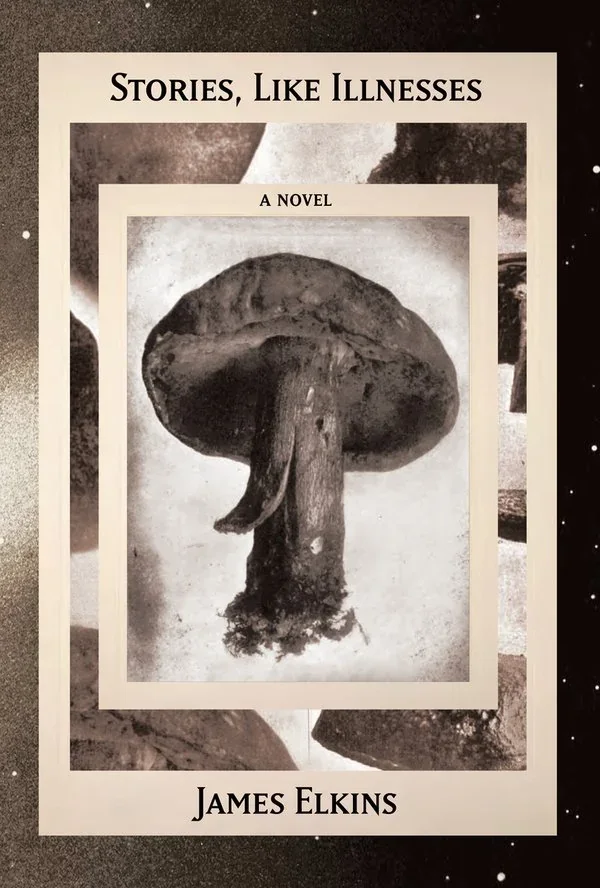
The project’s opening volume, and its most recent publication, Stories, Like Illnesses, crowds Samuel’s imagination with photographs of bats, bacteria, crystals, drills, engines, and comets. Its multiple columns let images surface in margins, across the page, or on both sides at once. The disorder is deliberate: it gives the page the same restless pressure Samuel feels when he can’t concentrate.
There’s far more to explore, including material online and in the nonfiction companion volume to Five Strange Languages. The ten books discussed here show why the subject deserves attention. In the strongest examples, photographs do more than decorate or offer a visual break. They answer the text, unsettle it, or send the reader back to check what each has said. Words and images make a kind of meaning neither could produce alone. Your attention keeps moving between them, caught in the exchange.
These books show three distinct ways images can change what a reader knows: they can guide the eye, complicate a written account, or send the reader outside the book altogether. The last method may be the most revealing. A photograph can hold a story still; a video’s view count keeps changing.
Travel, memory, and the visible detail
Blind Spot by Teju Cole
Teju Cole brings the wandering narrator into a world beyond W. G. Sebald’s familiar European frame. A Nigerian-American novelist, photographer, and theorist, Cole came to many readers through Every Day Is for the Thief and reached another audience through his photography column for The New York Times. He is now the Gore Vidal Professor of the Practice of Creative Writing at Harvard.
Blind Spot pairs his photographs with text on facing pages. Like Sebald, Cole follows a traveling narrator attentive to traces of past catastrophe, but his route and historical range are much broader, touching on Balinese, First Nation, German, Syrian, and Swiss genocides. The photographs are reproduced in color, with none of Sebald’s nostalgic gray atmosphere. That difference is more than cosmetic: Cole’s images insist on their own presence rather than seeming to emerge from a distant, fading past.
He also explains what he sees. Cole points readers toward details in his pictures and describes how he made them, bringing the reader into the process of looking. Sebald generally left his camera and photographic choices outside the books; those details have since been investigated, and a Sebald archive now holds unused photographs. Cole makes the act of photographing part of the narrative itself. It’s a direct, teacherly approach—and a distinct form of autofiction built around images.
Images that leave the reader to judge
Citizen by Claudia Rankine
Claudia Rankine’s Citizen, published in 2014, addresses the routine slights and overt hostility Black women face in American life. Its images do more than decorate the prose, as photographs often did in her earlier Don’t Let Me Be Lonely (2004). Here, artworks by Black American artists—including Carrie Mae Weems, Nick Cave, and Glenn Ligon—sit alongside accounts of prejudice, bullying, and casual disregard.
The pairing can be jarring. A scene about racism at a grocery checkout may be followed by work that has drawn international reviews or entered museum and collector circles. Other pictures shift the frame again: Caroline Wozniacki impersonating Serena Williams, Hennessy Youngman, and ordinary outdoor scenes. Rankine doesn’t explain these contrasts. That silence puts pressure on the reader to notice the gap between everyday assumptions and the cultural objects we learn to treat as significant.
A book that reaches beyond its pages
I’m Trying to Reach You by Barbara Browning
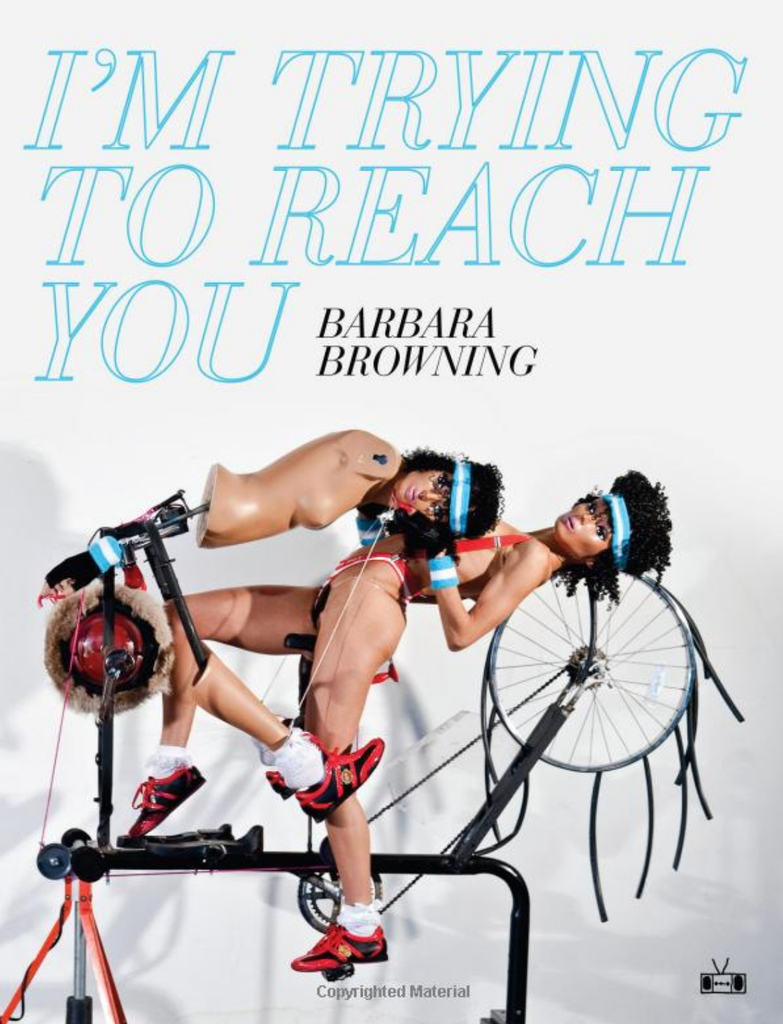
Barbara Browning’s I’m Trying to Reach You makes the reader cross between print and video. Alongside phone photos, the book includes YouTube screenshots; its dedication page gives a QR code and directs readers to the moth’s videos at www.youtube.com/AhNethermostFun/. As the story develops, those videos and selected viewer comments become part of the plot.
You can follow the book without opening a browser, but the grayscale screenshots and scene descriptions can only do so much. Watching the clips adds another layer—and exposes a detail the printed page can’t preserve: the audience’s changing size. The first of twelve videos had 1,011 views in April 2014, 1,500 when the book was taught again in 2019, and nearly 1,900 more recently. Later videos have far fewer views. That pattern suggests some viewers didn’t continue through the sequence, though the counts alone can’t tell us why.
Browning further blurs fiction and life with a double author photograph that strongly resembles the dancer called “the moth” in the videos. Reading means moving repeatedly between the paperback and the online clips. On a Kindle, the experience might feel more like following links through a digital text. The paperback’s friction—the shift between a fixed page and a changing video—may be exactly what makes the book linger.