Deciding whether to become a parent can feel intensely personal, yet family history and cultural expectations often shape the choice long before anyone makes it. These seven novels take that tension seriously. They explore motherhood as a desire, an obligation, a source of fear and a relationship that can extend well beyond pregnancy or birth.
That wider view also runs through The Meaning of Daughter, a multigenerational novel shaped by the author’s questions about her own parents’ influence. Its first-generation character, Merjan, wants to give herself to her art, while her Lebanese-Haitian community expects her to center marriage and motherhood. Immigration, cultural inheritance and ambition all inform her thinking. Her choices echo through the lives of her daughter and granddaughter over seven decades and across three countries.
The books below approach those questions from sharply different angles. Some focus on the possibility of a life without children; others examine pregnancy, inherited wounds or the difficult work of caregiving. Their shared insight is that the decision rarely begins or ends with one person.
Still Born by Guadalupe Nettel, translated by Rosalind Harvey
Still Born links the narrator’s decision not to have children with her friend’s attempt to become a parent. The narrator’s mother initially seems displeased when she learns her daughter has had her tubes tied. Then she offers a more complicated response: “It’s important to have someone to love, someone to take care of. It makes us less selfish.”
The novel tests that idea without reducing care to parenthood. The narrator helps her friend care for a baby with severe disabilities, supports a neighbor recovering from an abusive relationship and looks after the neighbor’s young son. Those relationships give the book a broader definition of motherhood: care can be deliberate and meaningful even when it doesn’t involve having a child of one’s own.
Burnt Sugar by Avni Doshi
In Burnt Sugar, the prospect of becoming a mother arrives inside an already damaged mother-daughter relationship. The protagonist has to care for her mother, who has dementia, despite the abandonment she experienced as a child. That history gives her own decision to have a baby a troubling edge: she sees motherhood partly as revenge and partly as a chance to begin a relationship untouched by her past.
But inheritance is difficult to outrun. The novel’s gothic ending sharpens the contradiction between a daughter’s wish to start over and the force of trauma carried across generations. Doshi makes the protagonist’s desire legible without pretending it will resolve the old wounds.
Cold Enough for Snow by Jessica Au
Jessica Au builds her novel around a trip to Japan shared by a daughter and her mother. They visit museums, take photographs and eat in restaurants, while the narrator quietly considers whether she wants children. The question emerges through small observations rather than a direct debate, and that restraint suits a story about how much of the self is formed in relation to other people.
The narrator’s mother describes a life in which she never thought of herself “in isolation,” but understood herself as linked to others. That idea becomes a point of pressure as the narrator continues alone on part of the journey. On a hike that lasts too long, she becomes frightened and tries to understand what she has inherited from her mother—and where her mother’s identity ends and her own begins.
One Leg on Earth by ‘Pemi Aguda
In the Lagos of One Leg on Earth, pregnant women are drowning themselves in what appears to be a supernatural pattern. Yosoye becomes unexpectedly pregnant and must decide whether to continue the pregnancy while facing the danger surrounding it. The situation makes motherhood feel at once intimate and public: her choice unfolds within a community confronting a terrifying force.
When a friend criticizes her decision to keep the baby, Yosoye considers the absence of her own mother and wonders whether someone with a mother like that could understand what a child might mean to her. Aguda draws out the hope Yosoye places in the possibility of a different bond, while keeping the threat close. Pregnancy becomes a psychological and social force, as well as a source of artistic energy.
Breasts and Eggs by Mieko Kawakami, translated by Sam Bett and David Boyd
Kawakami’s novel follows two sisters whose desires for control over their bodies are difficult for each other to accept. In its first section, narrator Natsuko hosts her sister Makiko and Makiko’s daughter in Tokyo. Makiko is considering breast implants, a decision Natsuko can’t understand—and doesn’t initially try to understand.
The second section shifts the conflict. Natsuko wants to have a child on her own, and Makiko questions that choice, drawing on her own experience and their shared childhood to imagine how hard single motherhood might be. Natsuko turns to friends, colleagues and others in her community to make sense of what she wants. The sisters’ disagreements reveal how bodily autonomy can coexist with a painful desire to be understood by those closest to you.
Red at the Bone by Jacqueline Woodson
Red at the Bone begins with an unexpected teenage pregnancy, then widens its focus to include the young couple’s parents. Woodson’s rotating first-person perspectives move backward and forward in time, showing the older generation’s worries about what the pregnancy will mean for their children’s futures. Yet, as grandparents, they can’t imagine wishing their granddaughter had never been born.
That change in perspective doesn’t erase the pain surrounding the pregnancy. The novel also traces how the young parents’ relationships with their own parents affect their efforts to be close to their daughter. Its shifting timeline captures a difficult truth: the emotions surrounding an unexpected birth can wound a family, then change as its members grow into new roles.
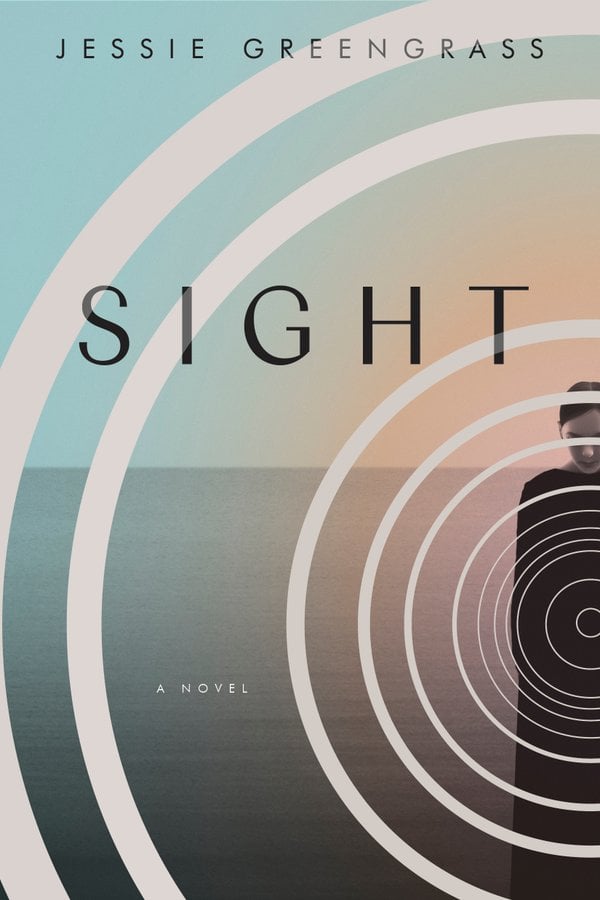
Sight by Jesse Greengrass
The narrator of Sight is pregnant with her second child when she begins revisiting the period before her mother’s death and an earlier childhood stay at her grandmother’s house. Her memories are tender, but they’re also unsettled by loss and by the demands of her own first pregnancy.
Greengrass gives those recollections an unusual frame. The narrator considers the history of the X-ray, the relationship between Sigmund and Anna Freud, and the making of the first anatomical drawing of a fetus in utero. These essayistic digressions connect questions of seeing and knowing to the narrator’s attempts to understand the women who shaped her. Pregnancy prompts a return to family history, but the book leaves room for uncertainty about what memory can explain.
Motherhood as inheritance and choice
Across these novels, the decision to have a child rarely stands alone. It takes shape alongside memories of a parent, expectations inherited from a community, physical autonomy and the possibility of caring for people outside one’s immediate family. The books don’t offer a single answer to what motherhood means. They make a more useful point: any choice about becoming a parent carries a history, and understanding that history can change what the choice asks of us.


