Modern witchcraft has a history worth questioning. Many familiar practices draw on Wicca, a religion founded by Gerald Gardner, while popular accounts of an unbroken ancient witch cult rest on claims historians have challenged. A useful reading list, then, should do more than gather spells and folklore: it should make room for the people, politics and storytelling that shaped the ideas we now call witchcraft.
That’s the approach Lindsay Merbaum took after becoming a witch herself. A self-described kitchen witch, she began exploring the subject seriously about a decade ago. The first books she found felt disconnected from the traditions they described, prompting a deeper search into where modern witchcraft came from and what had been lost or misrepresented along the way. Her recommendations below move between historical inquiry, memoir, fiction and cultural criticism. Together, they offer a varied introduction rather than a single account of what witchcraft means.
History, evidence and inherited stories
One of the first historical claims Merbaum encountered was the “Burning Times”: the idea that people executed during witch trials were witches killed by burning. The record is more complicated. Most people sentenced to death in those trials were hanged, not burned. Margaret Murray helped popularize the broader narrative in The Witch Cult in Western Europe, published in 1921. Murray treated accused witches’ confessions as evidence of a surviving pagan religion, although those statements were often extracted under torture.
Murray’s ideas also shaped Gardner, who cited an ancient goddess cult as an influence on Wicca. She wrote the introduction to his 1954 book Witchcraft Today. Gardner, in turn, drew in part on Aleister Crowley, a controversial occultist whose treatment of women and use of other cultures’ ideas invite scrutiny today. Crowley founded Thelema in the early 1900s, a religion centered on self-actualization. Its best-known phrase, “Do what thou wilt shall be the whole of the law,” comes from The Book of the Law. He also popularized spelling “magic” with a “k.”
For readers interested in how history, medicine and power intersect, Barbara Ehrenreich and Deirdre English’s Witches, Midwives, and Nurses is a pointed place to start. First published by the Feminist Press in 1973, the book examines how women healers were pushed out of medicine and how control over women’s bodies became a source of institutional power. Its argument still speaks to contemporary debates about healthcare.
Lindsey Stewart’s The Conjuring of America brings another vital history into focus. It follows Black women’s magic and healing traditions, including the work of enslaved conjure women who used ancestral knowledge and local remedies to support childbirth and treat illness. Drawing on research, mythology and firsthand accounts from enslaved people, Stewart traces the influences of conjure in America and the knowledge passed between generations.
AK Blakemore’s novel The Manningtree Witches turns to the violence of accusation. Set amid the hardship of civil war, it follows young Rebecca and her mother as they face charges of witchcraft from a community under the influence of witch hunter Matthew Hopkins, a historical figure. The novel’s focus on hunger, fear and scapegoating gives the persecution a social context, while Blakemore’s poetic voice shapes its atmosphere.
Memoir, identity and the practice of becoming
Amanda Yates Garcia’s Initiated follows a personal search through sex work, poverty, travel, love and magic. The memoir charts how Garcia became known as the Oracle of LA, but its wider interest lies in how a life’s difficult experiences can be transformed into new sources of meaning. One line captures that perspective: “Witches use magic to compost suffering into something nourishing, something that brings the world around us to life.”
Ariel Gore’s We Were Witches also blends personal experience with a search for creative and spiritual agency. Gore writes about trying to finish her education, build a life as a writer, manage her mental health and raise her daughter while making ends meet. The book crosses genres and unsettles easy divisions between story and argument. Its attention to shame, identity and the pressures faced by mothers makes witchcraft part of a larger inquiry into who gets to claim power.
Alex Mar takes a more openly skeptical starting point in Witches of America. While researching the occult for a documentary, Mar joins rituals and spends time with pagan groups, even taking on an apprentice role. The memoir’s uncertainty gives it a distinct place on this list: it follows someone trying to understand what belief might mean without pretending the questions are settled. The book also drew criticism over what it disclosed about its subjects and how it portrayed them, a reminder that documenting spiritual communities carries its own responsibilities.
Fiction that makes room for strange magic
Mona Awad’s Bunny brings witchcraft into the world of elite creative writing. Samantha Mackey feels isolated in her MFA program, where a tight-knit group of wealthy classmates call one another “Bunny.” When they invite her in, she’s drawn to their extravagant, unsettling circle, even as the choice threatens her friendship with Ava. Awad uses the premise to explore loneliness and belonging through surreal, sharply observed fiction. The story continues in a sequel.
Tracy Cross’s Rootwork, the first book in The Conjure Series, is set in Louisiana in 1889. Three sisters arrive at their Aunt Teddy’s home for the summer, where the family matriarch teaches them hoodoo alongside lessons about survival. Their new freedom doesn’t last untouched: tragedy changes the course of the summer. Cross combines historical fiction, folklore and horror in a story shaped by love, revenge and magic.
Wayétu Moore’s She Would Be King connects supernatural power with the history of Liberia. Three extraordinary characters come together: June has superhuman strength and is bulletproof; Norman can disappear under certain conditions; and Gbessa, branded a witch, cannot die. Their story moves from Virginia and Jamaica to the colony of Monrovia. Moore asks what freedom can mean in a racist, Christianized world, with the figure of the witch carrying both immense power and the burden of being cast out.
Sylvia Townsend Warner’s Lolly Willowes offers a wry change of pace. Its middle-aged protagonist leaves her demanding family in London for a country village, where she answers the devil’s call. Witchcraft may involve a pact, but Warner’s satire locates the greater danger in the restrictions of ordinary life. The book remains a playful study of independence and the cost of refusing an expected role.
Witches in culture and public life
Pam Grossman’s Waking the Witch pairs memoir with a wide-ranging account of witchcraft in contemporary culture. Grossman moves through fairy tales, horror films and pop culture, linking familiar images to the history behind them. Along the way, she discusses figures such as Victoria Woodhull, a free-love advocate and the first woman to run for U.S. president, as well as Spiritualists, abolitionist feminists who sought communication with the dead. The book also considers the influence of The Wizard of Oz.
Kristen J. Sollee’s Witches, Sluts, Feminists examines the witch’s image across art, media, literature, pop culture and politics. Sollee traces how women have faced persecution for appearing witchlike, alongside the resistance that has grown in response. Research and interviews take the discussion into sex, sex work, queerness, pornography, pleasure and reproductive rights. It offers a lens for understanding why the witch remains a contested figure as well as a source of identification.
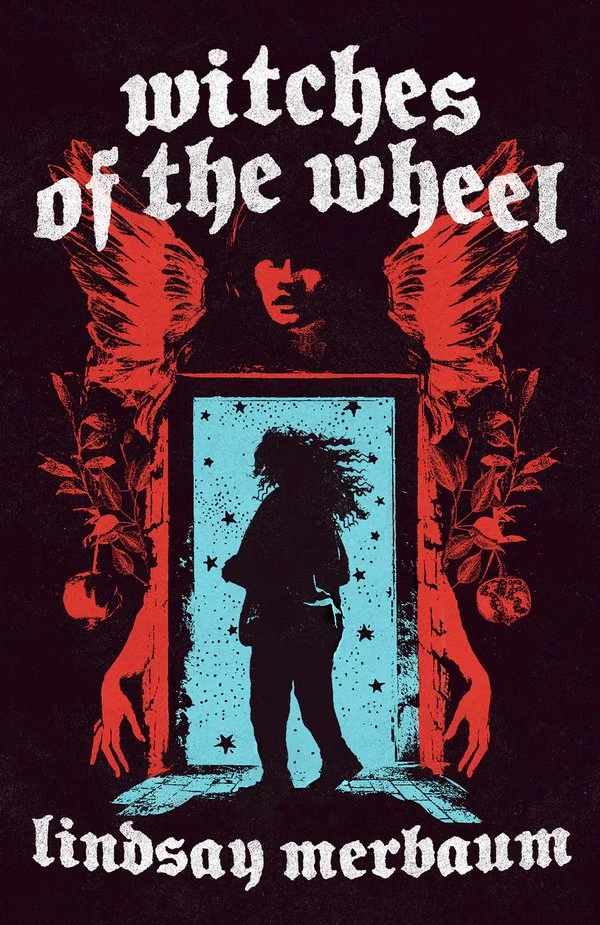
These books don’t settle on one definition of witchcraft. They show how the subject changes across history, personal practice, fiction and political life, while asking readers to look closely at who gets to tell those stories. For Merbaum, that work also shaped her own novel, Witches of the Wheel. Written over roughly eight years, it follows Gold, a young woman who sees spirits. After her mother dies, Gold finds work at a secret queer bar where bottles refill themselves; the bar also hosts a coven she hopes to join. An ancient goddess stands in her way, with a will to destroy. The book’s long revision process reflects a useful lesson for anyone following this reading path: stories about magic can begin with intuition, but they gain force through careful attention.


