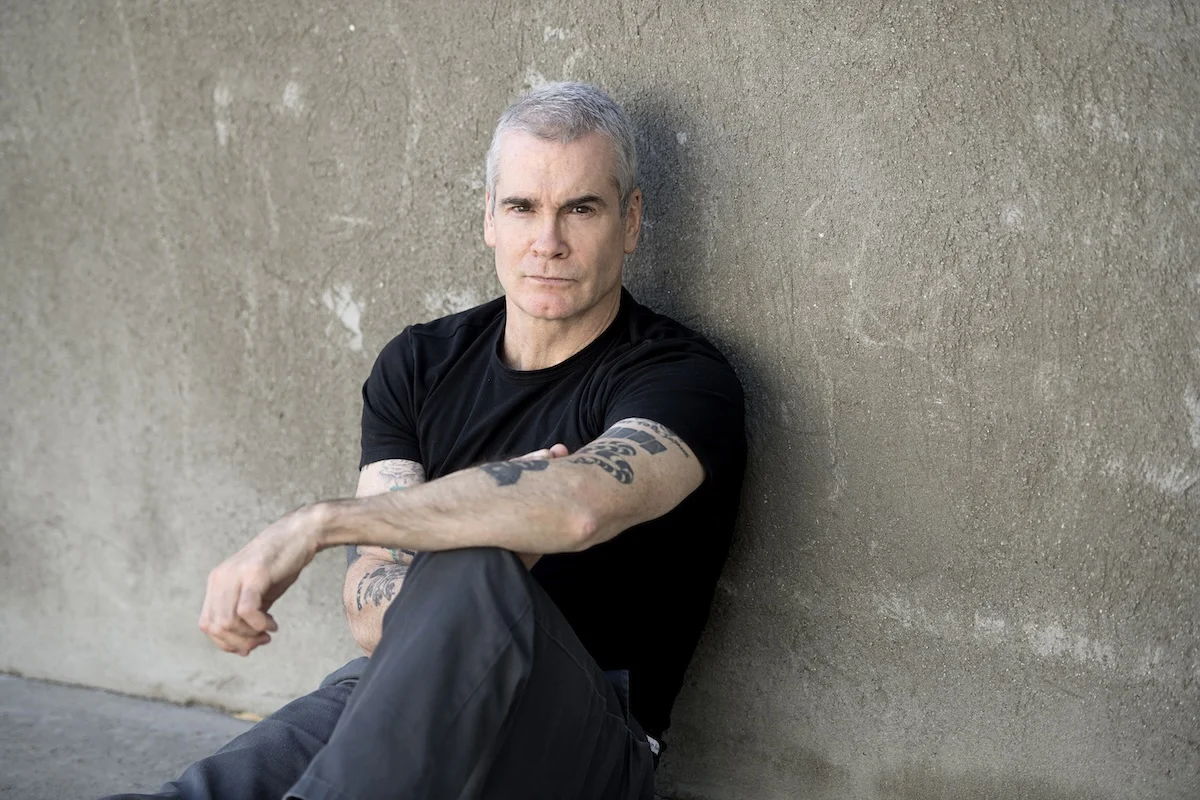
Henry Rollins has spent decades collecting the physical record of punk and garage rock. Now he’s preparing to let the public see some of it. His two-day Nashville exhibit, “Henry Rollins: Cool Evidence,” turns a private collection of more than 400 framed pieces into a public event—and offers a glimpse of the archival work he wants to make his life’s work.
The free exhibit runs November 6 and 7 at Radar615 Gallery, open from 2 p.m. to 9 p.m. CST. Posters, photographs, artwork and setlists will trace the history of bands including Minor Threat, the Stooges, Joy Division, the Cramps and the Gun Club. Black Flag will be represented, though Rollins says he’d rather keep items featuring his own face out of the show.
Rollins has been collecting for 47 years, and the scale of the archive has outgrown the walls of his Nashville home. Many pieces are carefully framed and stored; others sit among the records and tapes he has spent years organizing. The exhibit’s premise grew from a conversation with his longtime manager, Heidi May, who saw the collection covering the walls of his former Los Angeles house and told him it was time to share it.
His friend Jeff Gold, a music collector and appraiser, gave the idea a purpose: “Our job now that we’re old with stuff like this is to release joy.” Rollins says he’s holding on to that advice. He’s spending his own money to stage the Nashville event, with help from May and Cramps publicist Jo Murray. The approach reflects the do-it-yourself ethic that shaped his punk years: a small team, direct involvement and a willingness to pay for the work himself.
A collection built around the music
Rollins is wary of presenting himself as the attraction. In his workspace, among the books he’s written and collected, he points instead to a poster for Minor Threat’s September 23, 1983, show at Washington, D.C.’s Lansburgh Cultural Center. The band shared the bill with Trouble Funk and the Big Boys. Ian MacKaye, Rollins’ friend and former Minor Threat and Fugazi frontman, gave him the poster.
“That’s the last ever Minor Threat show,” Rollins says. He’d wanted the poster for years and took it straight to a framer. It will be one of the artifacts on view. For him, the value lies in the object’s connection to a scene and a moment, not in its status as a piece of personal memorabilia.
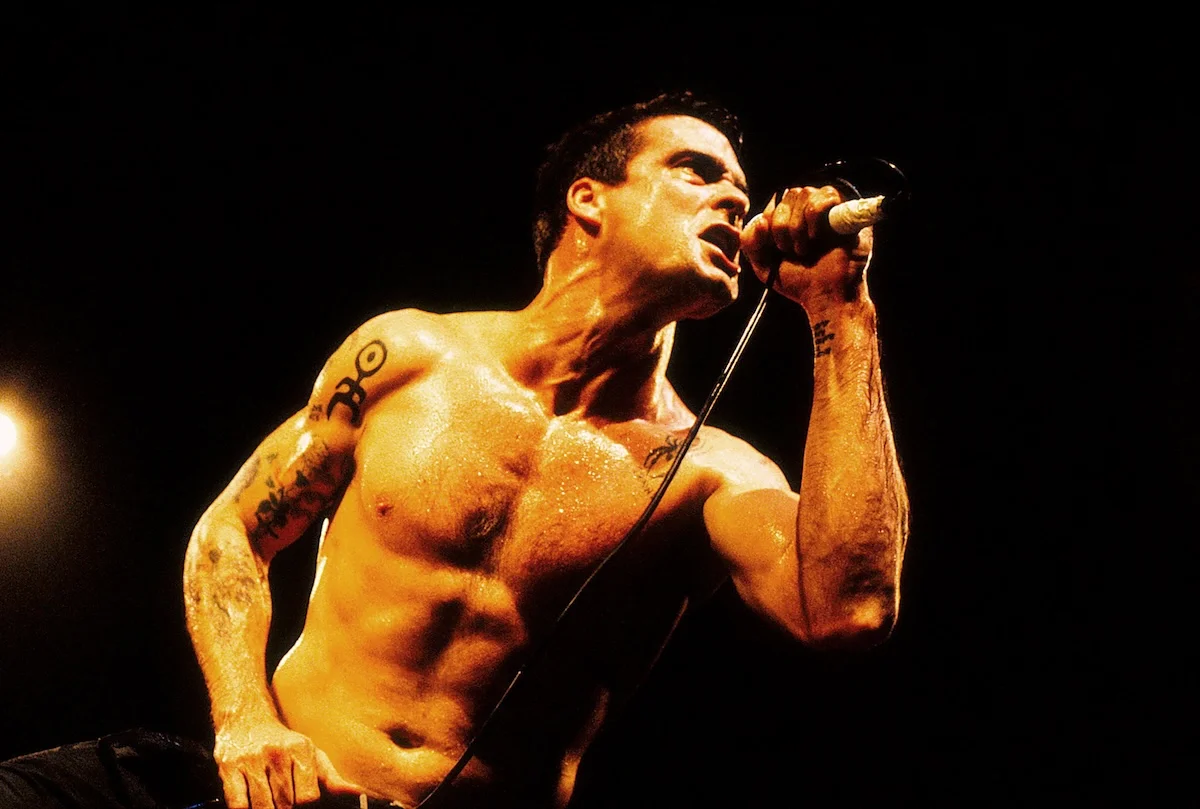
The same instinct shapes Rollins’ work as an archivist. He’s preserving materials from musicians and scenes whose history can vanish when paper, photographs and tape are left in unsuitable conditions. A specialist from the Smithsonian Institution trained him in scanning, document handling and archival storage. He now cross-references negatives, flyers and receipts to check the provenance of the items in his care.
One major project involves the Cramps. Rollins worked with MacKaye and In the Red Records founder Larry Hardy to restore and release the band’s lost 1977 album, Gravest Gravy, earlier this year. A follow-up, More Gravy, is scheduled for November. The releases draw on a broader preservation effort: Rollins and Hardy spent years persuading Cramps guitarist Poison Ivy to let them remove the band’s tapes from her garage, where the environment wasn’t suitable for keeping them.
After Ivy agreed, Rollins flew to Los Angeles, rented a van and drove the materials from Glendale to Nashville. He’s been moving the Cramps’ master reels into archival boxes at his own expense. The collection also includes records with uncommon histories: the only known surviving acetate from Iggy Pop’s high school band, the Iguanas; Buzzcocks acetates made by producer Martin Rushent; and one of just 25 original U.K. Cramps test pressings of Songs the Lord Taught Us, featuring an alternate version of the album.
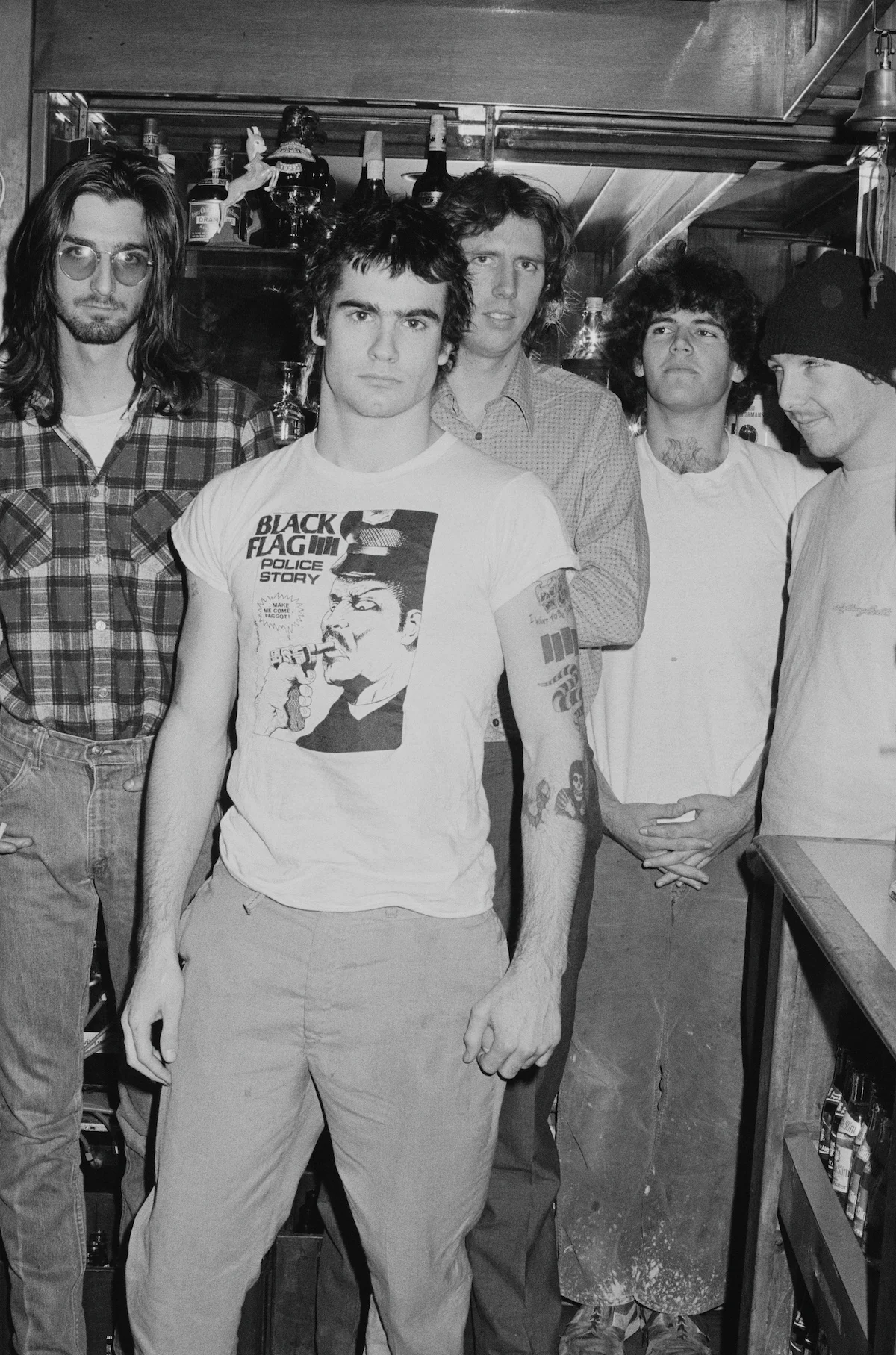
L-R: Dez Cadena, Henry Rollins, Greg Ginn, Bill Stevenson, and Chuck Dukowski of Black Flag in London, United Kingdom, 1983. (Credit: Erica Echenberg/Redferns)
Preservation beyond Rollins’ own shelves
Rollins has taken on materials from other artists as well. He and his team are cataloging tour scrapbooks, stage clothes, photographs and related pieces from Kid Congo Powers, who played with the Gun Club and the Cramps. He’s also helping Alicja Trout of Lost Sounds document more than 300 flyers, setlists and posters from Memphis’ punk scene.
That work helps explain why the collection occupies so much of Rollins’ time and money. He moved from Los Angeles to Nashville five years ago, driving cross-country in an old Mazda. He describes his life as modest: bargain groceries, plain clothes and a daily work routine. The house is comfortable, but he says much of what he earns goes into preserving the archive. “I’m comfortable. I work every day,” he says. “That’s kind of my ethos.”
His home includes a purpose-built space for records and archival work. A previous owner added the room for Monday night football gatherings; Rollins bought the house in part because that addition gave him a place for his collection and equipment. The area has dedicated electrical infrastructure for the audio system and tape transfers, plus its own heating and cooling system to help control temperature and humidity.
“This is the best work-listening space I’ve ever had,” he says. The setup matters because his collection goes well beyond framed pieces: the room houses a vast record collection and equipment for listening and transferring tapes. Rollins calls the sound system’s power supply “a fire hose of power.” The space is designed for long sessions with the music and the work of keeping it accessible.
From Nashville to a wider audience
The upcoming exhibit is a starting point. After a year promoting his memoir, Bait Dog Boy, due from Random House on March 2, 2027, Rollins plans to expand the pop-up into longer-running museum and gallery shows. He hopes to take them to major U.S. cities and internationally, with ticket prices kept low and as much of the programming as possible free.
Rollins, now 65, has worked as a singer, author and radio host, including hosting a weekly show for KCRW. His Nashville workspace holds his books, from Get in the Van to the 10-volume Fanatic series, alongside the tools he uses to write and preserve music history. The memoir adds another project to that mix, but his stated long-term focus is clear: setlists, flyers, master tapes and test pressings, shared with the people who care about the music.
“For me, taking care of physical artifacts—and sharing them with fans—is what I want to do for the rest of my life,” Rollins says. The exhibit makes that ambition tangible. Its larger test will be whether this private archive can travel, reach new audiences and keep fragile pieces of punk history in circulation.


