5 Best Sci-Fi Sitcoms That Take Place on Earth
The trick behind a good Earthbound sci-fi sitcom is simple: put something impossible in an ordinary home, then let everyday life do the damage. That formula has been around for decades, and it keeps working because the comedy comes from the collision between the strange visitor and familiar routines. Here are five shows that made that contrast count.
Television’s mid-century fantasy sitcoms helped establish the approach. The fantasy sitcom, sometimes called a “magi-com,” mixed domestic comedy with magic and other outlandish premises. Sally Field’s “The Flying Nun” is one example; another is “My Mother the Car,” the show Jerry Van Dyke chose over “Gilligan’s Island.” That series was far less successful, but audiences did embrace shows such as “Bewitched,” about a 400-year-old suburban sorceress, and “I Dream of Jeannie,” whose genie was 2,000 years old.
The sci-fi sitcom is a more specific branch of that tradition. Keeping the action on Earth gives the genre a useful anchor: aliens and other fantastical characters have to contend with apartments, families, work, and human habits. The premise may be odd, but the setting is instantly legible. That tension has produced more enduring comedy than its niche label might suggest.
My Favorite Martian
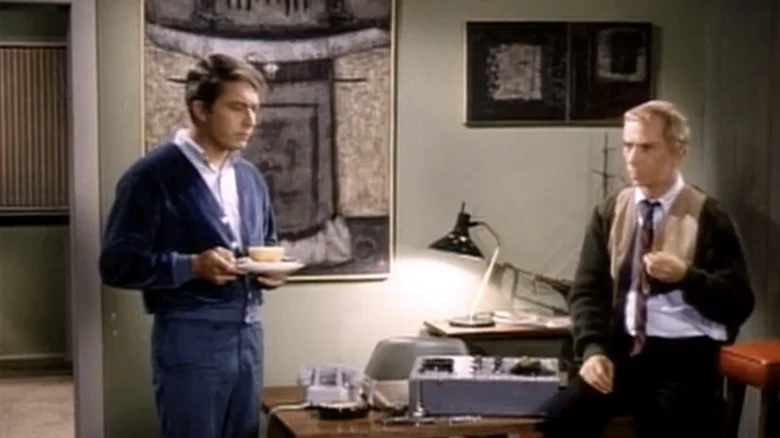
“My Favorite Martian” arrived in 1963 with a setup that now feels familiar precisely because later shows borrowed from it. Ray Walston plays Uncle Martin, a 450-year-old Martian whose spacecraft crashes on Earth. Los Angeles Sun reporter Tim O’Hara, played by Bill Bixby, finds him and lets him move into his garage apartment. They agree to hide Martin’s origins while he works on repairing the ship.
The show’s engine is the pairing: a young reporter sharing a home with an alien who doesn’t understand Earth, and who can move objects telepathically by flicking his index finger. Fish-out-of-water jokes meet odd-couple sitcom rhythms. It’s a foundational combination, even if later versions made it seem less original in retrospect. The series predated “Bewitched” and “I Dream of Jeannie,” and in 1964 welcomed “Gilligan’s Island” star Alan Hale Jr. as a guest actor—the same year he and the castaways began their ill-fated voyage aboard the S.S. Minnow. (Unless “Mister Ed” qualifies, “My Favorite Martian” is often considered the first fantasy sci-fi sitcom.)
3rd Rock From The Sun
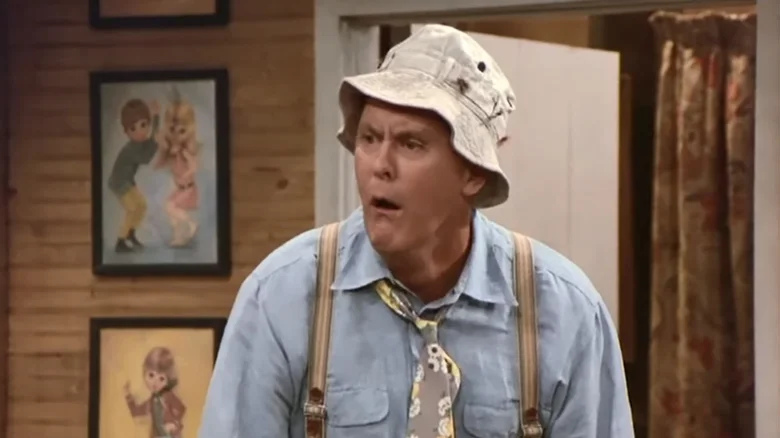
More than 30 years after “My Favorite Martian,” “3rd Rock from the Sun” showed that aliens trying to pass as human still had comic mileage. The premise is well-worn on paper; the performances made it sing. The NBC series became one of the big sitcom successes of the 1990s.
John Lithgow stars as Dick Solomon, an alien sent to Earth on a research project. His team includes security officer Sally (Kristen Johnston), lovable fool Harry (French Stewart), and information officer Tommy (Joseph Gordon-Levitt), the oldest of them all, trapped in the body of a teenage boy. They pose as a human family in a loft apartment, and their repeated misreadings of 1990s American customs supply much of the comedy.
Lithgow was already an accomplished actor, with two Oscar nominations and an Emmy for a guest appearance on “Amazing Stories” in 1986. His choice to star in a sitcom wasn’t a career retreat; he was working steadily, though he did break his rule against episodic television to take the part. These days, he’s also facing scrutiny over playing Dumbledore in the “Harry Potter” reboot. “3rd Rock” remains one of the decade’s best sci-fi shows.
Futurama
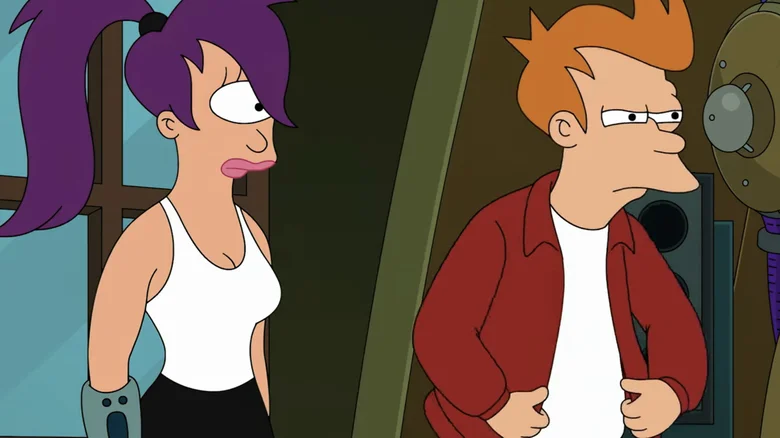
Calling “Futurama” a sitcom is accurate, but it doesn’t quite capture its reach. The situation is clear enough: Philip J. Fry freezes himself and wakes up 1,000 years later on an Earth he barely recognizes. But the series, like Matt Groening’s “The Simpsons,” uses that premise to do more than run a familiar comedy format.
In a 2000 BBC interview, Groening described the goal as “taking the idea of the future and science fiction and doing to science fiction what needs to be done to science fiction.” He also mentioned an idea for a show that would “demolish rock n’ roll,” which has yet to arrive. The sci-fi project, though, makes its point: decades of stories had imagined the future as a vehicle for solemn warnings about the present, while “Futurama” treats those grand predictions with irreverence.
Its 2099 Earth is unruly and unpredictable, and the jokes take aim at science fiction’s conventions without losing affection for the genre. That balance matters. “Futurama” is consistently funny, but it also keeps the warmth that made “The Simpsons” more than a string of gags.
ALF
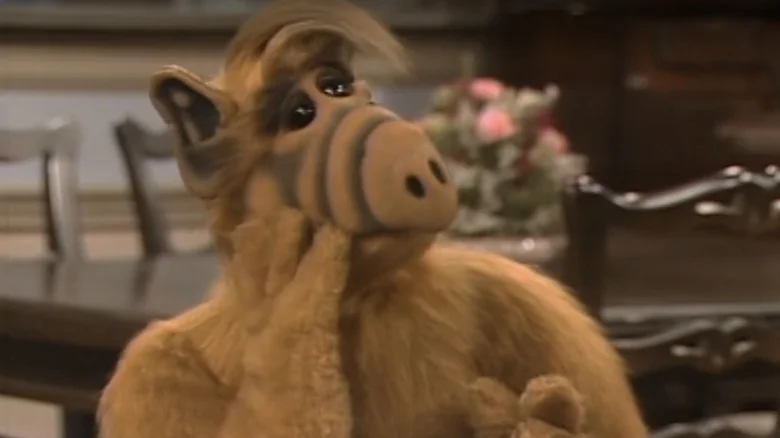
“ALF” was hard to miss in the 1980s, even if you didn’t grow up watching it. Like “My Favorite Martian,” it brings an extraterrestrial into a California home: ALF, short for Alien Life Form, moves in with the Tanner family. His real name is Gordon Shumway. Paul Fusco puppeteered him, while Michu Meszaros played him in full-body scenes.
The character could have been a one-note visitor, but ALF’s wisecracks and underlying sweetness gave him more range—and his appetite for the family cat supplied a decidedly less cuddly running joke. A generation of kids took to him, soon finding another sharp-tongued sitcom favorite in Bart Simpson.
Under the alien premise, “ALF” is a fairly conventional family comedy. That’s part of its appeal: the grounded household gives the high-concept jokes somewhere to land. For most of the show’s four seasons, ALF stays in the Tanners’ home, though his occasional trips outside lead to the bleak ending of this beloved ’80s sci-fi series, with the U.S. military capturing him. His story continued in the 1996 TV movie “Project: ALF,” and the character lingered in pop culture long after the series ended in 1990.
Mork & Mindy
Mork & Mindy made the alien-on-Earth sitcom its own
The premise of “Happy Days” spawning several spin-offs was familiar TV territory, but “Mork & Mindy” became something special. It launched Robin Williams into stardom as Mork, an alien from Ork sent to observe humanity. His assignment didn’t survive contact with real life: after landing in Colorado and moving in with Mindy McConnell (Pam Dawber), Mork became part of the community he was meant to study.
The show’s central joke was the gap between Mork’s alien perspective and human habits. He and Mindy fall in love, while she helps keep his identity under wraps and he keeps finding new reasons to be baffled by Earth. That setup gave Williams room to turn confusion into comedy. The premise mattered, but the performance is what made it last; “Mork & Mindy” still ranks among the best sitcoms of the ’80s.
There’s a neat bit of lineage behind it. Mork first appeared on “Happy Days” in “My Favorite Orkan,” a send-up of “My Favorite Martian.” The spin-off carried that older alien-comedy idea into the 1980s, then helped set the pattern for “3rd Rock from the Sun.” If you’re tracing sci-fi sitcoms set on Earth, “Mork & Mindy” is a key link in the chain—and Williams is the reason its familiar premise still feels alive.


