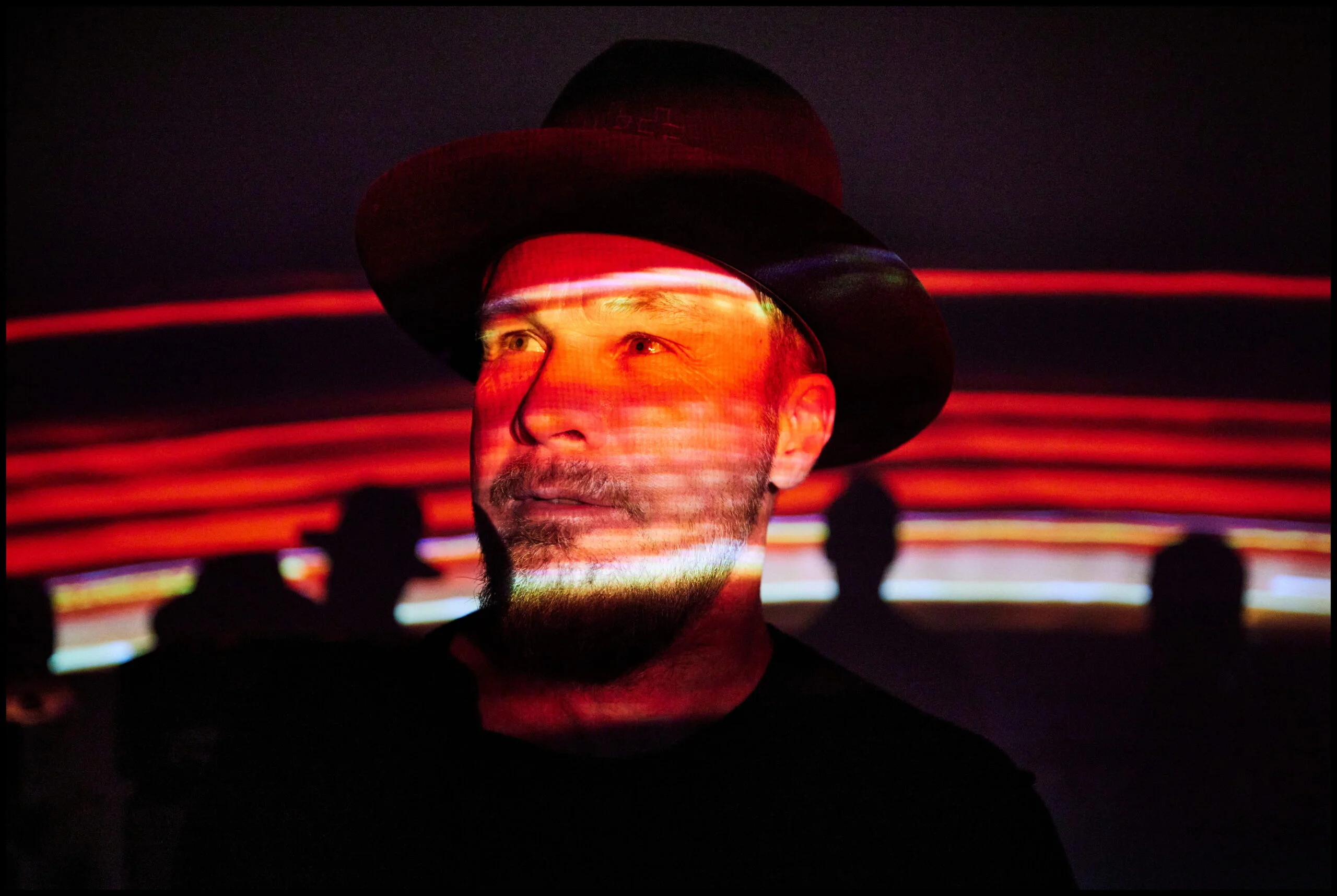
After the Cancellation of ‘Call Me, I'll Hide The Body,’ What Comes Next?
Before last Friday, the Nigerian author Jerry Adedayo Falade was all but unknown save for a small group of publishers who participated in an auction for his novel, Call Me, I'll Hide The Body, and the numerous agents he'd vetted prior to signing with Marc Gerald at Europa Content, whom he enlisted to sell in the U.S., and Sandy Hodgman, to sell U.K. rights.
Both agents effectively secured six-figure and seven-figure deals in the U.K. and U.S, respectively, and drummed up interest in screen rights, with offers for the crime novel reportedly topping $2 million. Whether this number includes foreign rights or film and TV adaptations remains unknown, because on July 29, Falade’s agents withdrew Call Me, I'll Hide The Body from submission.
Until then, Falade, who is currently a graduate student at Southern Methodist University in Dallas working towards a PhD, felt that he had won the literary lottery. His book starred a Nigerian immigrant protagonist, reflecting his research interest in Black masculinity in contemporary African American and African diaspora literature.
All of this came crashing down as a result of the accusation that his book was written with AI. In an email sent by Hodgman to publishing professionals who had been involved with the manuscript, which was shared with PW, Hodgman wrote that she and Europa "could no longer substantiate" that the novel was entirely human-written. The book was pulled, and Falade reported that his agents and publishers cut ties with him.
Macmillan's Minotaur imprint purchased the book in the U.S., and editors had deemed it worthy of being a lead title in a forthcoming publishing season, according to reporting by the Bookseller. The quality of the work was confirmed by Hodgman, who said the book "dazzled" Europa and "top publishing professionals around the world." Gerald concurred, telling the Bookseller that "everyone fell in love with" the book, and that "however it came to be drafted, it's amazing."
How exactly the book was judged to have been written by AI remains unknown. Some industry publications said they themselves ran the manuscript through Pangram, a leading AI checker. Falade told PW that if this was the case, he felt it was a violation of his copyright, as he'd given no individual or institution permission to feed his manuscript to a large-language model.
In several conversations with PW, Falade has maintained that he wrote Call Me, I'll Hide The Body himself. As evidence of his commitment to writing, he shared a pair of text messages, both from 2021 (predating the advent of ChatGPT), showing that he'd already been working on a piece of fiction. One, from a professor at his previous graduate school in Germany where he obtained his masters, was effusive in its praise of the quality of the writing. He has since posted some of this material on his Instagram page.
Falade has spoken with a variety of publications, including the Guardian, in which he suggested that the cancellation of his book may have been motivated by racism.
"Three Black authors received major publishing deals this year, and all three later had deals cancelled or disrupted following suspicions about AI," he told the Guardian. Though he declined to name which authors, the Guardian noted that H.M. Wolfe, author of Daggermouth, recently faced and denied accusations of using AI in her work.
"There seems to be a troubling assumption that when a Black writer produces work that attracts significant attention, the work could not possibly be their own. Meanwhile, there are popular white writers who have publicly mentioned using AI for their writing processes, and they're still doing fine," Falade added.
Fallout
Others have different theories. In his reporting on the situation for Deadline, Mike Fleming Jr. speculated that the deals were called off because AI-generated texts cannot be copyrighted. "Conceivably, a rights buyer would have no more protection than anyone publishing a work in the public domain," he wrote.
After Hachette cancelled Mia Ballard's Shy Girl for suspected AI use earlier this year, publishers may also be wary of the unwanted attention that AI allegations can attract.
Conversations between Falade and PW have been largely off the record, with Falade sharing additional emails from a wide range of supporters. He expressed concern for his physical and mental well-being in the wake of recent events, and said he's still trying to assess the situation and figure out what comes next.
Falade also expressed appreciation for those who showed him "solidarity" and said that over time, given the opportunity, he'll prove he did not use AI to write Call Me, I'll Hide the Body.
Looking ahead, as these cancellations continue to pile up, the industry may soon be forced to codify policies to address similar situations as they arise. It is not uncommon for self-publishers, aspiring authors, and even established authors to utilize AI. Coinciding with the Falade news was an online furor over YouTuber and author Hank Green’s use of AI to script his videos.
PW reached out to numerous other people involved in the situation, including Gerald, who was on vacation and unavailable to make further comment, and Hodgman, who declined to comment.
Earlier, in her email announcing the cancellation of the book, Hodgman wrote: "This raises so many questions about the nature of authorship and what AI means for this industry, but those are questions for another day."
For its part, the American Association of Literary Agents (AALA) told PW that the responsibility falls on the author to be fully transparent, and when they are not, the agent has the right to terminate the relationship.
"The author-agent relationship depends on trust and honesty. Authors have a responsibility to be transparent about how a manuscript was created, including whether and to what extent generative AI was used," Regina Brooks, president of the AALA, said in a statement. "Without that information, an agent cannot adequately evaluate questions involving originality, accuracy, copyright, contractual obligations, or compliance with a publisher's policies."
Brooks explained that, when material information is withheld, "the risk does not remain with the author—it extends to the agent who submits the work and places their professional judgment and reputation behind it, as well as to the editors and publishers considering its acquisition."