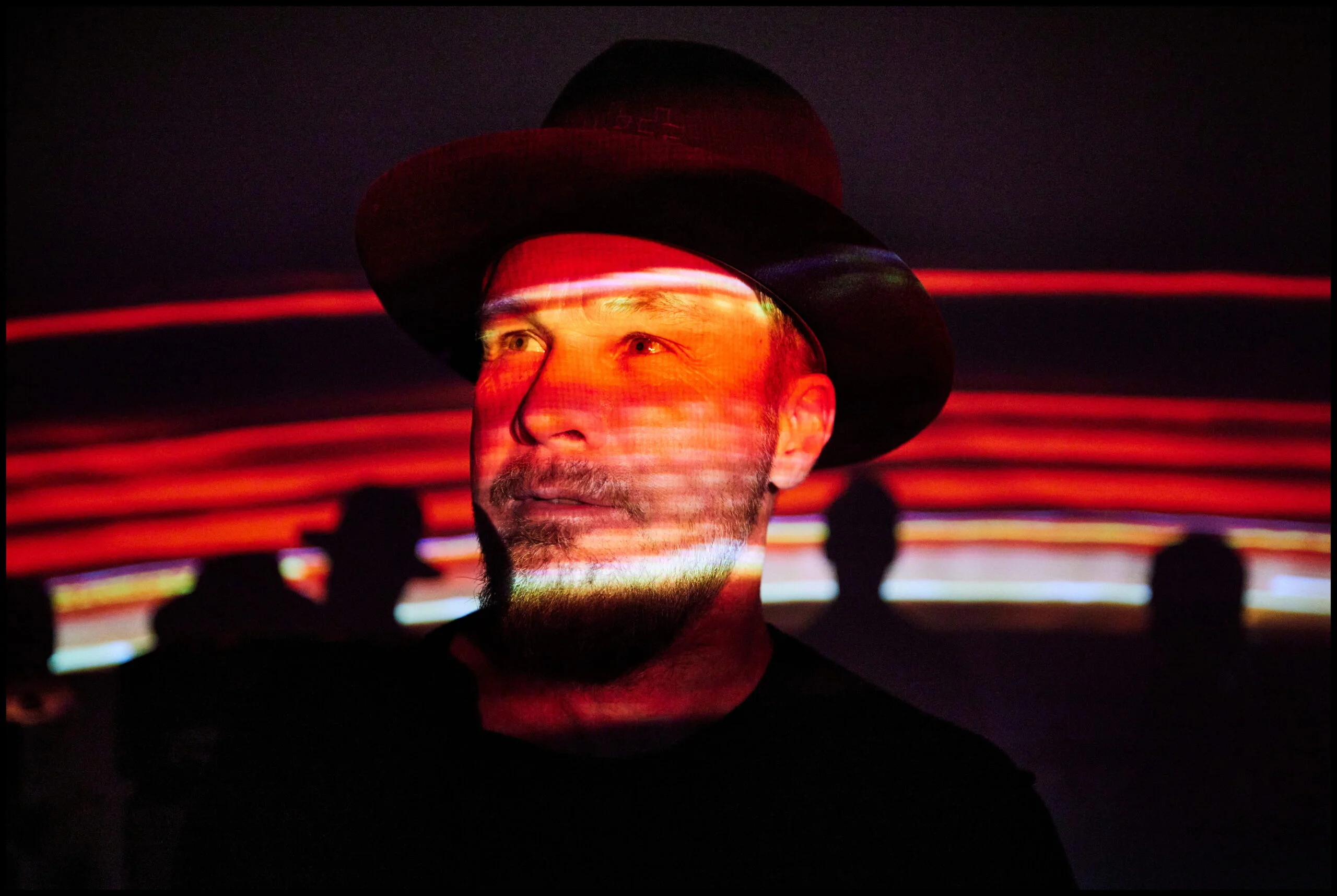
Josh Silver’s ‘Fruit Fly’ Is a Send-Up of the Publishing ‘Machine’
Josh Silver has lived many lives. The 36-year-old English author—whose debut adult novel, Fruit Fly (Crooked Lane), feels destined to dominate summer’s social feed—started his working life as an actor, performing on Broadway and London’s West End. His twenties brought professional highs but they were also defined by addiction—to drugs and alcohol, and, as he describes it, to “validation.”
After getting sober and stepping away from acting, Silver retrained as a mental health nurse, working on the front-lines of what campaigners describe as a mental health crisis in the UK. He began writing YA books, including the dystopian thriller, HappyHead (Delacorte). And that brings us to Fruit Fly, where the characters partake in the three pillars of adulthood: sex, drugs, and Google docs.
Silver’s own backstory is relevant here because, as he tells PW, the protagonists of Fruit Fly are like two beasts that live inside him. There's Mallory, a thirty-something author who had a breakthrough novel in her twenties, but is now completely devoid of inspiration. Then there’s Leo, a gay man in his early twenties who is addicted to “Chemsex”—the practice of (mostly) gay men meeting up to have sex under the influence of hard drugs in London. After a chance meeting with Leo, Mallory becomes fascinated by him, and she begins to turn his story (or is it?) into a novel, feeding the publishing industry’s desire for more books with “sad, gay, dark” themes. But we soon learn that she and Leo are not so different after all.
Ahead of its U.S. release, Fruit Fly has been optioned by A24 for TV. Silver, who will be an EP on the series, says that it was a “surreal” experience joining Zoom calls about the “competitive” auction from his car, while on work breaks. He won’t say which actors he’d cast, but after Anne Hathaway was given a copy in a recent interview, he’d “love to know what she thinks of the book.”
Silver spoke to PW about his viral success, the tension between his own story and the book’s characters, and some of the complex (and philosophical) questions at the heart of it.
One of the central themes in this book is addiction—not just Leo’s to drugs, but it seems like Mallory has an addiction to attention and validation, too?
Addiction comes in many forms. There's substance abuse—and I have my own experience with that. When I got sober, I learned that it comes up in other parts of your life. Mallory represents parts of me as well—she definitely has an addiction to chaos, and to other people and the way they can change how she feels internally, which is represented not only with her narcissistic husband, but also how she is desperate to be seen and validated. So she finds Leo and she suddenly feels this way of fulfilling both of those needs inside her.
Both Leo and Mallory are very “therapized”—they could both deliver a very convincing explanation of their behavior patterns, but they’re stuck repeating them. It’s one thing to know where behavior comes from, but it’s a much more difficult thing to actually change, right?
I spend a lot of time thinking about how self-awareness and knowledge does not equal change—that’s exactly what I was trying to write about. We can float around saying what our wounds are, what our attachment styles are, and we live in a world of Instagram where you can readily self-diagnose yourself and you can talk about it online. But what not many people talk about is how to stop it. I hate saying this, because it feels so Instagramm’d now, but at some point we have to do the work and be like: “I don't want to be like that anymore!” Mallory and Leo are both incredibly self-aware people—and being self-aware can allow you to justify shitty behavior.
Something I really loved is the sheer disdain for the publishing industry—and the creative industries at large—that weaves its way through this book. It’s very meta, in that it satirizes the publishing industry’s desire to platform stories about minorities suffering, while also engaging in it, to an extent?
It became so meta. I'm not just sending up the publishing industry—I'm sending up authors. And I'm aware that I'm an author and that I'm part of the machine that is creating and providing entertainment for money. What we as authors choose to write about—and whether we follow trends, or whether we're following money or if we're following what influences us—I am a part of all that. And I’m very aware that I'm asking the question about whose right it is to tell what story, while telling the story from the point of view of a woman, which I am not! That's part of the question, too.
People love to imagine the true story behind works of fiction. You’ve spoken about your history of Chemsex addiction and the similarities between you and Leo. How are you navigating the people’s desire to project your story onto your work?
Because I’m satirizing people's stories, there is possibly an expectation for me to authenticate the story I'm telling. I've had conversations with my own publisher about how far I go—and I'm fine with saying I have experienced some of what Leo has experienced, but certainly not everything. He is a creation from my mind, but all characters that I write are based in my experience, because that's where it all comes from. I do think that it is an interesting meta point now, where I feel like I have to validate Leo's story, because I've written a book about authentic stories, but I don't actually think that should have to be the case. I have a lot of friends who are actors and there's this question of: “Do gay parts need to be played by gay actors?” But the end point of that argument is that you can only play yourself and that negates the idea of what acting is. We have to allow creative freedom and learning from other people's experiences in order to create stories. So I'm happy to talk about my experience, but I also also have to be careful with how far I go, because I don’t want to say everything.
Leo and Mallory are both performing all the time—they know how to tell people what they want to hear. Is there such a thing as one “authentic self”? Or are the versions of us that we present all forming part of an authentic self?
As a writer, I enjoy being able to show the juxtaposition from what the characters are saying, and what they're thinking. For me, in my life, there's often been a huge gulf between how I'm feeling and how I'm presenting. And is there an ethical line between performing and lying? Often, so much of this performing a version of ourselves is about survival, because we're trying to get by and we're trying to succeed. But at what point does that become lying? That’s definitely a central tension in the book.
Another very meta part of this is that Fruit Fly is receiving the type of viral success that Mallory craves. What has that been like for you?
I’ve learned that social media has the power and the ability to be “word of mouth” at a million miles an hour. It's been very fast and my life has totally changed from how it was before. I'm not a nurse anymore—and we'll see how long that lasts—but I get to focus on writing and call myself an author. And I've had to learn a lot about external validation and what that does to me, and how people talk to you differently when you’re a success. It feels like a great moment, but I've learned throughout my own life that you have highs and lows and peaks and troughs and nothing is permanent. It’s nice to be connecting with the gay community—a community that I love. Seeing people read my book is wild, strange and very fun.