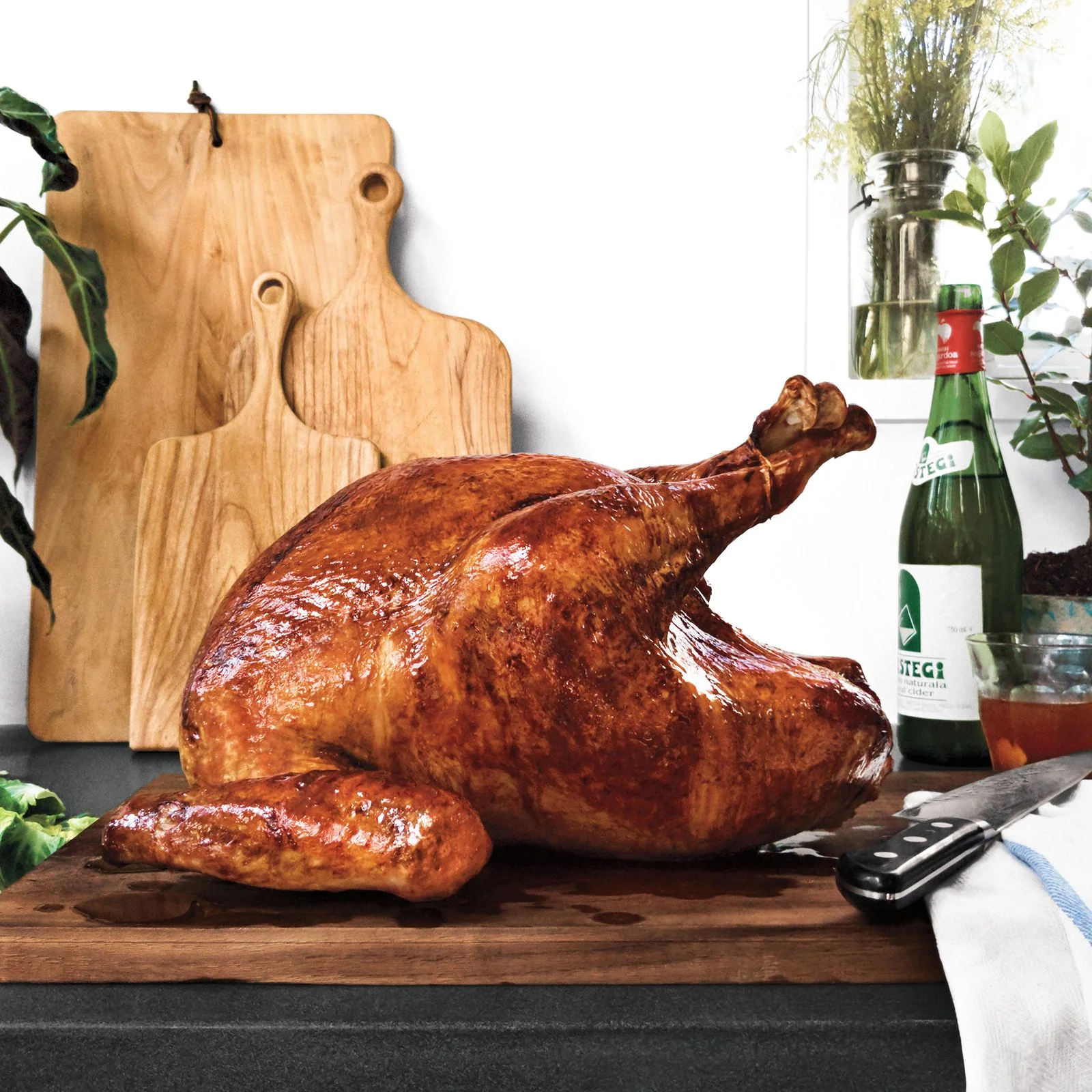
Dry-Brined Roast Turkey with Crisp Skin and Honey Herb Glaze
2026-11-03 22:14
845 views
Salt and brown sugar season the turkey ahead of time, while uncovered chilling helps dry the skin for crisp roasting and a glossy honey herb glaze.
Dry brining changes the turkey’s texture with little fuss: salt and brown sugar go on ahead of time, and the fridge does the rest. The method needs at least 12 hours and can run for up to two days. Salt helps the meat hold moisture; leaving the bird uncovered lets its skin dry out so it browns better. No brining bucket required.
Why this method works
A wire rack set over a rimmed baking sheet gives hot air room to circulate around the turkey, helping it brown on all sides. The recipe also skips basting with pan juices. Instead, you brush the bird as it roasts with a butter, honey, and vinegar glaze scented with rosemary, garlic, and orange zest, with Worcestershire adding savory depth. Repeated applications build a glossy coating.
After roasting, let the turkey rest uncovered for 30 minutes to an hour before carving. Foil traps steam and softens the crisp skin you worked to get. Use that resting time to finish your Thanksgiving side dishes.
Dry-brined turkey questions
Choose an unseasoned turkey. Kosher, self-basting, and enhanced birds have already been salted, so another dose can leave them too salty; check the label for an added salt solution. Frozen turkey works, too, provided you thaw it in the refrigerator for at least 24 hours before brining.
Don’t rinse the turkey after brining. The recipe’s instruction to rinse applies to the baking sheet and rack, to keep their drippings from becoming too salty. Follow the salt measurement for your brand of kosher salt, and don’t worry if some of the brine mixture is left over—the recipe makes extra.
The roasting schedule is designed for a whole bird weighing 12–14 pounds. A larger turkey or a spatchcocked one will cook differently, so use the dedicated Spatchcock Turkey With Anise and Orange recipe for a flattened bird instead of adapting these roasting and glazing times.
Making gravy from the drippings
The pan juices can go into gravy, but taste them first: the brine and glaze may make them quite salty. Skim off excess fat to make your roux, then add the drippings gradually, followed by low-sodium chicken broth or homemade unseasoned turkey stock. Make-Ahead Gravy doesn’t require drippings, though you can stir some in as it reheats. Taste before adding salt.
For the reasoning behind each step, see the guide to cooking Thanksgiving turkey →
Dry-Brined Roast Turkey
The payoff here is a crisp, glossy bird without an elaborate brining setup. The tradeoff is time: plan on at least 12 hours of uncovered refrigeration, followed by a slow roast and a proper rest.
This recipe serves 8–10 and takes 4 hours 45 minutes, plus the brining time. Salt and light brown sugar season a 12–14-pound turkey; the neck is saved for gravy and the giblets discarded. Use ½ cup Diamond Crystal kosher salt, or ¼ cup plus 1½ teaspoons Morton. After patting the turkey dry, rub the mixture over the skin and inside the cavity. Extra seasoning is expected. Refrigerate the bird uncovered for at least 12 hours and up to two days.
On roasting day, set the turkey breast side up on a rack over a foil-lined baking sheet, tuck the wings underneath, and leave it at room temperature for two to three hours. Heat the oven to 450°F. Work four tablespoons of room-temperature unsalted butter beneath the breast skin, then spread another four tablespoons over the outside. Tie the legs together, add a cup of water to the pan, and roast, turning the pan halfway through, for about 30 minutes, until the skin is mostly golden.
While it roasts, simmer the remaining four tablespoons of butter with ¼ cup sherry vinegar or red wine vinegar, two tablespoons honey, four teaspoons Worcestershire sauce, three rosemary sprigs, three crushed garlic cloves, and two strips of orange zest (each about 2 by 1 inches). After roughly five minutes, when the glaze bubbles and thickens slightly, keep it warm over low heat.
Lower the oven to 300°F. Brush the turkey with glaze every 30 minutes, adding water in half-cup portions when the pan starts to dry. Roast another 65–85 minutes, until a thermometer in the thickest part of the breast near the neck reads 155°F. The temperature should rise as the turkey rests. Look for deep golden, crisp skin, then give the bird at least 30 minutes—and up to an hour—on a cutting board before carving.
Photo by Michael Graydon + Nikole Herriott, food styling by Rebecca Jurkevich, prop styling by Kalen Kaminski
The recipe first appeared in Bon Appétit’s November 2018 issue under the name “Dry-Rubbed Roast Turkey.” For more holiday ideas, see [Bon Appétit’s best Thanksgiving recipes](https://www.bonappetit.com/recipes/holidays-recipes/slideshow/best-thanksgiving-recipes).