Pressed Roots is taking its textured hair blowout model beyond Texas, opening a Washington, D.C., salon in December. The location will be the company’s fifth and its first on the East Coast, testing whether a service system built around trained stylists and repeatable appointments can travel to a new market.
Founder Piersten Gaines developed the concept after encountering a gap in the blowout bar category firsthand. When she moved to Boston for Harvard Business School, she was looking for a stylist and found that the local blowout bar’s website gave her little reason to trust it with her textured hair. Other students directed her to one particular stylist, whose work and professional service convinced Gaines to return almost every week.
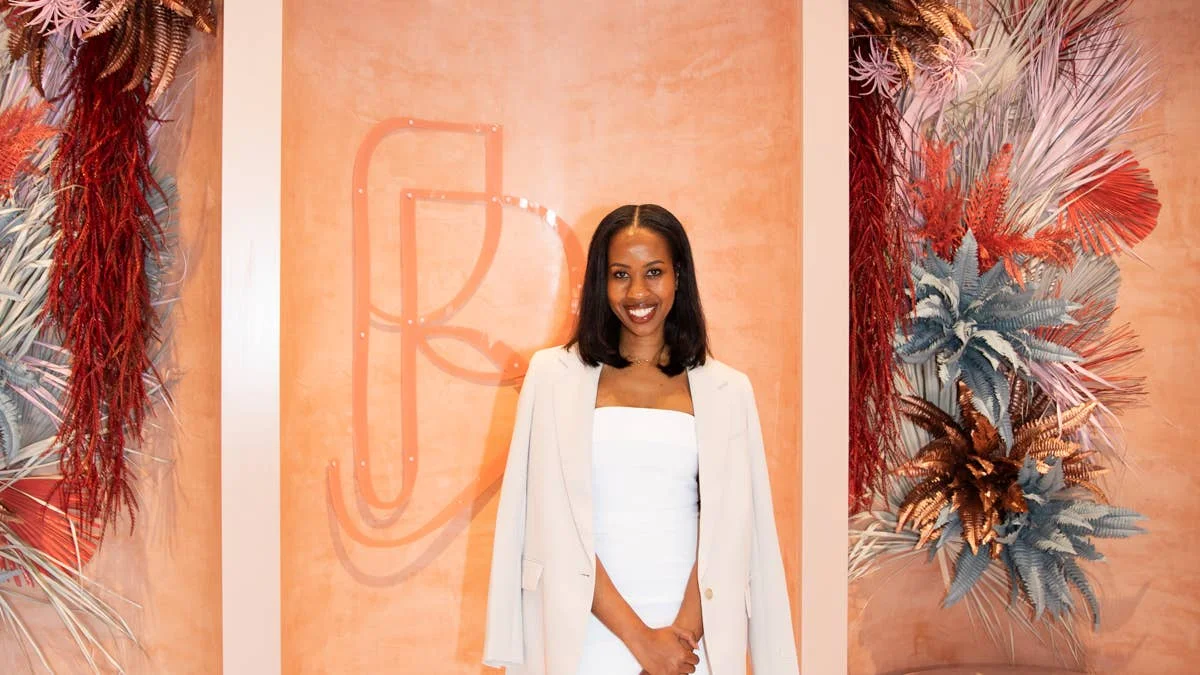
Photo: Courtesy of Pressed Roots
That loyalty ended when the stylist moved away. Gaines tried another person at the salon and had a poor experience. The problem, as she saw it, wasn’t the blowout bar format itself; it was that her good experience depended on finding one stylist with the right expertise. “If everybody here could do textured hair, this would be such an incredible business model because this is such a need,” she recalled thinking.
A salon format built around textured hair
Gaines launched Pressed Roots in 2018 as a “silk blowout bar” focused on textured hair. The business adapts the familiar blowout bar setup to clients seeking a silk press, with an emphasis on consistent technique across the team. Gaines wanted customers to be able to trust the service regardless of which stylist’s chair they booked.
The core appointment, called the signature silk blowout, starts at $80. Pressed Roots also offers trims, deep conditioning and steam treatments. The company’s approach puts much of the straightening work into the blow-dry stage, aiming to limit the flat iron to a single pass. Gaines says that the service is designed to prioritize hair health while producing a straight finish.
Memberships start at $139 per month. Gaines said the business has high retention among its core customers, who typically visit twice a month. That frequency makes consistency more than a brand promise: it is part of the operating model. Clients need to feel confident that a return appointment will deliver the same standard of care, whoever performs it.
For that reason, Pressed Roots hires licensed cosmetologists and puts each new team member through hands-on training. The curriculum covers hair anatomy, porosity, assessing individual needs and choosing products for different curl types. Trainees first practice techniques on mannequin heads, then learn the company’s 12-step Pressed Roots Method.
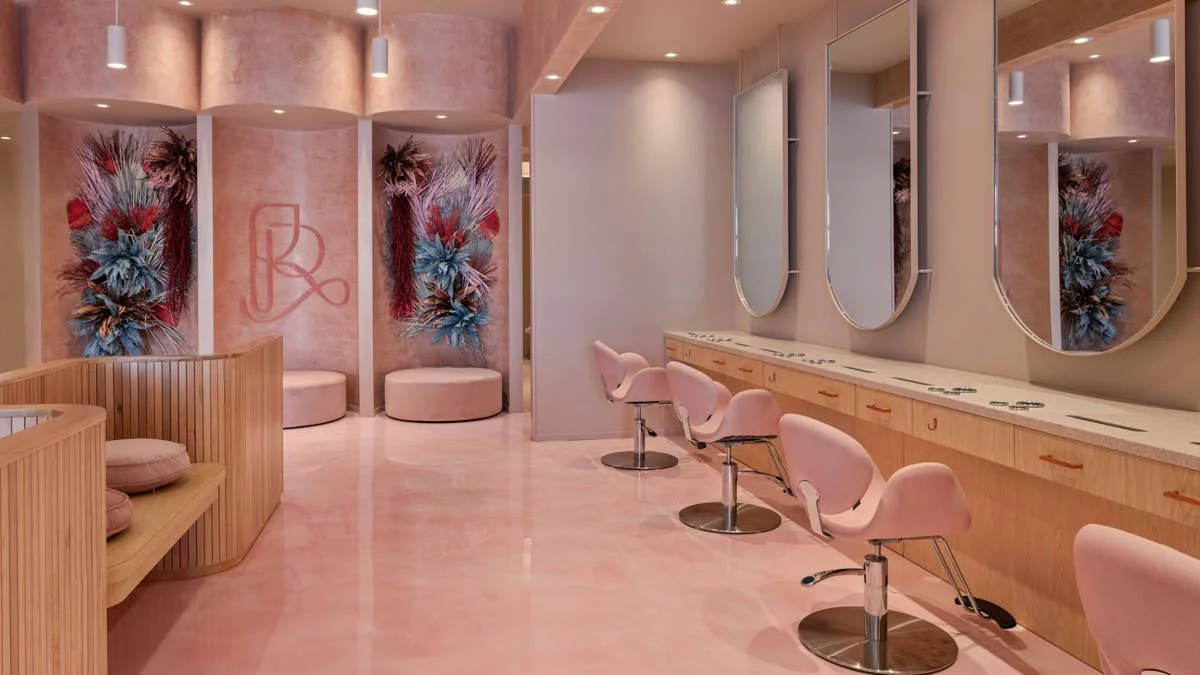
Photo: Courtesy of Pressed Roots
The method spans the full appointment, from greeting and consultation through washing, conditioning, detangling, sectioning, texture preparation, blow-drying, flat ironing, trimming, styling and the client’s departure. Gaines expects stylists to follow it for every guest. Her view is that working confidently with textured hair requires specific knowledge that cosmetology programs don’t consistently teach, and that this gap helps explain why customers often have to search for individual specialists.
“If you can do textured hair, you can really do all types of hair,” Gaines said. Pressed Roots’ customer base, she added, includes women across ages and household incomes. The model is aimed at a broad range of people with textured hair, rather than a narrow demographic segment.
Related: The Doux Is Bringing Textured Hair-Care Education to Roblox
From pop-ups to a fifth location
Pressed Roots spent its first two years operating pop-ups in cities including Boston, Atlanta and Dallas. The format gave the company a way to test demand before Gaines opened the first permanent salon in Dallas in 2020. The timing brought an immediate complication: the salon closed two days after opening because of the pandemic.
It reopened two months later, on the day Texas allowed salons to resume operations. Many competitors were still closed, and customers eager for appointments helped create a waiting list that Gaines said lasted for about two years. Social media posts showing before-and-after results and praising the service helped sustain awareness after that initial surge.
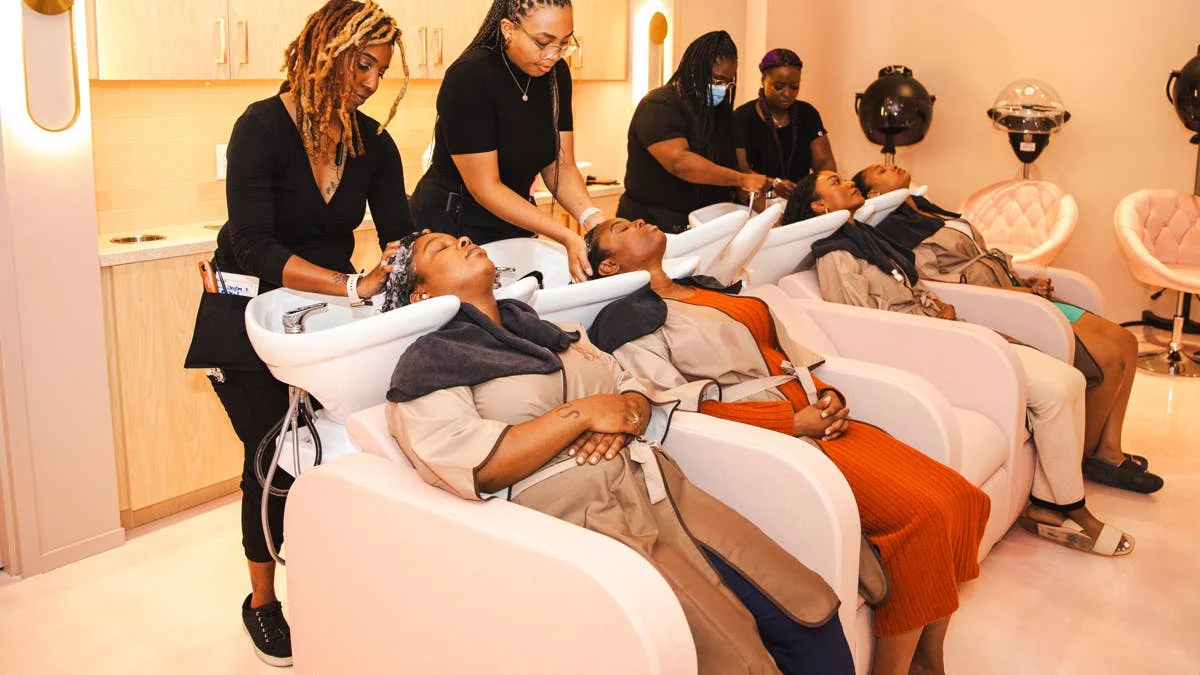
Photo: Courtesy of Pressed Roots
The company subsequently added two more Dallas locations and one in Houston. Before expanding beyond Texas, Gaines reviewed sales, guest feedback, retention and staff performance. She said the existing salons are profitable and retain customers steadily, giving the company a basis for its next move.
Washington, D.C., made sense because Gaines saw a large concentration of people with textured hair there. The new salon will use the same layout, services, memberships and prices as the Texas locations. “We’re really copying and pasting it,” she said, describing a format the company believes is working as designed.
That approach makes the D.C. opening a test of how well Pressed Roots can reproduce its customer experience in a market where it has no established local clientele. Gaines said the company is still working out its marketing plan, with social media among its main tools for reaching potential customers. The business will also have to make the case for its model alongside independent stylists who already serve textured hair clients.
Related: Why the Way We Talk About Textured Hair Needs to Change
Gaines does not see many national salon brands or franchises focused on textured hair. Independent stylists can offer strong expertise, she said, while Pressed Roots is selling the convenience of a salon appointment paired with a consistent service standard. The distinction will matter as the company enters a city where customers can choose among existing specialists and larger salon options.
Gaines’ longer-term goal is a national brand, with more locations planned across the country. She also hopes Pressed Roots’ growth will encourage other businesses to serve textured hair customers. More choices, including competitors with services that match or surpass Pressed Roots, would be a positive outcome in a category she considers underserved.
The D.C. opening will put that ambition into practice. Its clearest measure of success will be whether the training, service process and repeat-visit pattern that took hold in Texas can earn the same trust in a new city.