
October’s strongest-reviewed books range from Barbara Kingsolver’s new novel to Sarah Perry’s account of loss. The month’s fiction list favors distinctive voices and ambitious forms; nonfiction reviewers gravitate toward intimate reflection and reassessments of literary lives. The rankings offer a useful snapshot of critical attention, though review counts capture reception rather than any final verdict on a book’s staying power. What connects these selections is a willingness to make difficult subjects—grief, identity, artistic ambition—central to the reading experience.
Fiction: five novels with sharply different ambitions
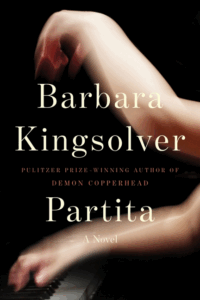
Barbara Kingsolver’s Partita (Harper) leads the fiction rankings, with 14 rave reviews, four positive, one mixed and one pan. Heather Scott Partington of The Los Angeles Times sees Kingsolver drawing on the experience behind her earlier work while finding fresh insight in a new story. That combination—recognizable authorial concerns with a new narrative angle—helps explain why the novel has attracted such a strong critical response. The numbers here are emphatic, though they don’t suggest unanimity: one pan signals that even a widely praised book can divide readers. Read an interview with Kingsolver here.
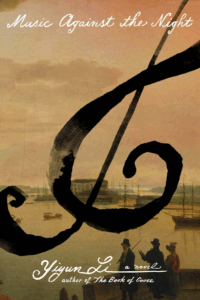
Yiyun Li’s Music Against the Night (Farrar, Straus and Giroux) follows with nine rave reviews, one positive and two mixed. Cory Oldweiler, writing in The Boston Globe, praises Li’s command of a complex narrative about young virtuosos, calling the novel unusual in both subject and execution. A story centered on virtuosos invites questions about discipline, talent and the demands of performance; the review’s emphasis on complexity suggests Li is as interested in how such lives are narrated as in their subject matter. Listen to an interview with Li here.
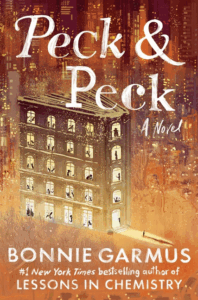
Bonnie Garmus’s Peck & Peck (Scribner) earned five rave, five positive and two mixed reviews. Claire Clark of The Guardian highlights its comedy, including jokes about typography, alongside a serious insistence that words matter. The pairing gives the humor a point: play with language can be entertaining while also drawing attention to what language carries. That blend may help account for the spread of positive and mixed responses, since comedy built around words depends on readers sharing its appetite for verbal play. Garmus discusses the novel in an interview here.
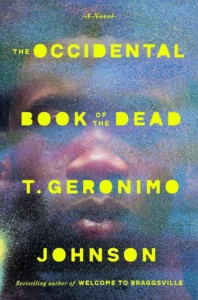
T. Geronimo Johnson’s The Occidental Book of the Dead (William Morrow and Company) received eight rave reviews. Jason Mott, in The New York Times Book Review, argues that its reach and occasional misfires are part of an unapologetic literary ambition that won’t appeal to every reader. That’s a useful qualification: ambition can be a strength and a source of friction at once, especially when a novel pushes beyond familiar expectations. Eight rave reviews make the response notable, but Mott’s assessment keeps the critical picture from becoming simple consensus. Johnson speaks about the book here.
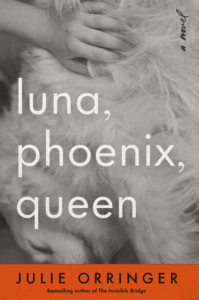
Rounding out fiction, Julie Orringer’s Luna, Phoenix, Queen (Knopf) collected six rave and two positive reviews. Meg Wolitzer, reviewing for The New York Times Book Review, singles out its treatment of isolation and the freedom found in telling one’s own story. Those ideas give the novel a quieter place in a list otherwise marked by conspicuous formal reach and comic wordplay. Its reception is still firmly positive, though the review count is smaller than the leaders’—a reminder that this ranking reflects the month’s reviewed books, not a single measure of literary value.
Nonfiction: grief, identity and literary history
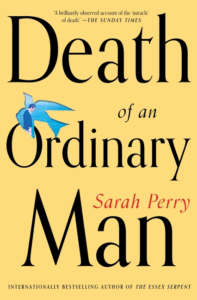
Sarah Perry’s Death of an Ordinary Man (Mariner) tops nonfiction with seven rave and one positive review. Amy Bloom, writing in The New York Times Book Review, describes a precise, graceful account that faces grief, faults and mortality with care. The subject demands a balance between candor and restraint: too much distance can make loss feel abstract, while too much certainty can flatten its complications. Bloom’s emphasis on precision suggests Perry’s account earns its force through close attention rather than easy consolation. This is more significant than it looks: the strongest nonfiction response this month centers on the difficult work of seeing a person clearly, including their flaws.

Lieke Marsman’s On Another Planet They Can Save Me (Catapult) and Meghan O’Gieblyn’s Will and Attention: A Memoir (Doubleday) share second place, with six rave and one positive review apiece. Publishers Weekly calls Marsman’s work cathartic and wondrous, finding pleasure in its engagement with large human questions. James Wood, in The New Yorker, praises O’Gieblyn’s memoir for its intellectual rigor, candor and openness. The shared ranking makes for an interesting pairing: one review foregrounds catharsis and expansive questions, the other a memoir’s disciplined thought and frankness. If you’re choosing between them, the descriptions point to different reading experiences, even as both have earned strong critical support.
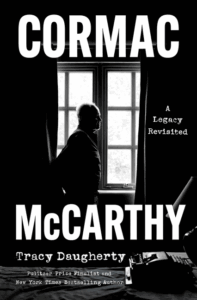
Tracy Daugherty’s Cormac McCarthy: A Legacy Revisited (St. Martin’s Press) drew six rave and two mixed reviews. Bill Heavy of The Wall Street Journal says Daugherty separates the writer from the myth, tracing McCarthy’s shift from Southern to Western writing while confronting difficult details. Biography has a particular burden when its subject already carries a powerful public reputation: it must examine the work and the person without simply repeating the legend. The review’s description suggests Daugherty takes on that tension directly. Two mixed responses also indicate that the book’s treatment of a complex literary figure hasn’t landed in exactly the same way with every critic.
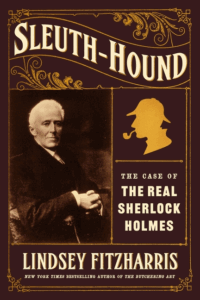
Lindsey Fitzharris’s Sleuth-Hound: The Case of the Real Sherlock Holmes (Farrar, Straus and Giroux) completes the nonfiction five with four rave and four positive reviews. The book restores Dr. Joseph Bell, the Edinburgh physician who inspired Sherlock Holmes, to the center of that origin story, according to David Pitt in Booklist. Its appeal lies in revisiting a familiar literary figure through the real person associated with his creation, shifting attention from the fictional detective to the historical source behind him. The reviews are uniformly favorable, but divided between rave and positive rather than concentrated in one category. An excerpt is available here.
What October’s reviews suggest
Across both lists, reviewers reward books willing to take distinct formal and emotional risks. Kingsolver and Li stand out in fiction, while Perry’s closely observed meditation on death leads a nonfiction field that ranges from memoir to literary biography. The pattern isn’t a single shared style; it’s a critical appetite for books with a clear point of view, whether that comes through narrative ambition, humor, personal candor or a fresh account of literary history.
That said, review tallies have limits. They show how a group of critics responded during the month, not how readers will judge these books over time, and the categories of “rave,” “positive” and “mixed” compress more varied arguments into a short ranking. The useful signal is in the descriptions themselves: these books appear to have prompted discussion about form, voice and the responsibilities of telling another person’s story. A snapshot, then, rather than a verdict.


