Halloween fiction works best when the uncanny slips into familiar places: a childhood bedroom, a family home, a camping trip, even a shoreline. These nine stories and poems use that closeness to build their unease. Some lean into gothic dread; others bring humor, grief or a strange tenderness to the dead. Together, they offer a reading list for anyone who wants their October scares shaped by language as much as by monsters.
The selections come from Recommended Reading and The Commuter. Their strongest thread is the past returning with unfinished business. A parent’s bedtime story becomes harder to dismiss, a town’s old legend surfaces on Halloween, and former lovers find ways to remain present. The collection also makes room for horror that refuses a single mood: alongside woods and decaying houses are a skeleton’s awkward new life and a ghostly romance with a comic edge.
Family histories that won’t stay buried
“Good Night, Sleep Tight” by Brian Evenson
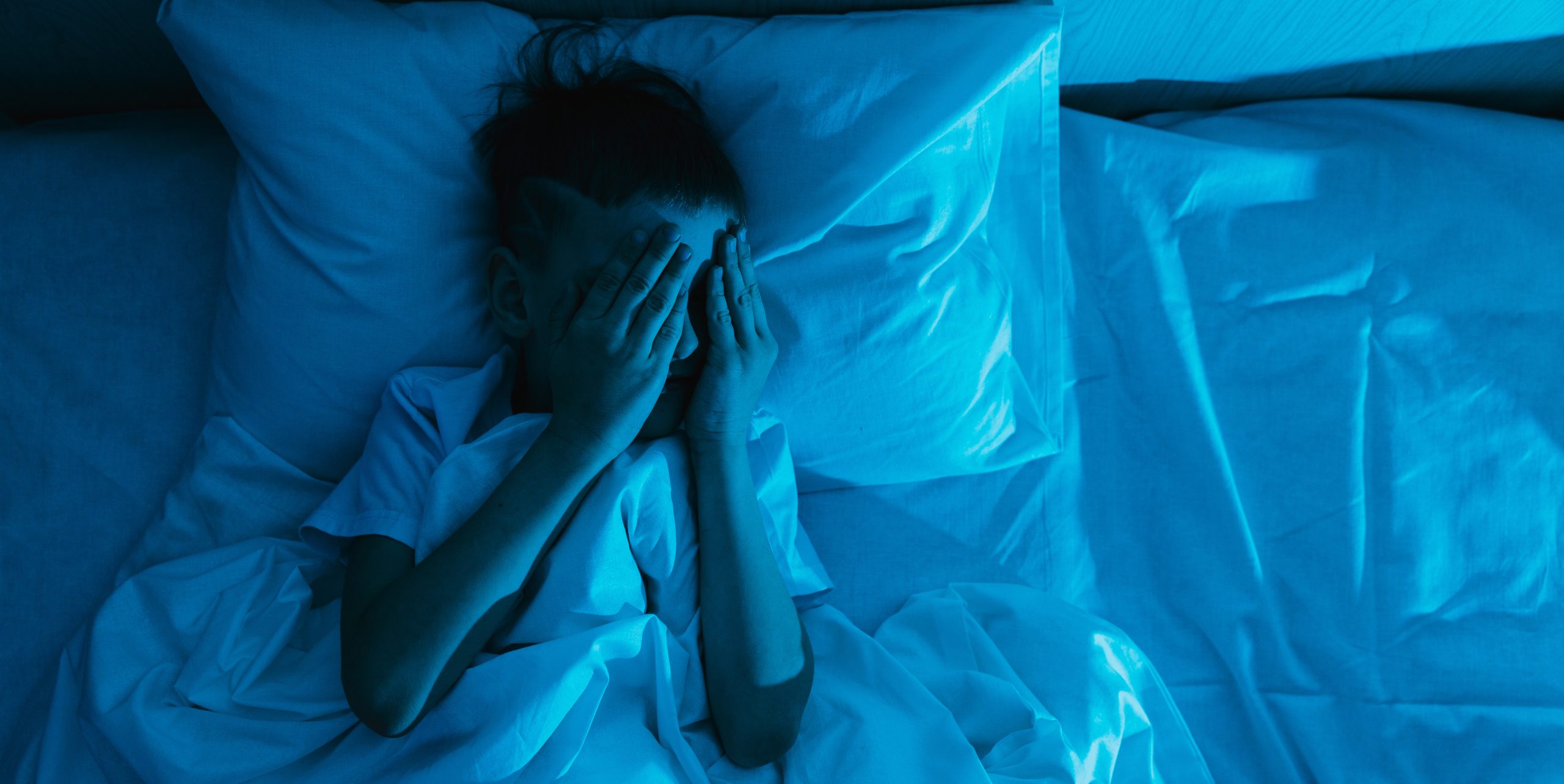
Brian Evenson starts with one of childhood’s most reassuring rituals: a mother telling her son stories at bedtime. Most are cozy, but she sometimes returns with a frightening tale, leaving him to wonder what he should make of the things she says. As an adult, he’s preparing to visit his mother’s old home with his wife and young son. The prospect brings those stories back into focus. He has to reckon with what he remembers, what he has brushed aside, and whether his own child might inherit the same unsettling family lore. The setup turns a familiar domestic scene into a source of suspense: the danger may be close enough to tuck you in.
“Hannah-Beast” by Jennifer McMahon
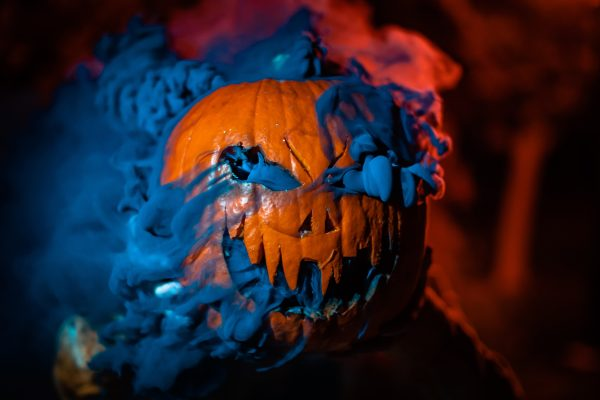
For thirteen-year-old Erin, the Hannah-beast costume is part of the appeal of Halloween: blue face paint, a colorful clown wig and a silver cape, all tied to a local legend. Her mother, Amanda, sees the costume differently and tries to stop her from wearing it. Erin reads that as another parental restriction. McMahon’s story lets the tension between them carry the horror, moving through time to show how an old story can reach into a family’s present. The costume isn’t frightening because it looks strange; it matters because of what the town remembers about the girl who wore it before.
“The Dirty Kid” by Mariana Enriquez
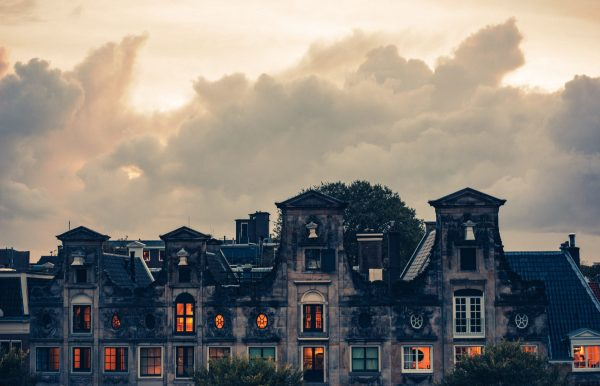
Mariana Enriquez places “The Dirty Kid” in a Buenos Aires neighborhood marked by layers of abandonment. Its large mansions, once built for the Argentine aristocracy, were left behind after an earlier yellow fever epidemic. Now the area is worn down, with crumbling homes, struggling businesses, thieves and people living on the street. The narrator remains attached to her family house despite its deterioration. Then a homeless woman and her child, who live outside her door, disappear. What could read as a crime story begins to gather a more disturbing possibility. Enriquez’s gothic atmosphere grows out of the neighborhood’s history and present-day neglect, leaving the narrator—and the reader—to question what kind of threat is at work.
Woods, farms and places with their own rules
“Tiptoe” by Laird Barron
In Laird Barron’s “Tiptoe,” a narrator revisits a childhood camping trip while trying to understand a condition he is experiencing. He’s convinced that his wholesome upbringing left him without trauma, but the return to the past puts that certainty under pressure. Barron locates the story’s unease in the gap between what the narrator believes about his family and what he may have missed. The woods deepen that suspicion. The threat doesn’t announce itself beside the campfire; it approaches slowly, making the title feel like a warning about how dread moves through the story.

“King of All Hogs” by JG Lynas
A remote pig farm, an older couple, a decrepit barn and a phone that keeps ringing: JG Lynas assembles a familiar horror-story setting, then gives its visitors reasons to distrust one another. The narrator travels there with her boyfriend, Mark, after he finds the farm through an online forum. Their relationship already feels precarious, shaped by an infatuation that hasn’t settled into anything secure. When the pair arrive and invite themselves to dinner, the farm becomes a place full of unanswered questions. The barn, the callers and the hosts all add to the uncertainty. The suspense comes from having no reliable guide to what’s strange and what’s dangerous.
Ghosts with a more complicated afterlife
“The Bone Friend” by Zebbie Watson
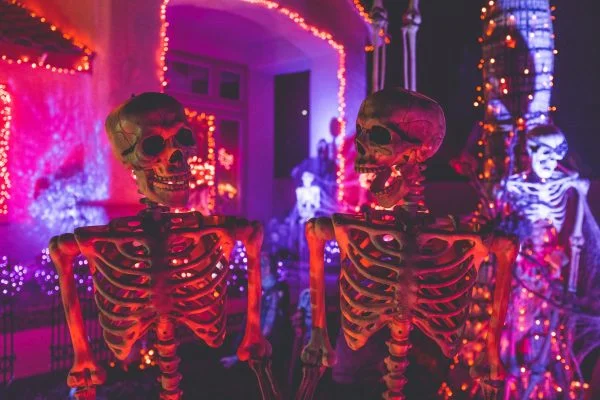
Zebbie Watson’s flash fiction begins with an unlikely courtship: a teenage girl discovers a skeleton and decides to date him. The story then shifts to the skeleton’s point of view as he tries to make sense of the world he has entered. He doesn’t know who he was before his body became a collection of bones, and that missing history gives the story its ache. The premise could easily tip into the macabre, but Watson uses it to explore longing and the desire to belong. The result is a ghost story with a whimsical surface and a melancholy core, carried by poetic prose.

“Fucking Ghosts!” by Hannah Gregory
Hannah Gregory’s flash piece begins with a narrator who can’t escape her dead lover. He visits every October, and when she feels a cold draft, she sometimes retreats to a bar bathroom to masturbate. It’s an odd, funny detail in a story about grief and the pull of a relationship that persists after death. The narrator keeps this haunting private until she meets someone who understands the impulse to return to a lost partner. Gregory lets the supernatural premise become both intimate and offbeat, suggesting that not every ghost story has to choose between heartbreak and humor.
“The Bone Hermit” by Lyndsey Croal
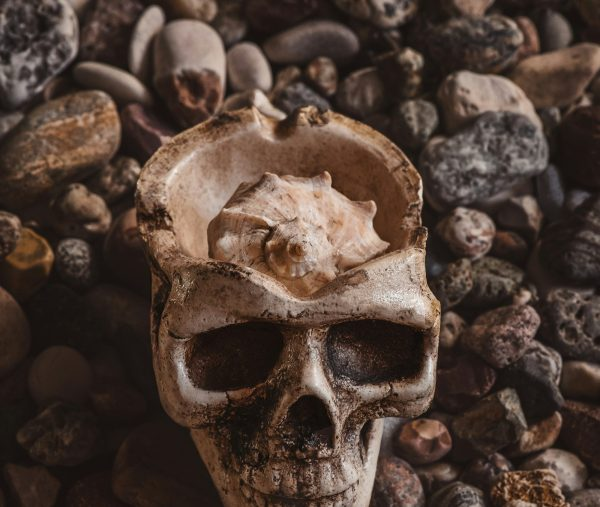
Lyndsey Croal builds “The Bone Hermit” around an image that’s difficult to shake: a hermit crab inhabiting the bones of the narrator’s dead husband. She thought she had put his body safely away in a seaside cove. Instead, the crab makes a home in the remains, and pieces of the body begin appearing outside her window. The crab peers out through the skull’s hollow eyes. In this brief piece, the natural world becomes the vehicle for an intimate haunting. The horror rests in the return of what the narrator tried to leave behind—and in the strange new life occupying it.
A poem that turns toward hope
“I Pray in Screamers House of Horrors” by Domenica Martinello
The first poem in a set by Domenica Martinello finds hope inside a house of horrors. Its visceral language draws on addiction and healing, giving the speaker’s search for escape a physical force. The reader feels trapped and choking alongside the narrator, unsure whether the light ahead offers warmth or another form of terror. That uncertainty makes the poem a fitting close to this set of Halloween reading: it leaves the door open to recovery without pretending that the way out is clear. These works offer scares in several registers, from creeping supernatural menace to grief and hard-won hope. Pick the one that matches your appetite for the dark, then let the page do the haunting.


