Five years after its theatrical debut, Last Night in Soho still makes its strongest case through images. Edgar Wright’s horror thriller conjures 1960s London with striking color, period fashion and fluid camera work, while its story about violence against women remains more contested. That split helps explain the film’s lasting appeal—and its limits.
The movie arrived after Wright had built a distinctive career across comedy, action and genre mashups. He first drew a devoted audience with the cult sitcom “Spaced,” co-created with Simon Pegg, then broke through with 2004’s “Shaun of the Dead.” “Hot Fuzz” and “The World’s End” completed the trio commonly called the Cornetto Trilogy. (See how we ranked Wright's Cornetto Trilogy movies here.)
Wright’s path also included the initially overlooked “Scott Pilgrim vs. the World,” which found a lasting audience for its video game references and media-savvy style. (Read more about the film’s box office performance.) With “Baby Driver,” he shifted toward a tightly choreographed crime story influenced in part by Walter Hill’s “The Driver.” (Wright discussed films that influenced “Baby Driver”.) “Last Night in Soho” took him into a different kind of territory: a supernatural story that revisits the glamour and darker mythology of Swinging London.
A dream of London turns into a reckoning
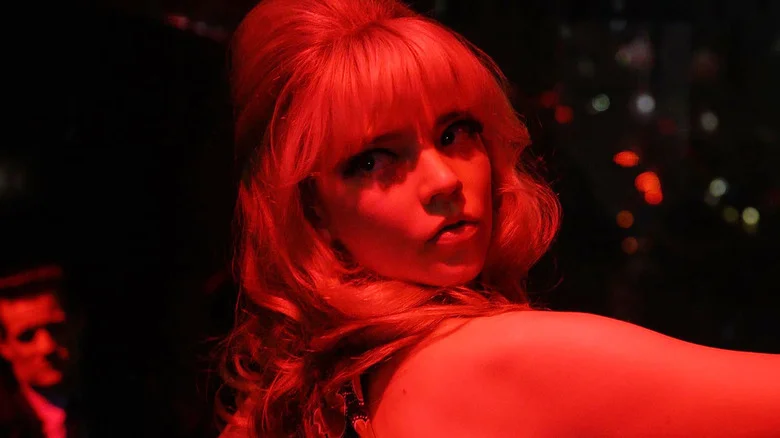
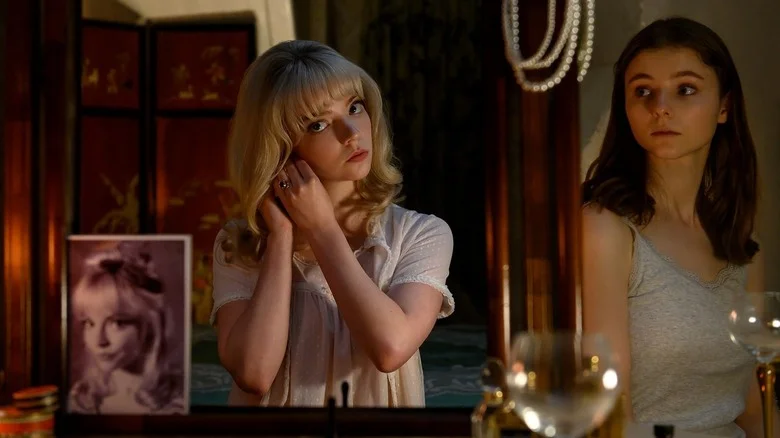
Thomasin McKenzie plays Ellie, a fashion student who leaves her home life behind to study in London. She can see her dead mother in mirrors, and the strain of dormitory life pushes her to rent an older flat. There, Ellie begins dreaming of Sandie, played by Anya Taylor-Joy: a young musician who arrives in 1960s Soho with ambitions of her own.
At first, Sandie’s world seems to give Ellie the inspiration she wants. Ellie starts designing clothes in a retro style, then adopts Sandie’s look, including her hair. But the dreams turn darker as Ellie learns that Sandie’s experience in the city was shaped by exploitation and abuse. Matt Smith appears as a well-dressed man from Sandie’s era whose connection to her story is uncertain.
The film also surrounds its younger leads with veteran British performers. Terence Stamp plays the Silver-Haired Gentleman, while Diana Rigg, in her final film role, is Ellie’s landlady, Ms. Collins. Rita Tushingham plays Ellie’s grandmother. Their presence gives Wright another way to evoke the British films and performers associated with the 1960s.
The look is more persuasive than the story
Wright and co-writer Krysty Wilson-Cairns build the film around shifting timelines and revelations. That structure gives the mystery momentum, but its perspective on sex work has drawn pointed criticism. The film’s portrait can feel judgmental, reducing the women at its center to victims while offering little sense of their agency. Its intended critique of a system that harms women becomes harder to read when the story itself leans on familiar assumptions.
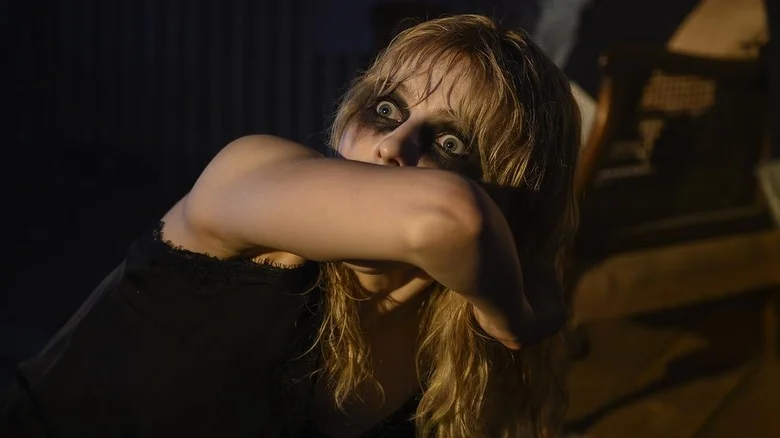
The craft is much surer. Cinematographer Chung Chung-hoon, whose credits include “The Handmaiden” and “It,” helps make the past feel vivid without relying only on postcard images of London. The production design and costumes give the city a strong visual identity, and the film’s shifts between eras become part of its appeal. Here’s the thing: the movie’s style doesn’t solve its story problems, but it gives the film an atmosphere that stays with you.
Critical response reflects the film’s divide
That mix of visual confidence and narrative unease shows up in the critical response. “Last Night in Soho” holds a 75% approval rating on Rotten Tomatoes. /Film’s review gave it 7.5 out of 10, praising the interest of seeing Wright step beyond the style audiences knew him for.
Christina Newland, writing for iNews, found the film’s politics frustrating. She argued that its depiction of sex work strips Sandie of agency, and that the late turn in her story doesn’t create a convincing sense of empowerment:
“It is a blunt-edged portrayal of sex work, taking away any sense of agency from Taylor-Joy's character [...]. Demonizing sex work as a trade which only ever can lead to misery and death is already pretty basic if you want to offer a rebuke to the patriarchy in your movie. But then the final big twist of 'Last Night in Soho' arrives [...] flipping the switch on the expected narrative of [Sandie's] victimhood, but doing so in a manner that has zero sense of empowerment or forethought.”
Bilge Ebiri took a more forgiving view in Vulture, acknowledging the film’s weak points while calling it an “intoxicating affair.” That gap between response and criticism captures the movie well: it can be an absorbing sensory experience even when its ideas don’t hold together.
The film underperformed at the box office, during a period when theaters were still recovering from the COVID-19 shutdowns. Its five-year mark leaves a clear impression: Wright’s visual imagination remains the draw, while the choices beneath the surface still invite debate.


