Prada’s return to the top of the Lyst Index is the quarter’s clearest signal of shifting fashion demand. The Italian house climbed five places to No. 1 for July through September, its first time leading the ranking since Q4 2023. Searches and demand rose 55% from Q2, alongside a well-received Spring 2027 show. Its $1,320 Wish Pouch also topped Lyst’s product chart, with demand nearly five times higher. Taken together, the brand and product results suggest that interest wasn’t limited to runway attention: shoppers were also searching for a specific accessory. The Index captures attention and demand, though it doesn’t tell us how many people ultimately bought the products.
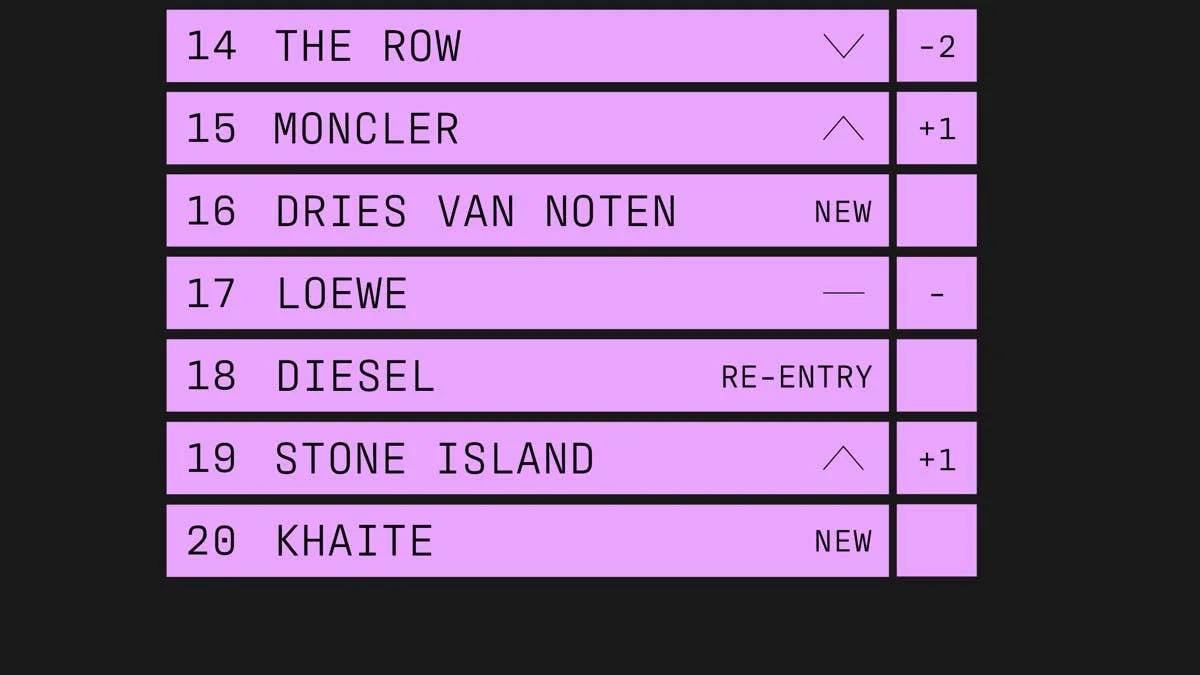
Photo: Courtesy of Lyst
Luxury rankings and new arrivals
Chanel held second place and Miu Miu ranked third. Gucci rose one spot to fourth, while Saint Laurent took fifth. Celine entered the top 10 at No. 10, up five places, with its Reebok collaboration landing third among the quarter’s most sought-after products. The list’s top tier remains concentrated among familiar luxury houses, but Celine’s product showing points to the value of a recognizable partnership in drawing attention. A high rank and a popular product aren’t the same measure; here, the collaboration gives Celine a visible result beyond its position in the brand table.
Two labels joined the brand ranking for the first time: Dries Van Noten at No. 16 and Khaite at No. 20. Dries Van Noten demand increased 27% quarter over quarter, and its $845 Long Wrap Scarf-Skirt placed fifth on the product list. That pairing of a new ranking entry and a product-chart appearance makes the label’s rise easier to read as more than a change in position alone. Diesel returned at No. 18 after Glenn Martens’ final show for the label sparked renewed attention. It had last appeared in Q1 2024. A return after that gap shows how a high-profile moment can bring a brand back into view, though the ranking by itself can’t establish how durable that attention will be.
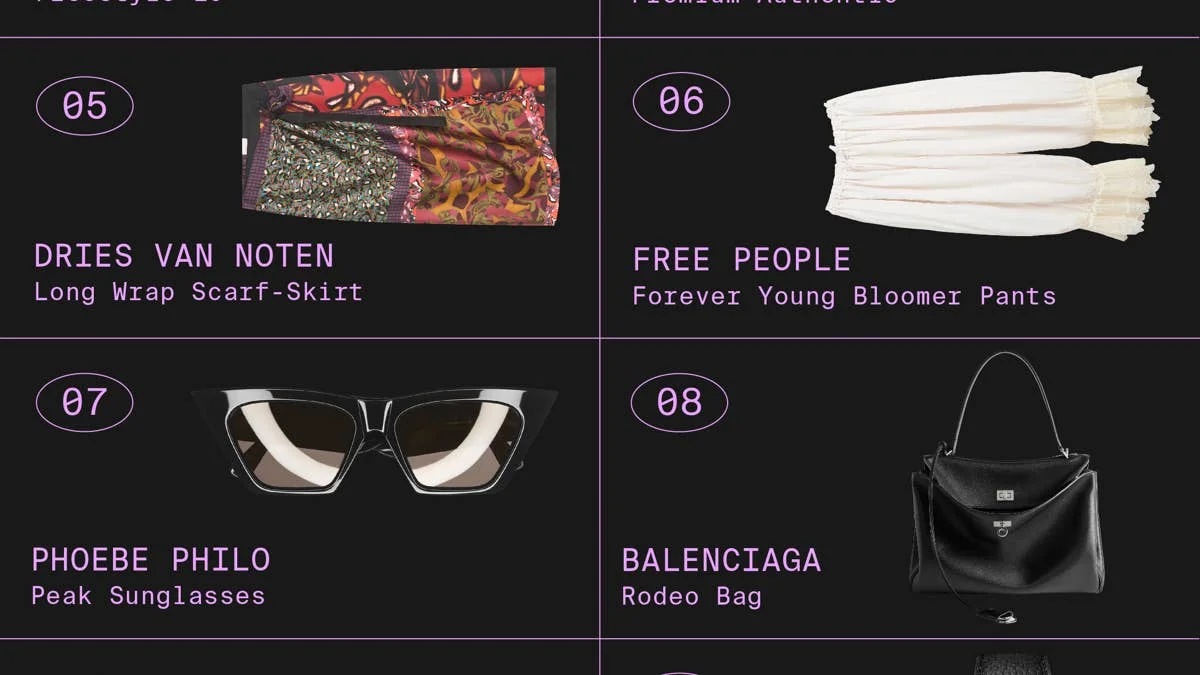
Photo: Courtesy of Lyst
Bags and accessories shape the product chart
Handbags were a prominent part of Q3’s product rankings. The $370 COS Trullo Flap Bag placed second, while Balenciaga’s $4,590 Rodeo Bag ranked eighth. Both reflect a preference for slouchy top-handle shapes. Their wide price gap also makes the chart useful as a snapshot of shared interest across different price points, rather than evidence that shoppers are choosing one kind of bag or one spending level. (And this is the part most people overlook.) A product ranking tracks demand signals; it doesn’t explain what buyers paid or why they were drawn to a particular design.
Cartier’s $3,750 Tank Watch reached the top 10, the first watch to do so since 2021. Demand for the classic design rose 83% quarter over quarter. Phoebe Philo’s $520 Peak Sunglasses ranked sixth after demand jumped 525% during the quarter. The contrast is striking: one product is a long-established design, while the other posted a sharp increase in attention. This is more significant than it looks. The chart suggests that shoppers can respond both to familiar pieces and to products associated with a designer’s current visibility, though it can’t show whether either pattern will persist.
Some familiar styles are also finding new audiences. Vans’ $80 Premium Authentic Sneakers saw demand grow 29% year over year amid renewed interest in 2010s trends, including mullet hems and mint-green colors. Chanel Ballet Flats and Free People’s Forever Young Bloomer Pants also made the top 10. The mix suggests that the quarter’s appetite wasn’t confined to luxury handbags or runway pieces; everyday sneakers and clothing with a strong style reference also found an audience. If you’re working in this space, the useful signal is how varied the product list is, not a single trend that explains every entry.
Emerging labels gain momentum
Lyst’s “moving fast” list tracks rising brands outside its main ranking. Conner Ives led the Q3 group, with searches up 49% from the previous quarter. The London-based, New York-born designer returned to show at New York Fashion Week in September for the first time. The label’s Reconstituted Vintage Robe has also been worn by Hailey Bieber, Kate Moss and Jennifer Lawrence. Those details offer several routes by which attention may build: a show, a distinctive product and visibility on well-known wearers. The list records the rise in searches, while the reasons behind that rise are harder to separate from one another.
New York label Emily Dawn Long recorded a 17% demand increase after its 2026 CFDA Emerging Designer of the Year nomination. Copenhagen-based Mfpen, marking its 10th anniversary, saw demand rise 37% quarter over quarter following a collaboration with New Balance. These gains suggest that runway visibility, celebrity wear and collaborations can quickly shift attention beyond established luxury names. They also show why a fast-growing search figure needs context: a nomination and a partnership are different kinds of exposure, even when both appear in a demand ranking. The figures point to momentum, not a guarantee that interest will carry into another quarter.
What the rankings say about demand
Across the brand and product lists, attention appears to come from several sources: runway shows, collaborations, recognizable designs and renewed interest in familiar styles. No single explanation accounts for the range of entries. That makes the Index a useful record of what attracted searches during the quarter, but a limited guide to what shoppers value over time. A jump in demand can be meaningful; it can also reflect a short-lived burst of attention.
For established labels, Prada’s lead and the Wish Pouch’s product ranking show how a brand-level rise can coincide with a breakout item. For newer or returning names, Dries Van Noten, Khaite and Diesel illustrate how rankings can register changing attention at different points in a label’s trajectory. The test will be whether these signals hold in later rankings. For now, Q3 offers a clear snapshot of demand, with plenty of movement and no simple formula behind it.
Hottest Fashion Brands of Q3 2026
- Prada (+5)
- Chanel (-1)
- Miu Miu (-1)
- Gucci (+1)
- Saint Laurent (-1)
- Dior (-3)
- Burberry (+1)
- Ralph Lauren (-1)
- Chloé (+2)
- Celine (+5)
- Bottega Veneta (+3)
- Coach (-3)
- Massimo Dutti (-3)
- The Row (-2)
- Moncler (+1)
- Dries Van Noten (new)
- Loewe
- Diesel (re-entry)
- Stone Island (+1)
- Khaite (new)
Hottest Fashion Products of Q3 2026
- Prada Wish Silk Duchesse Pouch
- COS Trullo Flap Bag
- Celine x Reebok Freestyle Lo
- Vans Premium Authentic
- Dries Van Noten Long Wrap Scarf-Skirt
- Phoebe Philo Peak Sunglasses
- Free People Forever Young Bloomer Pants
- Balenciaga Rodeo Bag
- Chanel Ballet Flats
- Cartier Tank Watch
Please note: Occasionally, we use affiliate links on our site. This in no way affects our editorial decision-making.