Five films that explain what “Clayface” is reaching for
“Clayface” sits in an unusual spot for a DC movie: James Watkins has made a horror story about a man whose body becomes his special effect. Matt Hagen (Tom Rhys Harries), once a poor kid from Gotham and now an aspiring film star, is disfigured after sleeping with a gangster’s girlfriend. He turns to an experimental treatment from Dr. Caitlyn Corr (Naomi Ackie), hoping to recover his face. Instead, his features become as pliable as clay—and his life takes a darker turn.
The film’s strongest reference points come from body horror, where physical transformation can strip away a character’s sense of self along with their familiar appearance. But the DC Comics origins matter too. These five films connect those two threads, from monster-movie classics to more recent stories about beauty, identity, and obsession. Body horror’s long history gives “Clayface” plenty of company; the more revealing question is what each comparison says about the film’s particular mix of genres.
Darkman
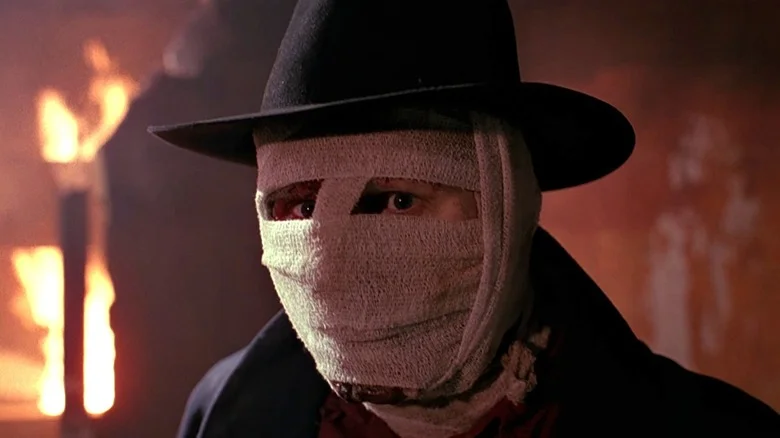
Sam Raimi’s 1990 film may be the closest match for “Clayface,” a comparison also made in /Film’s review. Raimi developed “Darkman” after he couldn’t secure the rights to make films about either the Shadow or Batman, and the result feels like a superhero origin filtered through a Universal monster movie. That frustrated search for a hero to adapt helped produce a character who’s entirely his own.
Liam Neeson plays Dr. Peyton Westlake, a scientist working on synthetic skin for burn victims. Gangsters leave him horribly scarred, so he uses his invention to disguise himself and pursue revenge. The masks can reproduce his old face, too, giving Peyton a shot at returning to his life with Julie (Frances McDormand). That hope doesn’t last.
Both films turn scientific transformation into a means of disguise, but they draw the boundary differently: Peyton puts on artificial faces, while Matt’s entire body can change. Matt’s career as an actor also gives his transformation a different sting. Still, the parallels run deep. “Clayface” reworks the gangster attack that scars Peyton, and its final revenge sequence recalls “Darkman” directly. Even the doomed attachment between Matt and Caitlyn echoes Peyton and Julie. “Feat of Clay,” the “Batman: The Animated Series” episode that influenced the movie, gives Matt (Ron Perlman) a different origin: a car accident leaves him scarred. The switch to a deliberate attack brings the film closer to Raimi’s story.
The Fly
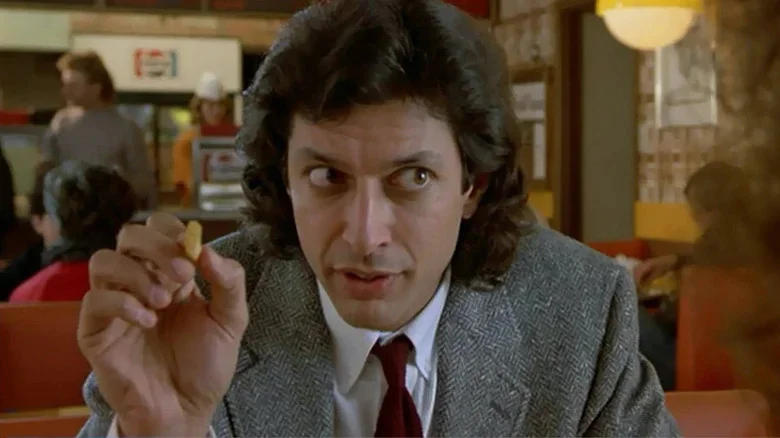
David Cronenberg’s 1986 “The Fly” was an obvious touchstone even before “Clayface” arrived. Watkins has praised it on Letterboxd, writing: “[h]orror, humor, heart, 'The Fly' has it all.” That’s a useful description of the blend “Clayface” is aiming for, and a good reason to watch the older film next.
Journalist Veronica Quaife (Geena Davis) falls for eccentric scientist Seth Brundle (Jeff Goldblum), whose teleportation machine uses a pair of linked pods to send matter from one to the other. When Seth tests it on himself, a fly is trapped in the pod with him. The genetic fusion slowly remakes him into something between human and insect.
The transformation remains the film’s great achievement. Practical effects show Seth’s human exterior breaking away until he’s a human-sized fly; effects artist Chris Walas and makeup artist Stephan Dupuis won the Oscar for Best Makeup and Hairstyling. Those effects have helped the 1986 film eclipse the 1958 original, though the earlier version still works as drama. Its lead, David Hedison as Dr. André Delambre, wears a fly-head mask that can’t compete technically with Cronenberg’s effects. But both versions trace the anguish of watching someone you love fall into obsession and a kind of allegorical disease—a path Matt and Caitlyn’s failing relationship also follows.
Batman Returns
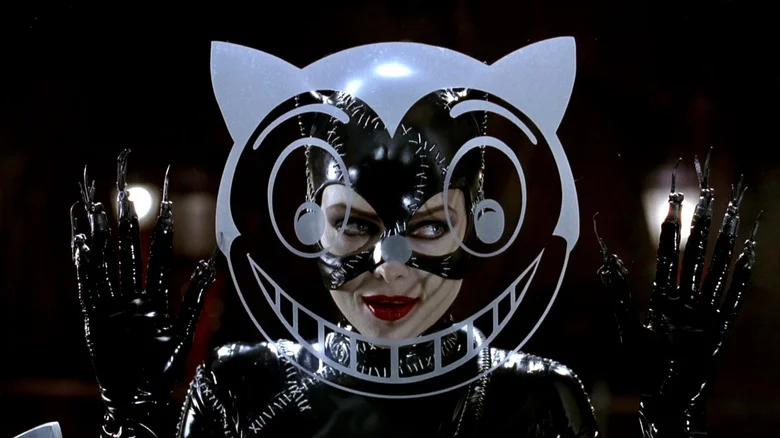
“Joker” looks like the easy comparison for a movie about a Batman villain made without Batman. Tim Burton’s “Batman Returns” is more illuminating. In 1992, Burton pushed a studio superhero film toward something stranger and more personal, as this look back at the film argues.
Batman (Michael Keaton) is present, but Selina Kyle/Catwoman (Michelle Pfeiffer) and Oswald Cobblepot/The Penguin (Danny DeVito) command the story. Their versions don’t closely resemble their comic-book counterparts. Burton’s warped reinterpretations are compelling on their own terms.
Selina is thrown out a window by her boss, Max Shreck (Christopher Walken), then returns with a supernatural nine lives and a new identity as Catwoman. That resurrection gives her arc a strong kinship with Matt’s: both are left for dead and come back changed. Their love stories are doomed, too. Batman and Catwoman recognize something in each other’s divided selves, finding comfort in their animal-themed costumes in a way they can’t in ordinary life. “Clayface” gives Matt and Caitlyn a similarly intense connection, but neither romance can escape the damage surrounding it.
The Invisible Man (1933)
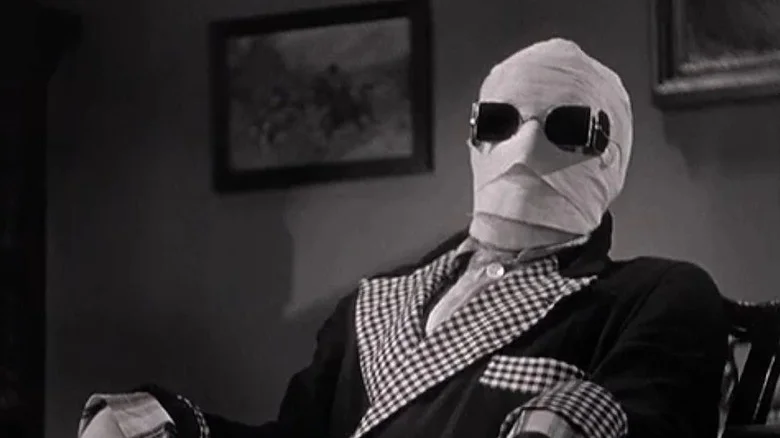
“Clayface” asks what happens when a man can change his appearance. James Whale’s “The Invisible Man” takes that fear to its endpoint: Griffin can disappear altogether. Adapted from H.G. Wells’ early science-fiction novel, the 1933 film stars Claude Rains and belongs to Universal’s black-and-white monster era, whose sound-era classics still have a hold on audiences—and helped shape the character of Clayface.
When Clayface first appeared in 1940’s “Detective Comics” #40, he was Basil Karlo, a horror-film actor who adopted the name and costume of a villain he had played. The name itself nods to Boris Karloff, the actor behind Universal’s Frankenstein’s Monster, as the character’s history makes clear. Matt’s bandages and plastic mask also call to mind Griffin, who wraps his head and wears sunglasses when he wants people to know he’s in the room.
Both Griffin’s invisibility and Matt’s transformations come from science, not magic. Whale had directed “Frankenstein” before making this film, and “The Invisible Man” shares more of that story’s scientific horror than the supernatural mood of “Dracula” or “The Wolfman.” It may be Universal’s most frightening monster precisely because no one can see where Griffin might be. That threat lingers in “Clayface’s” ending, when Caitlyn scans Gotham’s streets and wonders whether Matt could be nearby, wearing anyone’s face.
The Substance

Coralie Fargeat’s “The Substance” is the closest match to “Clayface” in broad outline: both are science-fiction body horrors about performers whose bodies become the battleground for their careers. Their starting points tell very different stories, though. Matt loses the face that made him a star in a violent attack. Elizabeth Sparkle (Demi Moore) turns to the film’s mysterious treatment after reaching 50 and finding herself pushed aside by ageist, misogynistic studio executives.
The treatment lets Elizabeth live in the younger body of Sue (Margaret Qualley), alternating between the two each week. She’s told to “respect the balance,” but increasingly chooses Sue—and becomes more dissatisfied with her original body as a result. The Substance takes on the shape of addiction, ending in overdose, physical ruin, and a grotesque final act. It’s an especially sharp companion to Matt’s dependence on the treatment that gives him his face back.
“Clayface” is rated R and doesn’t spare the audience: Matt’s assault, the gangsters’ knives, and his later killings make the film’s horror explicit. Still, “The Substance” pushes the gore much further. Its first transformation has Elizabeth’s body split open so Sue can emerge. If “Clayface” makes you picture a mud creature with fragments of its former self swirling inside, “The Substance” gives that image a far more visceral form.


