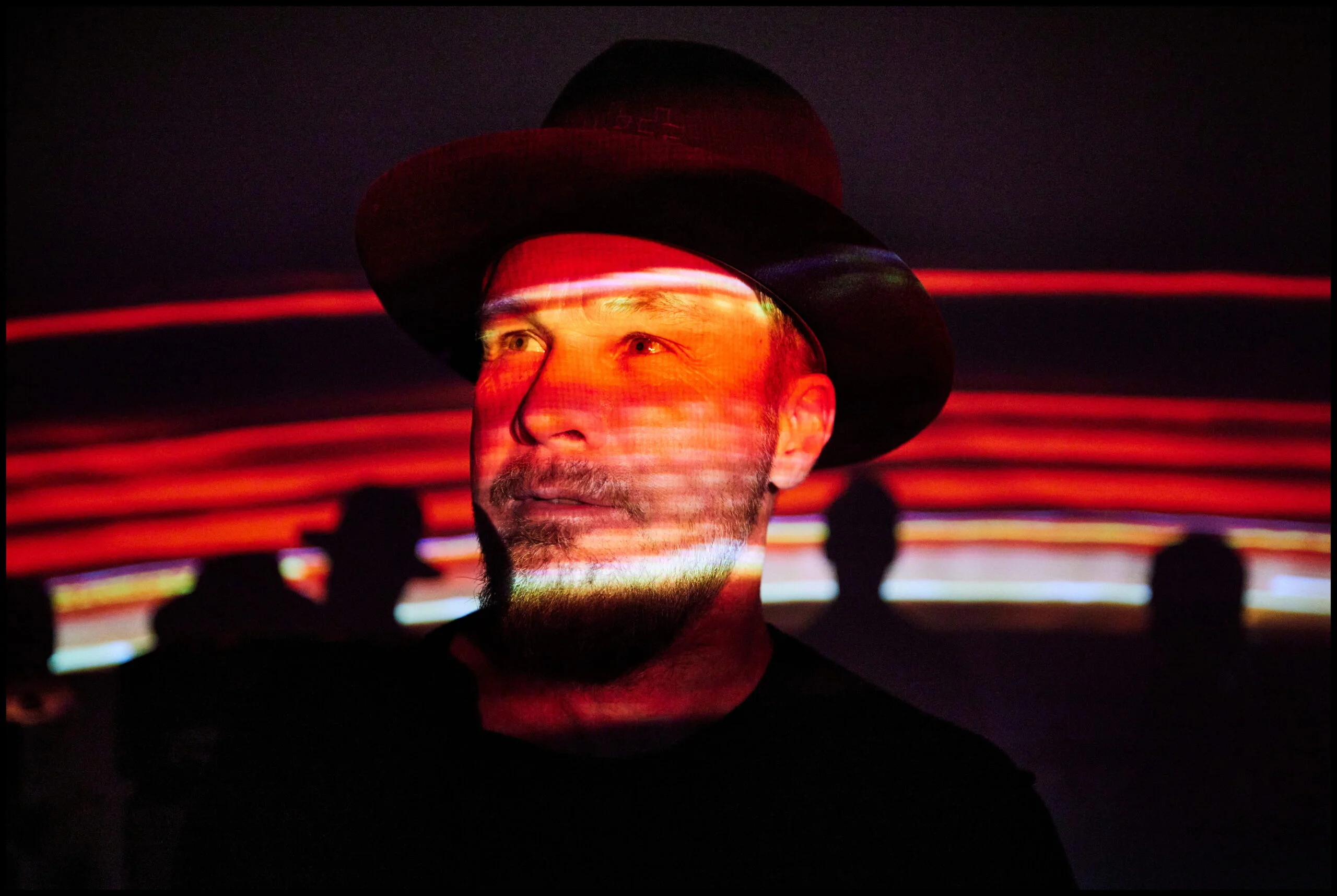
Another American History Tale
We talk to a hip-hop legend about publishing his story
Ronald Brooks, better known as Money B of the hip-hop group Digital Underground, teamed with author and screenwriter Chad Coenso for A DU Party Don’t Stop: The Money B Story. The memoir tells the story of Brooks’s Oakland upbringing, the birth of hip-hop, and how he came to be a part of the legendary musical group.
On the surface, you might seem like unlikely coauthors. How did you become friends, and what made you decide to collaborate on the book?
Money B: My friendship with Chad goes back about 10 years. We became very quick and close friends because we both shared a passion for what we were doing. I always believe that good people find good people. The energy that you put out there is the energy that you get back. Chad and I were meant to get together and do this book. And as far as Digital Underground, I think it worked in a sense because we were all from different places, but we all had the same love for the music and the funk. When you find people who have the same passions as you, it works.
Coenso: I was working on this film project that was more or less a parody of exploitation films from the ’70s. We had some interest in making it into a feature-length film. We wanted a good funky theme song very reflective of Curtis Mayfield, Superfly, or Isaac Hayes and Shaft. It turned out we knew somebody who knew Money B’s manager. He agreed to be featured on the track, and that’s when Money B and I first met each other. He’d just gotten off the set of All Eyes on Me, the Tupac film. He told me, “There’s a lot that’s not in there. Tupac was my roommate on the road, and both our parents were in the Panthers.” And he said he really needed to write a book about his life and tell these stories. He just needed a writer. A couple months went by, and he reached out and said, Hey, I think I wanna go ahead and collaborate with you. I ended up meeting him at a Scarface show in Portland and we inked the deal. So our bond came from me being a fan. And from there, you know, having worked on this as long as we have and gone through the wringer together, we’ve become even closer. Our families know each other. And now he’s one of my really close friends both creatively and personally.
Money B, how did your upbringing help shape your musical career?
Money B: My parents also were always playing music around the house. I would always pick up the records and read the credits to see who played this and what singer was on that. Also, my parents were in the Black Panther Party and I went to the Oakland Community School, so I grew up around a lot of party members. Curiosity was not frowned upon. We weren’t taught what to learn; we were taught how to learn. I’ve always been a person who dives all the way into something new, and I ask all the questions until I fully understand it. Also, growing up in the Black Panther Party, it was always about what was best for the collective. So being in a group like Digital Underground, it was easy for me to fit into the type of setting where the best decisions were made for the group.
Chad, has your writing been influenced by music?
Coenso: I grew up outside of Washington, D.C., in Gaithersburg, Maryland. And we didn’t have a lot of money, and neither did anybody in the area. And there was one kid who had cable. We used to go over there to see late night HBO and MTV, and specifically Yo MTV Raps. So I was actually there at his house for the world premiere of “The Humpty Dance.” I remember seeing it and just being completely blown away by the humor of it and the funk. As time went on and hip-hop influenced me, I started writing poetry and doing spoken word performances. And I learned that rhyme and verse is a great way to convey ideas. I also realized what I was being taught in school, especially as it pertains to civil rights and those leaders and movements, wasn’t necessarily the whole truth. There was so much more the Panthers were doing in the community to break down class barriers. Money B grew up in the depths of that community. The book is not just a journey through the evolution of hip-hop but a journey through American history.
Money B, in the book, you characterize the East Coast–West Coast rivalry as a myth rather than reality. Can you elaborate on that?
Money B: I’m originally from Philadelphia. I spent all my summers on the East Coast. It was just all bullshit. It was a beef between Suge Knight, Sean Combs, Tupac, and Biggie. That was it. And we, as a hip-hop community, allowed magazines, for sensationalism, to paint it as if there was this divide. (This is not the first time that this was introduced—you know, the COINTELPRO actually created a rift between the New York Panthers and then Huey P. Newton and the West Coast Panthers.) It was fabricated by a few hip-hop magazines owned mostly by white people who did not care about the culture. But most people that I knew in the industry knew it didn’t mean anything. I was friends with Busta Rhymes and DJ Premier and Guru from Gang Starr and A Tribe Called Quest. We were still doing shows together. We were still, you know, I would talk to some of those guys on the phone and not once did we ever have a conversation about, Hey, bro, you live in Oakland, I can’t talk to you no more.
What was the most cathartic aspect of working on the book?
Money B: So, in my book, I bring you from my childhood all the way up to my teenage years when I’m talking about, you know, how hard the crack epidemic hit our communities and me being of the age where I had to navigate through all of that. I think the most cathartic thing about writing this book was revisiting the relationships, and some of the ones I lost or that went sour along the way. Writing this book allowed me to rethink and relive. You open up that box and then reflect how you could have handled some things a lot differently. I really believe in what we’ve created and what we’ve done. I’m excited for everyone else to check it out and learn about me, how I grew up. It’s another American history tale.