Who decides whether an album is a “return to form?” Is it the band or the fans who decide? What is the agreed upon form?
A “return to form” can be complicated, because if it’s not pulled off in a way that feels genuine, then it just hurts twice as much because it’s not only a cloying attempt to re-capture some past magic, but also a reminder that those days are gone entirely. And they are never coming back.
More from Spin:
- Ariana Grande Stepping Back From Spotlight After Tour
- Questlove: “We’re In a Way Happier Rhythm Now”
- Kylie Minogue Rocks With Nick Cave, Madonna
It can also feel disappointing when a band takes steps backwards to the past, which feels like admitting they have no new ideas, releasing similar albums for as long as the tours still sell tickets. This is more or less what a legacy band does.
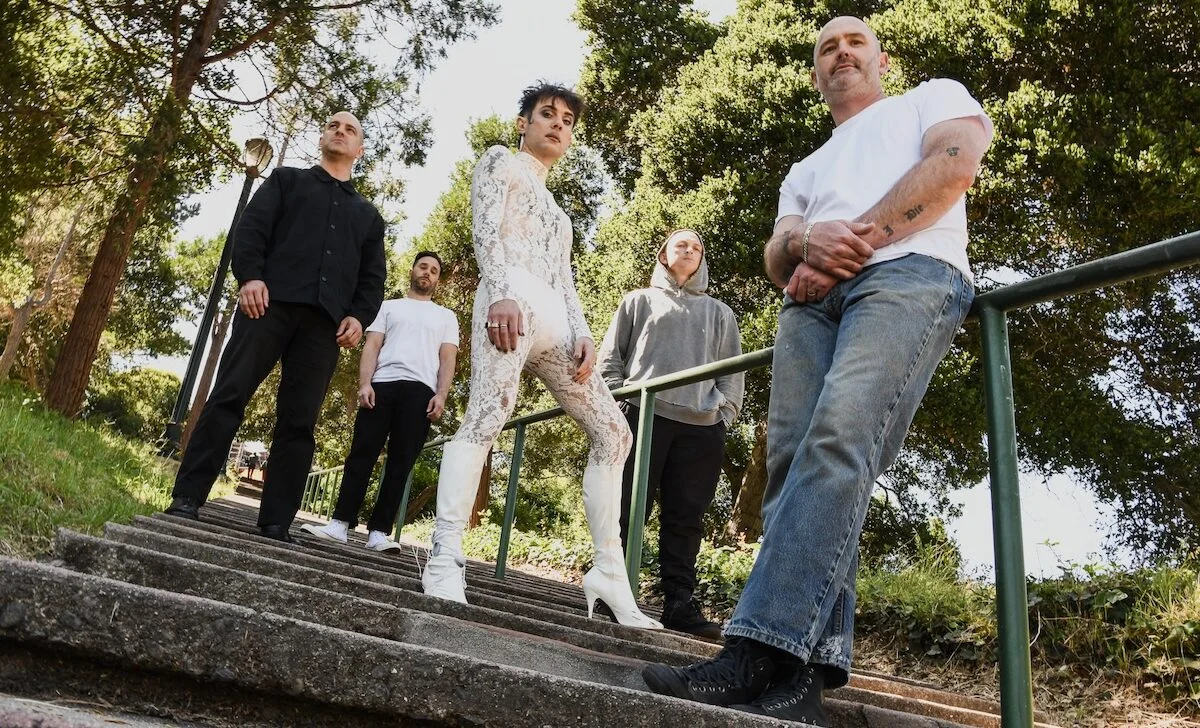
Ceremony is not a legacy band, and they have no desire to be one. Ceremony is also not a band too attached to any past form or “true form” as any fan might see it, because they know who they are, they know where they came from. That is something the band, including guitarist/keyboardist Anthony Anzaldo and vocalist Ross Farrar, has never questioned since literally day one.
“We had a mission statement when we started,” says Anzaldo. “Ross had a very clear idea of what he wanted the backdrop to his lyrics to sound like. So those first five to 10 songs that we wrote—you hear them now and they sound so simple and rudimentary, and they are technically, but we threw away so much stuff. And we kept trying the same kind of thing until we felt like it was exactly the thing that ethereally knew what Ceremony should sound like for that first 7-inch.”
This was 21 years ago when the band members, who had known each other since grade school, were still teenagers. So, to call Tell Me Your Dream, the band’s first album since 2019’s In the Spirit World Now, a return to form would probably not be inaccurate, but would be too much of an oversimplification.
Since its inception, Ceremony has evolved from combative and battering blastbeat hardcore on their 2006 debut Violence Violence to slightly more skate-oriented punk on Still Nothing Moves You in 2008. In 2010, Ceremony dropped what a lot of fans might call their quintessential album, Rohnert Park, becoming slightly more accessible sonically though no less furious on fan-favorite opener “Into the Wayside Part I/Sick.” It’s easy to say that the album named for the band’s hometown is their true form, their core identity. But maybe you think it’s 2012’s Zoo, which toyed with some ’90s alt-rock sounds, or the post-punk of 2015’s The L-Shaped Man or 2019’s In the Spirit World Now.
There is no wrong answer.
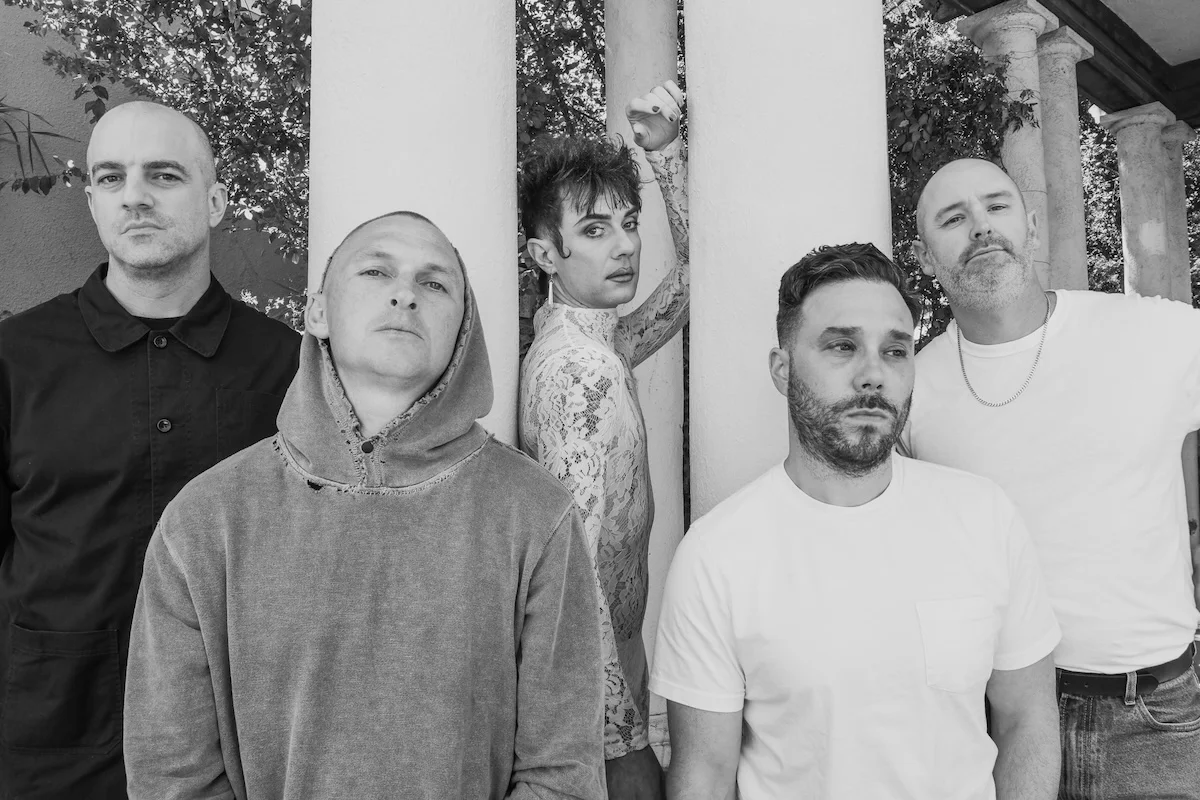
“What is so great about albums and being an album band is that you’re sort of able to hit people in certain periods of their life,” Anzaldo says. “There are people who really only know us from L-Shaped Man or Zoo or Rohnert Park or Spirit World, and to those people we are that kind of band. But, again, we started so young, and Ceremony is really this example of us growing as people and musicians, and it’s been a very natural process because we’ve evolved naturally.”
There was no discussion before The L-Shaped Man, for example, that the band would start playing with chorus pedals and synth sounds as a way to tap into some perceived market opportunity. It was always latent in the band, and it just chose to come out then.
“Three of us were in high school when we started, you know what I mean?” Anzaldo says. He was 17, drummer Jake Casarotti and bassist Justin Davis were 15. They were far from virtuosos.
“Your abilities just are what they are at that point,” Anzaldo says. “Jake may have been playing drums for a few months. There was no greater mission apart from making music that was honest to us and the community that we belonged to at that time. There wasn’t an effort to steer away from influences or genres. The thought of incorporating all of that other stuff wasn’t even an option, we couldn’t grasp that then.”
The mission statement back then also included creating a very specific instrumentation to fit Farrar’s vocals, which have also evolved over time from the mile-a-minute snarls of the past to allowing for more melody and space as the band has also stretched into its more atmospheric indulgences.
But even when he’s giving himself space to sing a little prettier, there’s still the bluntness that fans fell in love with on favorites like “Sick.”
Tell Me Your Dream’s lyrical side has plenty of slow moments of longing and introspection, and political lyrics that allow for no possible misunderstanding, but rather than always resorting to screaming, he’s gotten better at slipping them into songs like “Madness,” which channels P-Funk more than punk.

“When Ceremony writes a song, there’ll be a drop of political innuendos in there, and then there will be something about spirituality, and then there will be something about dichotomies and living in those modes, and art and all of these other things,” Farrar says. “And what that does essentially is it is able to grasp more people and it’s more relatable to people. Usually when you write a political song, that’s what it is. It’s a political song, or a political poem is a political poem. And it’s really hard to do well because of how absolute it is. There’s not a ton of really good political poems. There’s a handful of them. But not all of them are good. You get into that trouble, I think, when you’re writing music, too. Also, when you’re writing music, you want to have a little bit of ambiguity. You want to leave things open to the listener. Having things just straight up black-and-white can be difficult. But, we also believe in the direct statement. That’s why we use things like Palestine, we use that word in our song because it’s a direct statement. It’s a throughline that will get directly to them.”
Now decades down the road and at a point where they have the fortune of no longer feeling like a band that has to prove anything to anyone or strive for some next rung on any sort of ladder—not that they would’ve cared about that anyway—Anzaldo says they can tap into the influences they’ve always loved but hadn’t yet incorporated into their band: Post-punk like PiL and Gang of Four, funk and soul music, and, yes, traditional hardcore punk, however you choose to define that in 2026.
There’s a much larger conversation to be had about hardcore right now. Like emo in the early to mid ’00s, the genre marker has been muddied to the point of near meaninglessness. Younger generations of bands are playing with hardcore and hardcore-adjacent sounds and aesthetics, and in an area like punk that’s all too quick to decide what is and isn’t, a band like Ceremony is going to be on the receiving end of genre purists feeling some type of way about a synth-heavy song. Anzaldo, Farrar, and the rest of the band do not care. That’s very punk rock, of course.
And that’s how you end up with a band more than 20 years into its existence with an album that’s rolled out as something of a “return to form” sounding like their most innovative work to date. In only 10 songs, it brings every reference point and influence that exists inside the collective of Ceremony to the surface. There are abrasive punk songs like “Death Destruction Mayhem,” there’s the slap bass of “Madness” that started as a rehearsal space goof, there are songs like “Deep Down Where I Belong” that sound like a darker B-52’s or the Joy Divisionality of “Dark Summer,” and there’s the downright cinematic album closer “Paradise,” which might be the most beautiful song the band’s ever written.
All of this feels at home in Ceremony’s catalog because everything is at home in Ceremony’s catalog as long as it’s never forced. Each moment of anger, beauty, humor, exhaustion, love—they all come from somewhere within the core of the band, which is it’s true form.
They had to take time apart from Ceremony to reach this point, too. Being a band for so long and having started when they were kids, this band is a relationship that must be tended to like any long-lasting relationship. People evolve as they age, and the band was no different. After their tour in support of Spirit World ended at the beginning of March 2020, the band took the same time off everyone else did, before returning as part of the support package for Turnstile’s Glow On tour, returning to a reopened world that now had an insatiable appetite for hardcore music..
The COVID era is a perfect parallel to all of this, actually: The world shut down, and when we supposedly “came back,” the world was an entirely different place. It had continued to evolve even when it was supposed to be shut down. Returning to form might just be a myth. There is no “back to normal,” as we all learned.
There is only the “new normal.”
Tell Me Your Dream is not a return to form. It is not a band worshipping its past or trying anything on for the future. It is just what Ceremony sounds like right now, as a result of the world turning and revolving around the sun, all the while the components of the band continue to grow and learn alongside each other just as they always have, and when they came back from the break following that tour with the creative itches again, they were not ready to recapture the past. They were there to document what the guys in the band sound like at that exact moment in time in the present. That’s how it’s always been.
To see our running list of the top 100 greatest rock stars of all time, click here.