“It’s not easy for me to be a human,” Jim James says. “But it’s easy to make music.”
Even at low points, he goes on, the music has kept coming to him. The frontman of My Morning Jacket has spent more than two decades making records, establishing himself as a distinctive voice in American rock. But songwriting and performing are as much about receiving as creating, he says.
More from Spin:
- Pearl Jam Welcomes Billy Strings At Ohana
- VMAs: Madonna Rules, Taylor Makes History, Nirvana Gets Its Due
- Stevie Wonder Unearths Four ‘Key Of Life’ Rarities
“I feel like it’s always been something that is its own spirit or its own life that’s coming through me,” he says. “It’s the dance that I have with the muse. I don’t have a partner, I don’t have kids, I don’t have a traditional life. I feel like my music is my life, so it’s like I’m kind of always in my home. I’ve got a studio and I’m always recording things.”
“I’ve had a hard time being Jim, the person. I haven’t really enjoyed it and I’ve done a lot of work in the last few years. I’ve begun to make peace with it and start to enjoy it. But one thing that has always come through is the music.”
His new solo album, Wowed Out, arrives after years of music with My Morning Jacket and several other projects, but its origins reach back 15 years, when James was recruited to write soundtrack music for an unnamed feature film. He partnered with composer-drummer Brian Reitzell, a veteran creator of movie music for Sofia Coppola and other filmmakers.
The music wasn’t used in the film and was put away. But as he worked on his first new solo music since 2018’s Uniform Clarity, James was reminded of those abandoned movie-score sessions. While recording a song called “Lost Child,” which included an old sample from R&B singer Maxine Brown, he began adding strings to the track and flashed back to the scoring sessions with Reitzell.
“There was some message that said, ‘Go back and open up those old movie score files. This would go well together,’” James recalls.
It was the usual voice he hears in his head while creating new music, guiding him toward a song’s ultimate end.
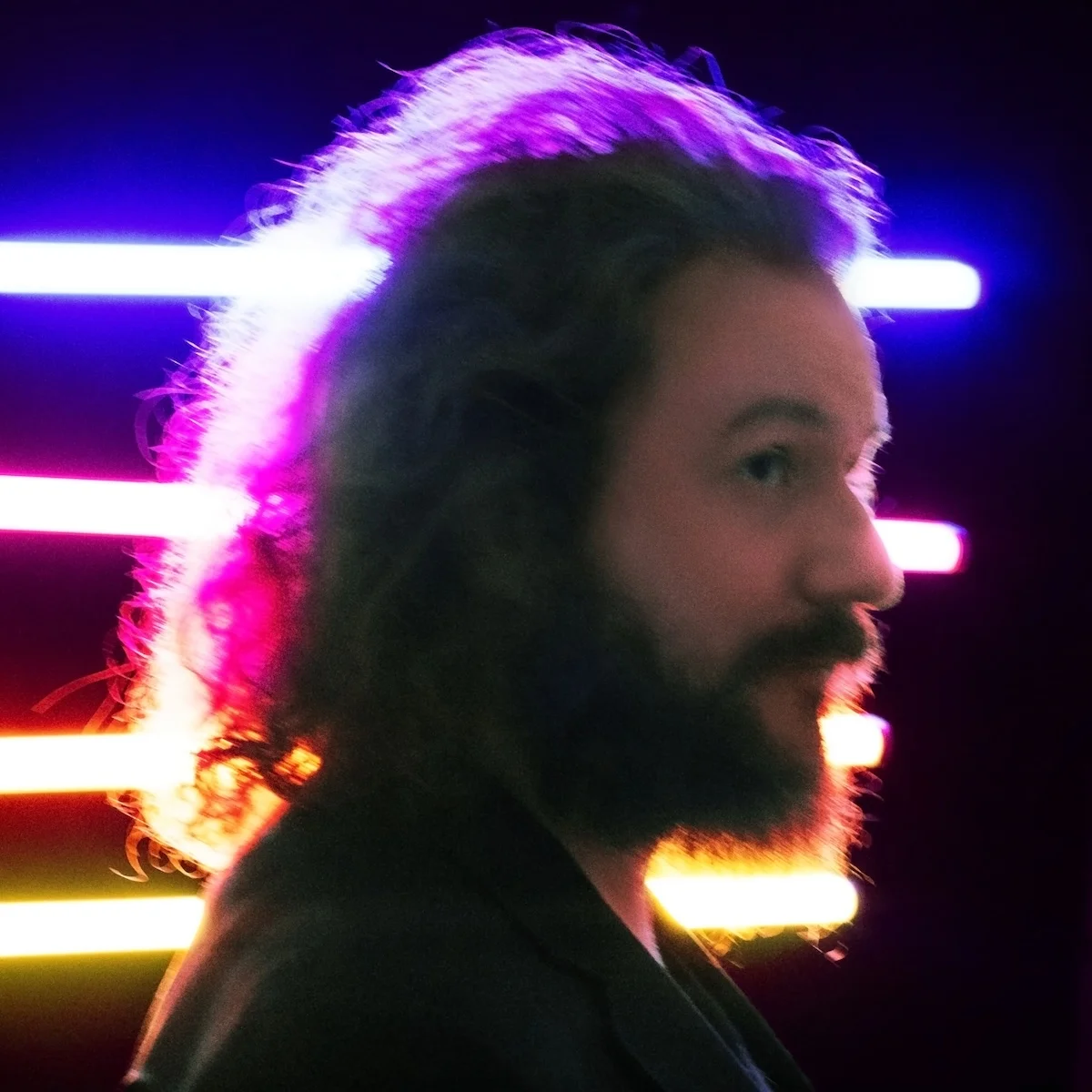
“When I’m working on a thing, I go into this kind of trance state where the thing is just issuing me commands: ‘Why don’t you try some bass on this?’ I’m like, ‘Okay, I’ll try some bass.’ And maybe that doesn’t work or maybe it does. And then it’s like, ‘Why don’t you try a guitar?’ And I’m just following the commands. Eventually it’ll say, ‘It’s done,’ you know?”
For Wowed Out, he opened up the scoring sessions and began transforming 45-second score cues into three-minute songs, then listened to what he’d created on walks, waiting for more instructions and ideas from his inner voice.
Across the album’s 10 tracks, James crafts richly composed songs that are gently psychedelic and deeply felt, from the undulating, affectionate “Baby Dear” to the soulful, organ-infused “Whole Heart (Into It).”
The album title is a term that comes up more than once in the lyrics, and it describes the feeling James now gets from the daily avalanche of digital information scrolling past his eyeballs. “I’m, like, wowed out because they’re trying to wow you with every post and every news article. It’s so sensational.”
James has limited his access to certain apps, trying to create some distance from the endless stream of information and sensations. On “Hands On,” he turns that impulse into something more elemental: a desire to get away from the phone and back into the physical world.
The song came from his feelings about taking action at ground level, literally digging his fingers into the dirt. It is built from a simple musical theme and played as a gentle guitar melody, as James sings: “All these dawns and all these evenings / All these complex human feelings / Begin and end again … Please let me stay.”
“I can take buds of flowers and put them in the dirt, like the farmers do that feed us—that we would all be dead without—people being hands on, growing food,” James explains. “It’s just a prayer to the universe to help me remember to try and stay that way. I was like, ‘Please help me stay off my phone and remember I can go take a walk in the woods. I can go have a conversation with a real human.’”
The idea was partly inspired by the examples of his twin sisters, one an organic farmer, the other a midwife, both in Kentucky. They don’t spend a lot of time scrolling on their phones.
“They’re literally bringing life into the world,” says James, who grew up with his siblings in Louisville’s suburban Hikes Point, not out in the country. “They are badass. It’s like, my one sister gave birth to both of her sons on her own organic farm with her twin sister as the midwife. It doesn’t get much more hands-on than that. I’m so proud of them and that they live that way.”
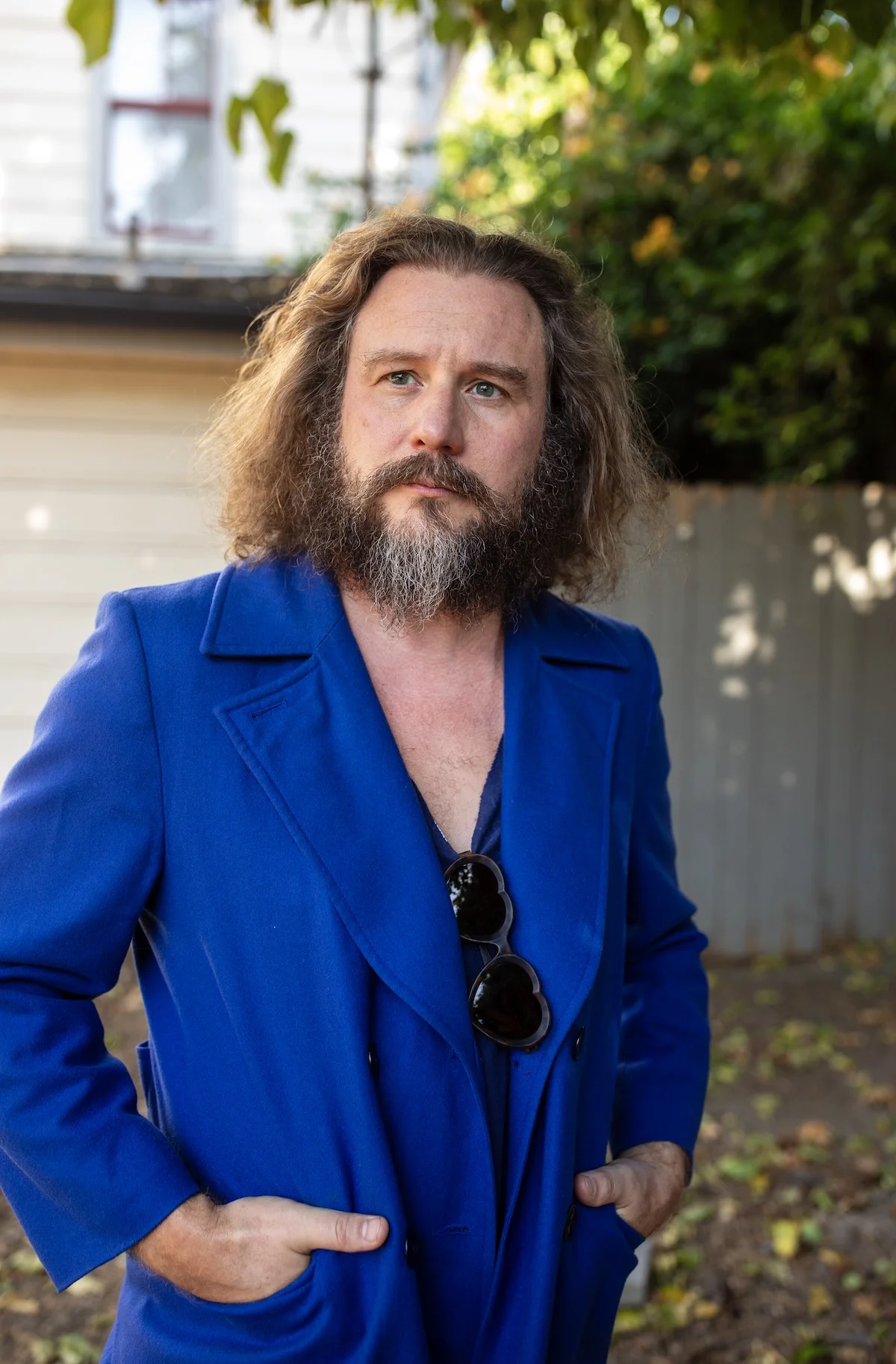
As complicated and difficult as daily life as a human can be, James has taken solace and inspiration from the basics of existence. The day before the album’s release, James played a solo show at Amoeba Records in Hollywood, standing alone in the dark blue women’s pea coat he’s grown attached to. Singing songs old and new on acoustic guitar, he noticed a little red-headed baby held up by his dad, who was then first in line for autographs.
“Whenever somebody brings a baby to a funeral or something, it’s like there’s hope there still. Somebody might turn this thing around,” he says with a laugh.
Playing solo acoustic always takes him back to the beginnings of My Morning Jacket, when he recorded his songs on a 4-track at home. During shows with the band, he typically sets aside a song or two for stripping things down to just him alone onstage with his guitar.
Late this fall, James will begin a short solo acoustic tour, beginning November 28 back home in Louisville.
“I love it,” he explains with a grin. “It’s a really interesting way for me to get at the song in a different way. It’s also a really cool reminder a song is just an idea and there’s so many different ways you can do the song.”
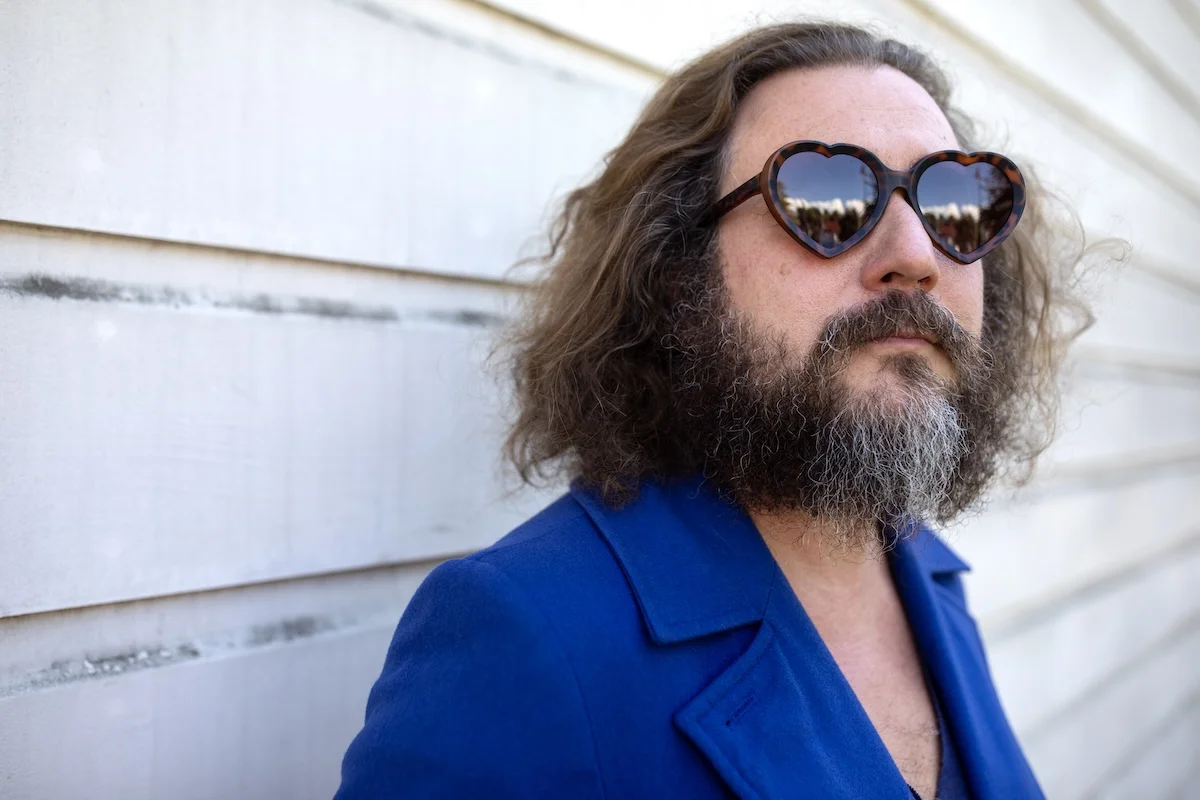
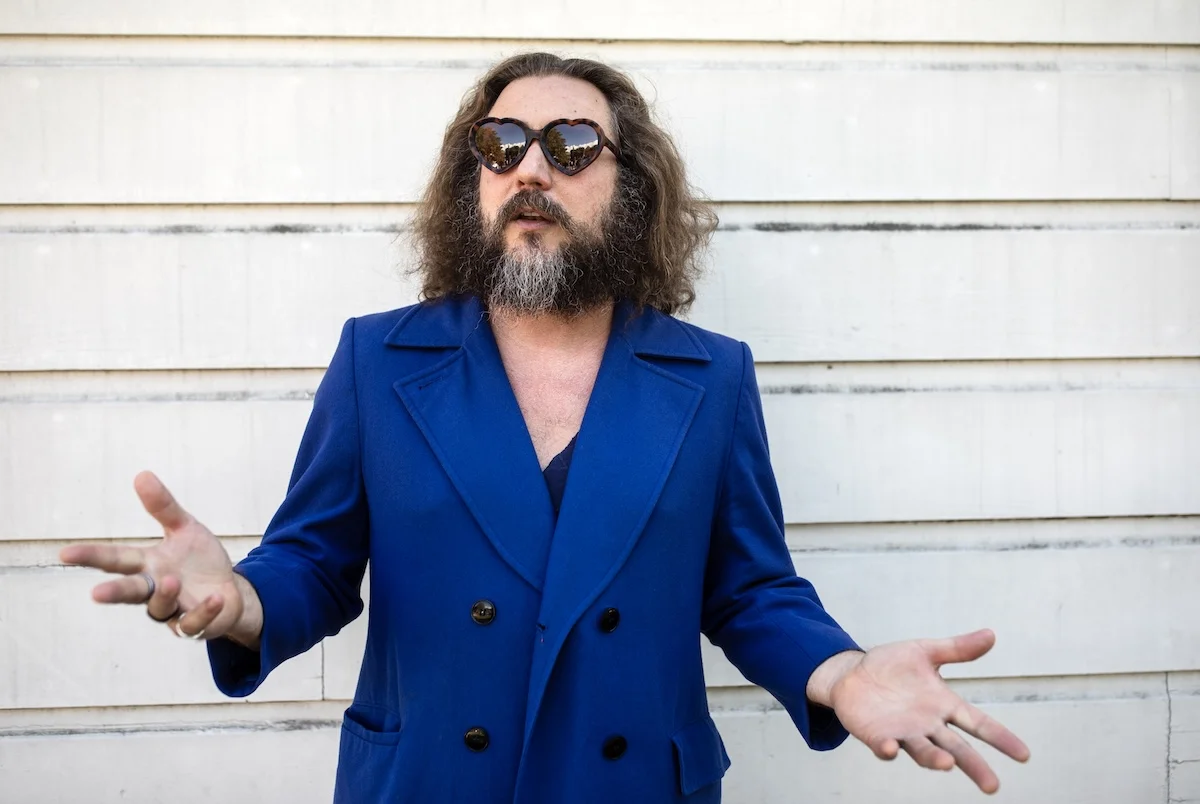
At the moment, James is sitting in a coffee house in South Pasadena, on the outskirts of Los Angeles. Outside, it’s 97 degrees, and he’s dressed in a sleeveless T-shirt, his thick auburn beard accented with a strip of gray down his chin.
James landed in L.A. about eight years ago, got a house and settled in, with frequent trips back to Louisville to work with the band. He no longer has the house, but has remained in the neighborhood, renting places as needed, and he’s become part of the local creative community.
“I have a lot of friends out here and L.A.’s just a great creative place,” James says. “David Lynch talked about the light out here. A lot of places you get great creative energy that can sometimes be dark or a lot to handle. And I feel like L.A.’s got this kind of cool neutrality and you can come here and create your art in a beautiful place, in a kind of neutral-feeling way.”
He’d met Lynch and performed several benefits for the filmmaker’s foundation for Transcendental Meditation.
In July, James was part of an ensemble of artists playing two nights at the Hollywood Bowl to celebrate the music of Wes Anderson films, joining host Bill Murray, Beck, Devo, and Jenny Lewis, among others. He performed “Strangers” by the Kinks and “The Wind” by Cat Stevens, and now calls the concert “one of the great honors of my life.”
But, when we spoke, the news of Dolly Parton’s death was weighing heavily on him. He only got to see Parton perform once, as a surprise guest of Brandi Carlile at the Newport Folk Festival in 2019.
“She’s like the ultimate champion of the cause of peace and love,” he says. “She comes from the part of the country that I come from and she’s always just been such a champion for being yourself and loving yourself. She’s just such a beautiful figure.”
Sessions for a new My Morning Jacket album are planned for November with producer Gena Johnson. It will be their first full album recorded in Nashville, and will mark the second time James has fully handed over production to someone else, after working with Brendan O’Brien on 2025’s Is. In the meantime, the band has been working through the new songs in rehearsal in Louisville, and Johnson has helped pare down their 30 new songs to a manageable 15.
“Sometimes with the solo record, I’m just in the thing and I don’t let anybody else in—but not really deliberately. It just doesn’t happen,” James explains. “I used to try and do that with everything because my ego felt like if I didn’t do every last thing, it wouldn’t be good enough. It’s been a really beautiful thing with Gena and hearing what she has to say and be like, ‘OK, let’s try that.’”
Earlier this year, he released Peacelands, a solo acoustic album of cover songs and originals under the My Morning Jacket name. The 14-track collection, which included covers by Bob Dylan, Brian Wilson, and the Velvet Underground, was partly in response to this past year’s violent immigration raids by ICE. Proceeds from the record went to the American Civil Liberties Union, Doctors Without Borders, and the International Rescue Committee.
“I just wanted to do something concrete for the world in the midst of all the hatred and horrors that are going on,” says James. “The whole point of it was just to promote peace and raise money. So it was like, how can we do that as fast as we possibly can? It’s always the music.”
The songs keep coming to him, he says, but James is also prepared for a time when that might come to an end. The voice in his head will let him know.
“After each record, I don’t know if I’ll ever make another one,” he says. “Maybe that’ll be my last one. Maybe we’ll make 20 more. I’m just waiting to hear those commands from the universe. So that’s been kind of freeing too—it’s helped me look forward to the future in a way where I’m like, if it doesn’t give me any more music, then I’m sure I’ll receive some other instruction to, like, go be a veterinarian or go do something else. It’s amazing how much it’s out of my hands.”
To see our running list of the top 100 greatest rock stars of all time, click here.