The Latest Eurovision Misfire for the UK
Another year, another disappointing result for the UK at Eurovision. The nation's entry, Look Mum No Computer—an official alias for musician Sam Battle—finished in last place, securing just one point. This mishap marks not only a new low for this year's contest but also continues a troubling trend: it's the third time the UK has landed at the bottom since 2020. To add some context, the country has managed to reach the top 10 only once in the last 13 years. Having chronicled the UK's Eurovision failures for four consecutive years now, it's hard to mask the cynicism about our prospects. The anticipation leading up to the contest was tinged with skepticism regarding Sam's offering, a shouty synth-pop track titled "Eins, Zwei, Drei." Performative in nature, the song was all about his struggles to quit his office job to pursue his dreams in Germany, delivered in a bright pink boiler suit no less. It was a vibrant performance—a "big swing," as noted by Graham Norton—but unfortunately, it didn't resonate with the European audience. Sam put everything into his act, but despite the effort, the song didn’t hit the right notes. Let’s be honest: there was little indication that it would fare well, and the anticipation was probably misplaced. While I hate to admit it, here we are once again, dissecting yet another disappointment. Like many others, I had hoped for a unique entry, one that would break free from the polished electropop mold that the UK has fallen back on too often. However, "Eins, Zwei, Drei" came off as eclectic yet disjointed. It's the core of the UK’s frustration—this cycle of trying to be different but ending up with mediocrity. As Adrian Bradley from the Euro Trip podcast noted, "The BBC deserves applause for their ambition” in selecting an unconventional artist. Yet, even he raised the uncomfortable truth: "They took a risk on something that maybe people won't like." The reality is, this gamble didn’t pay off. Even Sam himself hinted at the polarizing nature of his music, likening it to Marmite—something people either love or hate. In this case, it appears most of Europe opted for the latter. Journalist Filippo Baglini from London One Radio sums up the situation concisely: "The song, honestly, is not a great song for the UK." The data backs this up too; the public vote awarded it zero points, and only the juries seemed willing to throw a single point Sam's way. What this means for the future is uncertain, but one thing’s clear: a rethink is needed."The UK boasts an unparalleled music legacy globally. From The Beatles to contemporary stars, the expectation is sky-high — yet recent performances have fallen flat," declares an enthusiastic music aficionado.
Thomas Tammegger, a devoted Eurovision follower hailing from Austria but residing in Denmark, echoes this sentiment. "The BBC's casual approach diminishes its significance. They should recognize that sending humorous or novelty acts misses the mark consistently."
When tangible effort is applied, as seen with Sam Ryder's 2022 entry, success can manifest: "Just look at how he secured second place," Tammegger continues, pointing out the potent combination of a solid song and genuine performance.
Ryder, a rare success in over a decade for the UK, stands out not just for finishing second with his glam rock homage "Space Man." The question remains: why hasn’t the BBC replicated this formula in subsequent contests?
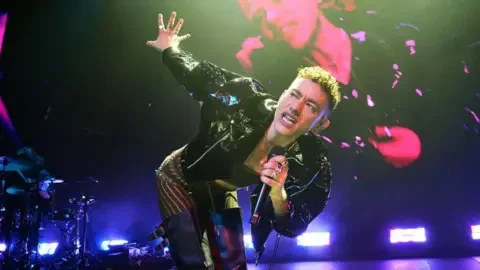
In the words of Will Young, who famously declined to represent the UK in 2015, the Eurovision stage is viewed as a "poisoned chalice." There’s a palpable fear among established artists — they’re hesitant that a poor showing could tarnish their careers. For instance, Olly Alexander faced significant backlash after finishing 18th in the 2024 contest, earning only 46 points, a stark reminder of the risks involved in competing.

 Getty Images
Post-Alexander's disastrous run, the BBC seems to pivot towards lesser-known artists. Acts like Look Mum No Computer and 2025’s Remember Monday are emblematic of this strategy, opting for the indie route devoid of major label machinery.
Interestingly, this approach baffles many competitors abroad. Eurovision participants in Vienna express disbelief: "It seems like representing the UK isn't valued?" pondered Satoshi, clearly unsettled by the perception.
One contestant Underlines that despite the UK’s remarkable contribution to global music, there’s an apparent reluctance to embrace Eurovision's potential to highlight that talent. Dara, a seasoned pop artist, urges major UK performers to overcome their apprehensions. "It's a fantastic opportunity. You should engage with what makes your country unique," she stated after her stunning victory.
"Embrace your quirks and take the plunge into something different. Isn’t that the essence of creativity?" she remarks.
What Finland Can Teach the UK
It’s perplexing that the UK has yet to learn from Finland's prior struggles. Much like the UK’s current attitude, Finland also battled a lack of confidence in Eurovision until Lordi won in 2006, catalyzing a valley of failed entries.
For an agonizing 15 years, Finland could not score a top-ten position while failing to qualify for the finals on several occasions. "We simply didn't believe we could win," said Katariina Kähkönen, a Finnish journalist, reflecting on that era.
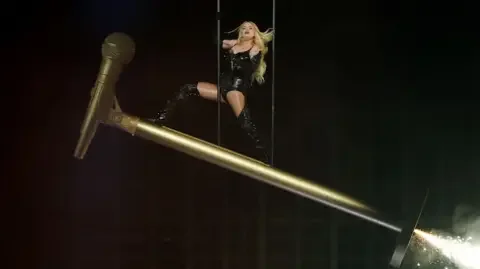
However, a renaissance dawned post-pandemic, leading to entries like Käärijä's energetic "Cha Cha Cha," which secured a dazzling second place in 2023.
 Reuters
Matti Myllyaho, the mastermind behind Finland’s Eurovision resurgence, spearheads the Uuden Musiikin Kilpailu (UMK), drawing on fresh talent and redefining expectations.
The impact of artists like Erika Vikman, known for her daring performances and unique sound, has sparked interest among musicians re-evaluating their own Eurovision participation.
"Vikman's bold entry 'Cicciolina' didn't just gain market traction; it signified artistic freedom, suggesting that Eurovision could cater to avant-garde acts too," says Myllyaho. This sentiment rejuvenated how Finnish artists perceive the competition.