How Rebecca Sonnenshine Reinvented ‘Little House on the Prairie’
Laura Ingalls Wilder’s Little House on the Prairie series, based on the author’s upbringing in the Midwest in the last 1890s, left an indelible mark on American culture. The novels, first published in the 1930s and '40s, became beloved staples of children’s literature and inspired a popular '70s TV adaptation. But in recent years, the books have seen their fair share of criticism over Ingalls Wilder’s portrayal of both Native Americans and Black Americans.
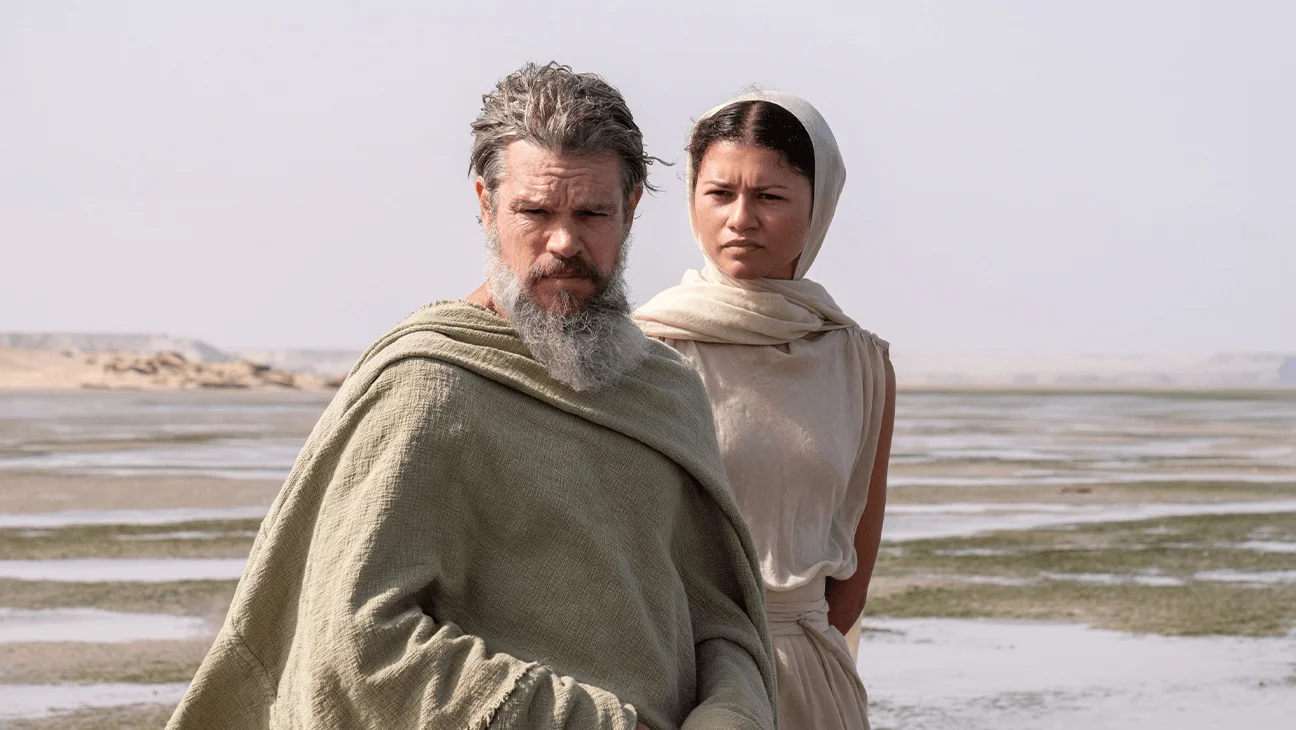
So what exactly does a Little House on the Prairie adaptation look like in 2026? It’s a question producer and writer Rebecca Sonnenshine—who recently penned the blockbuster adaptation of Freida McFadden’s The Housemaid—asked herself before tackling the new Netflix adaptation of the series that she loved as a child.
Sonnenshine talked with PW about the research she did for the series, expanding supporting characters, and what to expect from next year’s The Housemaid’s Secret.
What is your relationship to the Little House on the Prairie books, and how did it lead you to do this adaptation?
These were the first books I ever really read. My dad taught me to read when I was three, so I was reading these books by the time I was five, and my cousin gave me her extra copy of Little House in the Big Woods. I read them over and over and over again. I loved realism as a kid as opposed to fantasy. The books were so evocative and magical and they felt very close to my own life because I grew up in kind of a rural place and my parents were also artistic. We raised chickens, ducks, and sheep. And my mom was a school teacher. Because they were the first books I ever read, they really imprinted on me and made me want to be a writer and a filmmaker.
Because there's been so much criticism of Ingalls Wilder’s work in how she uses racist stereotypes, what was it like adapting this story for a modern audience?
There's so much to explore with these books from our vantage point of 2026, where we have the ability to go into a story like that of the Osage and to actually cast Osage actors who can authentically portray that. We can give them a language consultant to help them speak the language of the Osage. We have the research and the capability to create costumes that accurately reflect what they wore. Those things are maybe a little bit new to us because we haven't put the time and energy in the past into thinking that that was particularly important authenticity, but we do now, and it's important to people and it was important to us. We felt really lucky and honored that we had so many people—including Osage consultants—who were willing to jump in with us even though the material has had its criticisms, and they were willing to help us make this in the most thoughtful way that we were able to.
You also spotlight and expand characters and relationships that weren’t front and center in the book, like Dr. Tann (Jocko Sims) becoming a main character, and getting to see the friendship between Laura (Alice Halsey) and Good Eagle (Wren Zhawenim Gotts) develop.
The interesting thing about the books is that they make it seem like the family is always very isolated, and that was a choice that Laura Ingalls Wilder made and wasn't necessarily the whole truth. They definitely knew people out on the prairie, and you rely on other people.
This doctor who appears in one chapter of the book—I discovered that he was a real individual who lived there at the time, and he was their closest neighbor. I thought, this is a character worth expanding upon and getting to know because I am very interested in what Black Americans were experiencing at this time in our country. We tend to tell the same story over and over and over again, and so this gave us the opportunity to tell a different story of a doctor who was born free, who had come out West to make a new life for himself after the Civil War. It was a frontier, which meant everyone had an equal shot out there. I like to think that there were lots of people who were very open minded.
You need other people on the prairie. That's one of the biggest takeaways from the show: there's this myth that if you try hard enough, you can succeed all by yourself, and it's just not true. You have to reach out. Some of our characters have prejudices, but they can change, and they change by getting to know others—and that is something that we should all be thinking about all the time.
What kind of additional research did you do outside of the books about Laura's life, or life at the time?
There are lots of great biographies of Laura Ingalls Wilder, and I've always kept up with them. I'd read them all, basically, before I ever got onto this project. The first one I ever read was published in the '70s, called Laura by Donald Zochert, and it was written like a novel. It was the first nonfiction book I ever read. I also went into the history of the Osage. Where did they come from? How did they end up in Kansas? Where did they go after? Many people know the story of where they went afterwards, because that's where they pick up with Killers of the Flower Moon about 50 or 60 years later. I read a lot about the Osage, even going as far to get into dissertations on them. I read information books about what Black Americans experienced in the West, [books on] what it was like to be a woman on the prairie—lots of diaries of women pioneers. There's a great book about childhood on the prairie about the dangers and the expectations of children and what kind of work they did, what kind of games they would play.
You've mentioned that Coach Taylor and Tammi from the show Friday Night Lights were an inspiration for you for the relationship between Charles (Luke Bracey) and Caroline Ingalls (Crosby Fitzgerald). I'm curious about the balance in terms of making great viewing for families, but also for adults or people who know the books from growing up. You want your viewer to be interested in everyone.
It's very much a love story about a family, and so we really tried to build out each character in this family to have their own arc, and their own hopes and dreams and emotions that they're wrestling with. We fleshed out the characters of Ma and Mary and also Mister Edwards. We're giving them sort of an equal weight in the story and being able to go into their perspectives, which I feel like we didn't really get to do in the books, but expanding upon what's there.
Friday Night Lights was a huge inspiration in terms of just the tone. Charles and Caroline—that was a great love story. They married because they loved each other, and we take inspiration [from it] as a great romance—you know, a G-rated Outlander. When I cast it, I thought, it has to be as good as Outlander. We have to find that lightning-in-a-bottle casting.
You wrote the screenplay for The Housemaid and now the sequel The Housemaid’s Secret is on its way. How did you feel about how successful the film adaptation became?
I'm very excited about it. It's a really fun story. Freida [McFadden] is a genius. She's a master at these twisty, emotionally driven tales, and I've done my very best to adapt them and make her proud. And I couldn't be more excited to sort of team up again with Paul Feig. He's a wonderful person and a great director. I am in awe of him.