Marissa Stapley Gets ‘Lucky’ in Hollywood
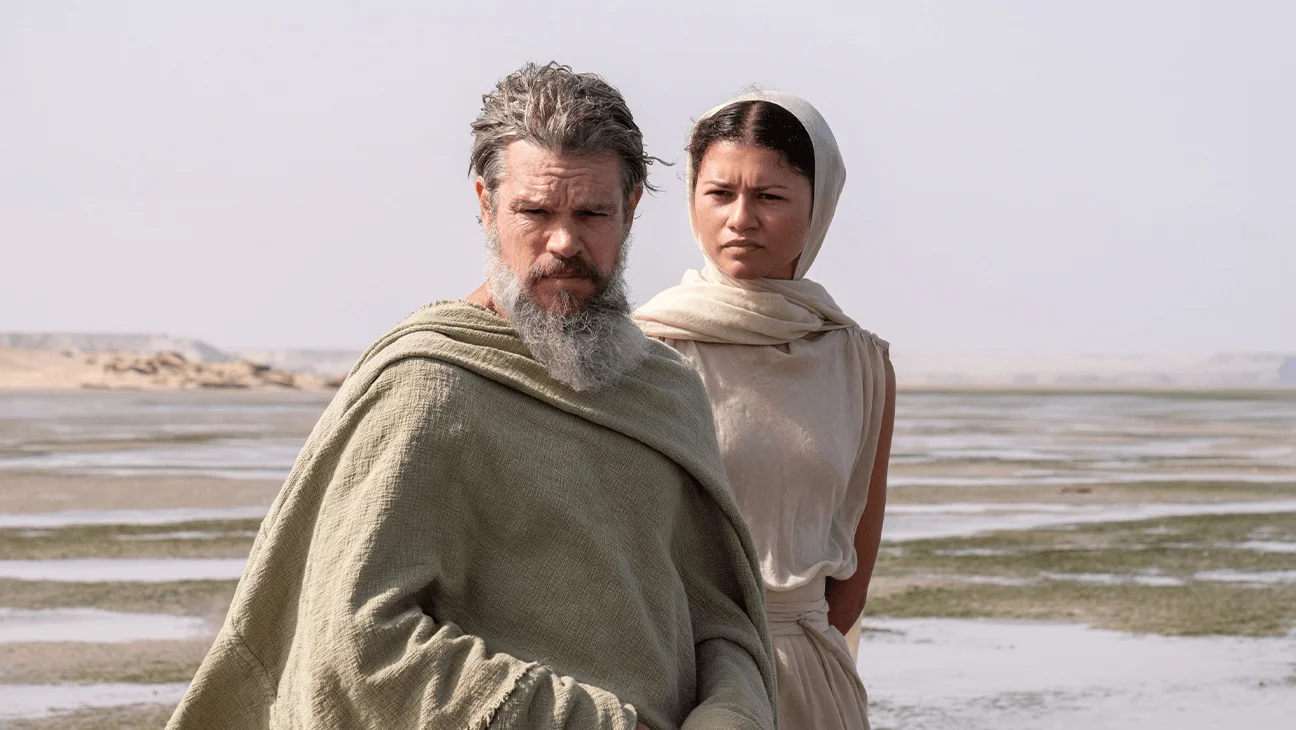
Marissa Stapley's 2021 novel Lucky became a book club sensation after Reese Witherspoon selected it and her production company, Hello Sunshine, acquired the rights. The book centers on a con woman on the run after a heist gone wrong, who finds herself in possession of a winning lottery ticket worth $390 million. This week, Apple TV debuts a seven-episode series adaptation of the book starring Anya Taylor-Joy, created by Jonathan Tropper and Cassie Pappas.
Talking with PW the morning after the show's premiere in L.A., Stapley discussed the show's departures from her book, and what's next for her very fortunate heroine.
The novel's plot hinges on Lucky's possession of a very valuable winning lottery ticket. The show has abandoned this plotline for something similar—a woman on the run—but predicated on something quite different. How do you feel about that change?
I'm not going to lie and say I didn't have a moment of, okay, that feels like a big part of it. But it's also the hook—books need a different kind of hook than a show needs. For a show to have a woman on the run from the FBI and the mafia in seven episodes, and then you throw in the lottery ticket—it just wasn't going to work. Cassie and I did an event the other night and she said, "I don't know if you noticed, there's a scene when Lucky's sitting in the bar and there's a lottery ticket in that scene." So there are little Easter eggs in the show for fans of the novel.
The novel takes place in two timelines, Lucky's childhood with her father and 2008. The show has a contemporary setting, with some limited flashbacks. What parts of the book translate best to the show?
Jonathan and Cassie didn't diverge from the heart of the book. And what they told me was the most important part of the book, which is correct, is the relationship between Lucky and her father. They did that so well, even with the minimal real estate they had to dedicate to the past. What Lucky is chasing in the book and the show is freedom from her past. She is trying to lean into a version of herself that is better than where she came from. I love that the book is like a companion volume to the TV show, like a prequel, which explains everything about Lucky's past, her childhood, and where she came from.
Anya Taylor-Joy's Lucky repeatedly poses as an abused woman to manipulate men early in the series. What's your take on that choice?
It's repulsive, but it's authentic. Con artists are the worst among us, ultimately—they look at someone, they read them, they know what the angle is, and it's not going to be pretty. When you look at her in that situation, you think about what has actually just been done to her—she was drugged and abandoned. That's not good, but that's where Lucky is coming from. As for her acting the way she does, that's the result of the terrible stuff her father would have taught her to do. It's not a good choice, but this is what people do to survive. There is a complex affection we have for Lucky and I think a real con artist in Lucky's situation would have made those same choices.
How did you research con artists for the novel?
The way I start with any novel is I go to the library—I live in Toronto, so I go to the Toronto Public Library, I take out every book I can. In this case it was The Confidence Game [by Maria Konnikova], which I read, and then all the cast read the book too. I also read so much more, from Catch Me If You Can [by Frank Abagnale] to books about Bernie Madoff and how Ponzi schemes work. Sadly, there were also a lot of how-to guides for senior citizens on how to avoid getting scammed, because that's an important part of the plot of the novel [which is not in the television show]. And of course, you have YouTube videos. Honestly, you can learn anything on the internet—how to short-change, how to count cards, all of that stuff. It can be endless.
What's the story behind "Horns of a Bull," the Fiona Apple song that opens the series?
Cassie made it happen. She is connected with Amy Wood, who is Fiona Apple's drummer and producer. Fiona Apple's "Criminal" was always in my head when I was writing the book and I actually dedicated my next novel, The Lightning Bottles, to all of my favorite '90s female musicians, including Fiona Apple. The song is an original for the show.
Is the show setting up a second season?
None of us know. Of course we hope, but we don't have any information currently. I saw a journalist's interpretation that the last episode of the season is very open-ended. It's an ending and it's a beginning. You could go on, because you've left her somewhere. I think that's probably the best way to put it.
We do know a sequel to the novel is coming. What can you tell us?
It's called No Such Thing as Lucky. Apple and I have a deal where I'm using [two original characters from the Apple TV adaptation] Agent Billie Rand and Dutch, who were not in the book, but are in the show, in the sequel. I have the rights to use those characters. Dutch is a very cool character, and his relationship with Priscilla [the antagonist] is complicated—Priscilla has a larger role in the second novel. We start with a lot taken away from Lucky at the beginning of this novel, and she's on the run again. It's super cool. I would love to write 10 Lucky novels. I love her, I know her, and she's proven she can do anything.