How to Minimize Your Risk to Foodborne Parasite Cyclospora

This story has been updated with new reports that the source of the cyclosporiasis outbreak has been confirmed by federal health officials.
If you’ve been on the internet at all the last week, you’ve probably come across news about the cyclosporiasis outbreak, a gastrointestinal infection that causes nausea, fatigue, and “explosive” diarrhea.
The foodborne disease—caused by the cyclospora parasite, which thrives on fresh produce—has sickened at least 1,600 people across 34 states according to the Centers for Disease Control and additional reporting from the Michigan Department of Health and Human Services.
The foods most commonly associated with the cyclospora parasite are fresh berries (like raspberries), lettuce, snow peas, basil and cilantro. Prepared foods such as bagged salads and veggie trays are also culprits. Contaminated water, too, can induce cyclosporiasis. In some affected areas experts suspect lettuce or salad greens.
As of Friday July 17, health officials have confirmed that lettuce imported from Mexico and served at Taco Bell in five states is the source of the outbreak. The CDC on Thursday warned consumers to avoid shredded iceberg lettuce from Taco Bell locations in Indiana, Kentucky, Michigan, Ohio, and West Virginia, reports the Associated Press. The AP also named the single supplier of that lettuce was also identified as Taylor Farms, of Salinas, California, though officials noted that as investigation continue, other potential sources of the outbreak may also be identified. Last week, regional Taco Bell locations pulled several ingredients off area menus, days before the fast food giant was investigated by federal and state officials.
Given that we’re in the height of produce season, we’re especially wary about what to eat right now.
Bon Appétit tapped infectious disease expert, Peter Chin-Hong, MD, who serves as a professor and associate dean at the University of California San Francisco School of Medicine, for his insight. We asked him about food safety tips, the best steps to mitigate exposure to cyclospora, and more.
These responses have been edited for clarity and brevity.
Is it safe to eat any raw produce? Fruit or veg with thick rinds or peels?
I would not tell people to avoid fresh produce altogether, and The CDC has not issued that guidance, either. It is summer after all, and we have been waiting all year for some of the best fruits and vegetables, many of which are at the peak of their flavor and availability. With that said, if you are living in a place with many cases, like Michigan, you may want to be more careful. Higher risk items traditionally include leafy greens (bagged salad mixes), fresh herbs (like cilantro), berries.
Lower risk choices include bananas, oranges, avocados, melon, and mangoes. Interestingly, the lower risk fruit are typically eaten without the rind or outside skin, which can be contaminated with feces/soil (and the parasite). Wash the outside of the thick-skinned produce and wash your hands before cutting into it.
When the source is eventually identified, people can relax a little bit more.
Is frozen or canned produce a viable option? Would it depend on canning or processing dates?
Commercial canning uses temperatures that can easily kill cyclospora (greater than 158°F and 70°C). Processing dates would not matter. Freezing does not reliably kill cyclospora by itself. However, many frozen produce items are briefly blanched beforehand, so that may reduce risk and add some measure of safety.
Is washing enough? Can you soak foods in vinegar and baking soda to kill cyclospora?
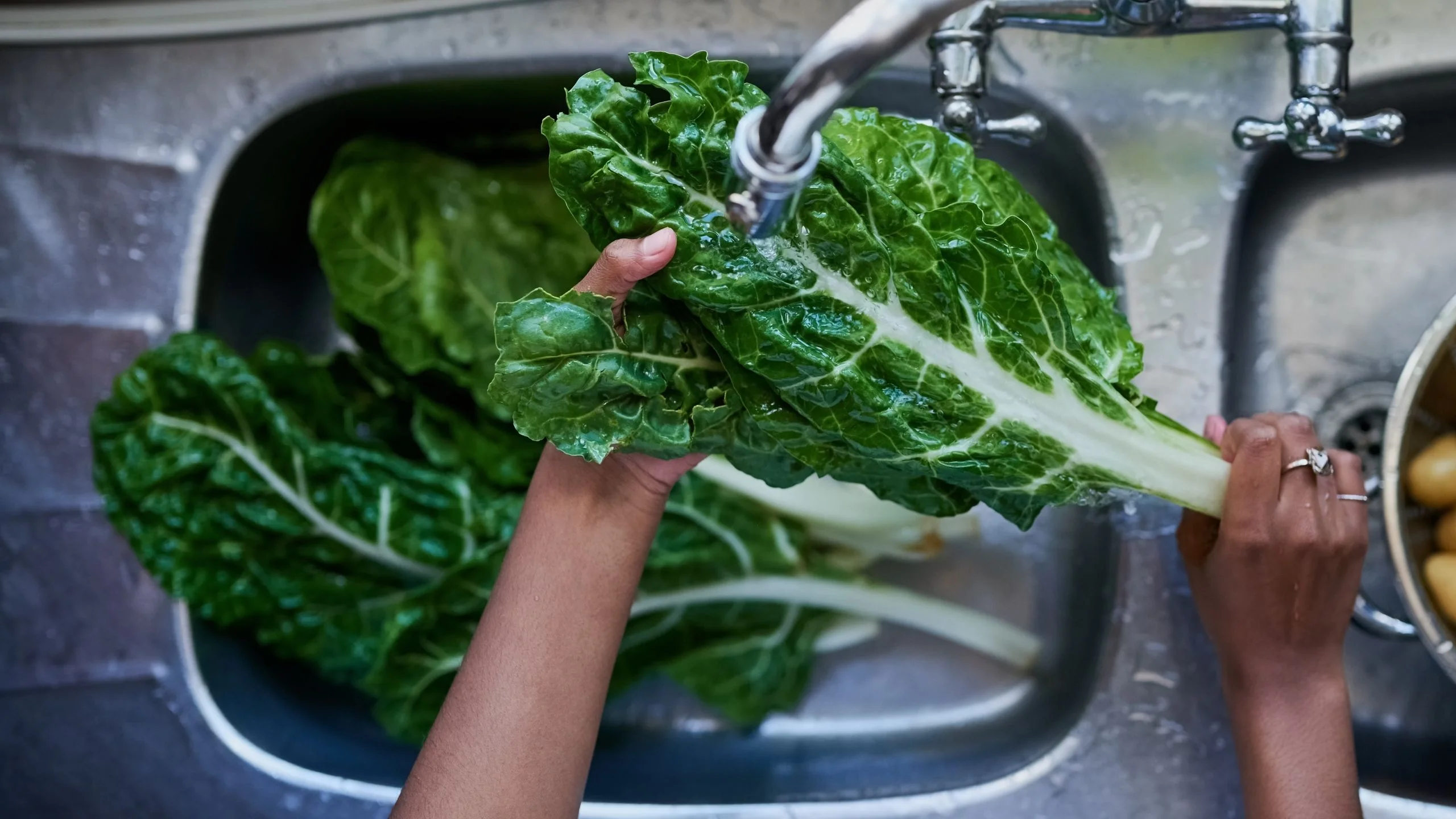
Washing may reduce dirt that might be contaminated with feces but it does not eliminate risk altogether. It reduces the risk. Vinegar and baking soda will not reliably kill cyclospora even though they may kill some bacteria.
Is cooking enough to make produce safe to eat? Do I need to ensure I've reached a certain temp for a specific amount of time?
Cooking alone is generally enough to make produce safe to eat. People won’t usually need a thermometer. Normal cooking temperatures (stir frying, steaming, sautéing, roasting, boiling) at home usually exceed these temperatures easily.
How does this disease affect babies and children? Are there any special considerations that should be taken for their food? Should parents avoid giving babies raw produce entirely?
Babies and children have the same probability of being infected compared as adults. The problem is that babies and toddlers can become dehydrated more easily. I would not recommend avoiding all raw produce for healthy babies and children at this time in most places. However, in a state with an active outbreak like Michigan, it is reasonable to avoid raw leafy greens, herbs and berries for babies and toddlers.
In general, I would take the usual precautions for babies and infants as I would under normal circumstances: wash your hands, wash produce carefully, peel fruits and vegetables when possible, and cook vegetables when appropriate.
Is farmer's market produce generally safe?
Farmer’s market produce has technically the same risk as other ways of getting fruits and vegetables sourced from other venues, like grocery stores. That said, historically many outbreaks have come from large food distributors of imported fruits, vegetables and herbs, not from small distributors.
Do you have any sense on how long this outbreak will last?
We typically see cases of cyclospora in the summer, May to August, but it’s hard to say at this time. There has been a cut in funding to public health that might have hampered the response. Investigators will need to try to find the food item responsible, and intervene before the food leaves the supply chain. Because fresh produce has a relatively short shelf life, it is possible that the outbreak will fade over weeks. As it gets colder, it is also less likely for the parasite to become infectious and sicken people. The large multi-state outbreak in 2013 lasted from June to August before tapering off.
Is it possible to contract cyclospora twice?
Theoretically yes. There is no evidence that infection leads to long-term immunity. Most people don’t get it twice, not because people develop immunity but rather because exposure in the US is generally uncommon.
Is there medical help available if one contracts cyclosporiasis?
One silver lining: If diagnosed, severe symptoms associated with cyclospora can be treated with antibiotics for seven to ten days if diagnosed, and this extends to babies and toddlers.